GEO Fundamentals
AEO vs GEO: When to Use Each Strategy (Decision Framework)
Quick Answer
AEO (Answer Engine Optimization) targets smaller, research-focused platforms like Perplexity and Brave Search that search the web in real-time. GEO (Generative Engine Optimization) targets dominant platforms like ChatGPT, Claude, and Gemini with 200 million weekly active users. For most businesses, GEO should be the priority due to market size and conversion quality. The distinction is simple: AEO targets specialized platforms; GEO targets mainstream adoption.
Two acronyms causing confusion: AEO and GEO. Both target AI. Both want citations. Both feel important. But which one should you actually focus on-and what happens if you pick wrong?
The cost of confusion here isn't just wasted time-it's optimizing for the wrong audience entirely. Let's fix that.
The Confusion: Why They Sound the Same
It's alphabet soup out there right now. AEO. GEO. LLMO. AI SEO. Every vendor and thought leader has their preferred terminology, and they all seem to mean roughly the same thing: optimize your content so AI engines recommend it.
Both approaches focus on AI visibility. Both want you to be the "cited source." Both require strong E-E-A-T signals. It's easy to think they're just two words for the same thing.
They aren't. And confusing them costs you time.
You might spend weeks optimizing for an answer engine format that 99% of your customers never use. Or you might ignore the specific entity signals that ChatGPT needs, assuming your standard SEO work is "good enough" for generative engines.
The terminology confusion exists because these fields evolved rapidly and different communities used different names. But underneath the labels, there's a real distinction worth understanding.
Let's clear the board.
What is AEO?
Definition
Answer Engine Optimization (AEO)
Optimization for AI-powered search engines that crawl the web in real-time and synthesize answers with direct citations. Target platforms include Perplexity, Brave Search, and You.com.
Answer engines are essentially "search engines 2.0." They crawl the web live, read multiple pages, and synthesize an answer with citations to the sources they used. Unlike traditional search, they don't just show you ten blue links-they construct a response and attribute it.
The goal of AEO is to appear in that synthesis. When someone asks Perplexity a question in your domain, you want your content to be one of the sources it cites. The citation includes a direct link back to your page-visible attribution that can drive traffic.
The audience here is specific: tech-savvy early adopters, researchers, and people who want "facts fast" without wading through multiple websites. It's a smaller ecosystem, but a highly intent-driven one. If you sell developer tools, specialized B2B software, or deep-tech hardware, your audience is likely spending time here.
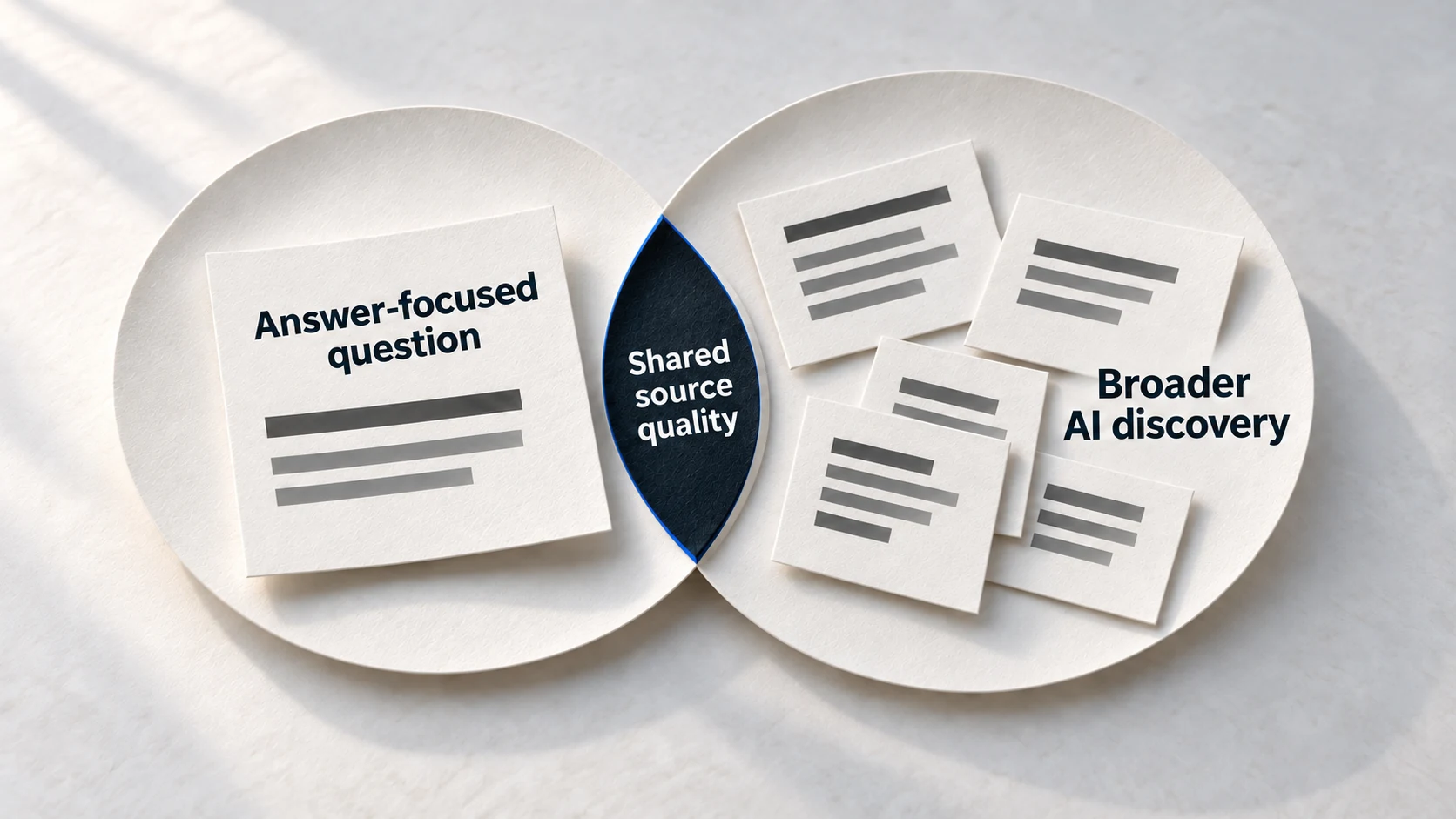
Because answer engines crawl the web in real-time, content freshness matters more here than in GEO. Your page needs to exist and be crawlable right now. Schema markup, clear structure, and explicit answers to questions give you an edge.
What is GEO?
Definition
Generative Engine Optimization (GEO)
Optimization for large language models that generate responses from training data and retrieval systems. Target platforms include ChatGPT, Claude, Gemini, and AI features in Google Search.
GEO targets generative engines-the platforms that don't just search the web but generate responses based on their training data and retrieval systems. Think ChatGPT, Claude, and Gemini.
200M+
weekly active users on ChatGPT alone
This isn't a niche-it's the new internet. GEO targets where the mainstream audience is already searching.
Source: OpenAI (via Axios)The goal of GEO is to become part of the model's knowledge base-or at least a trusted source it can retrieve. You want to be the brand that ChatGPT recommends when a user asks, "What's the best CRM for small businesses?" or "How do I structure my about page for AI visibility?"
The scale difference between AEO and GEO is massive. And Semrush research shows that traffic from AI recommendations carries a 4.4x conversion lift. That's the prize GEO is chasing.
GEO success depends heavily on entity recognition. Does ChatGPT understand who you are as a brand? Do you have enough third-party mentions, Wikipedia presence, and consistent information across the web? These signals matter more than content freshness because the model is making decisions based on accumulated trust, not real-time crawling.
Key Differences
So how do AEO and GEO differ under the hood? There are six main distinctions that shape your strategy.
How to Read This Comparison: Each row represents a dimension where AEO and GEO diverge. The right choice depends on which column better matches your audience and resources.
AEO vs GEO: Technical and Strategic Differences
| Dimension | AEO | GEO |
|---|---|---|
| Target Platforms | Perplexity, Brave Search, You.com | ChatGPT, Claude, Gemini, Google AI |
| Market Size | Millions of users | Hundreds of millions of users |
| Content Discovery | Real-time web crawling | Training data + retrieval systems |
| Success Factor | Content structure & freshness | Entity recognition & authority |
| Citation Style | Direct source links | Semantic recommendations |
| Best Audience Fit | Researchers, developers, early adopters | Mainstream consumers, B2B decision-makers |
The entity recognition difference is especially important. Internal analysis suggests that approximately 60% of GEO success comes down to entity strength-whether the model understands who you are. AEO engines care more about content freshness and structure because they're crawling in real-time.
Note
Think of AEO engines as super-smart librarians who find and summarize sources
GEO engines are more like consultants who understand your brand semantically and recommend you based on reputation, not just content matching
Practical Examples: Who Should Choose What
Theory is useful, but examples make the decision clearer. Here's how different business types should think about their AI visibility strategy:
Business Type → Strategy Match
- 1
Developer Tools Company → AEO Priority
- 2
E-commerce Brand → GEO Priority
- 3
B2B SaaS for Marketing → GEO Priority
- 4
Academic Research Publisher → AEO Priority
- 5
Local Service Business → GEO Priority
Decision Framework
Which one should you prioritize? Here's a framework to make the decision based on your specific situation.
Choose Your AI Visibility Strategy
Question
What best describes your situation?
Prioritize AEO
Your audience is researchers, developers, or academics who use Perplexity and Brave Search for technical queries. You operate in a highly technical niche where accuracy is valued over brand.
Prioritize GEO
You sell to the general public or mainstream B2B buyers who ask ChatGPT for recommendations. You want access to 200M+ users and the 4.4x conversion lift from AI referrals.
Run Both
You serve technical and business audiences. You have resources to optimize for both AEO and GEO platforms. You want complete AI visibility across all search behaviors.
Start with GEO
You have limited time and budget. Focus on GEO first-the market size is larger and 60% of the skills transfer to AEO later. Build entity authority, then expand.
SEO = be found. AEO = be quoted. GEO = be recommended.
For 90% of businesses reading this, GEO is the priority. The sheer volume of users on ChatGPT and Gemini makes it the necessary play. But don't sleep on AEO if you serve the technical elite-those users are highly engaged and often influential.
Common Mistakes to Avoid
Understanding the difference is step one. Avoiding common traps is step two. Here's what not to do:
- 1 Treating them as interchangeable
AEO and GEO require different optimization tactics. Content that ranks in Perplexity citations won't automatically get ChatGPT recommendations, and vice versa. Plan for each specifically.
- 2 Optimizing for AEO when your audience uses GEO
If your customers are asking ChatGPT for recommendations, perfect Perplexity citations won't help you. Know where your audience actually searches before investing optimization effort.
- 3 Neglecting entity work for GEO
GEO success requires entity recognition-AI needs to understand who you are. If you're only creating content without building brand presence across the web, ChatGPT won't recommend you.
- 4 Ignoring AEO for technical products
If you sell to developers or researchers, Perplexity visibility might matter more than ChatGPT presence. Don't default to GEO just because the market is bigger-match the strategy to your specific audience.
The Good News: Skills Overlap
Here's the relief: approximately 60% of SEO skills transfer to both AEO and GEO.
Intent identification, content structure, research skills, authority building, and entity understanding all apply to both strategies. If you're already doing good SEO, you're not starting from zero-you're building on a foundation.
The platform has changed. The surface is different. But the game of organizing information for machines? You're already playing it. What changes is where you focus your optimization effort and which platform-specific signals you prioritize.
Skills That Transfer to Both AEO and GEO
✨ Save this template for consistent formatting across all platforms
Getting Started
Ready to put this framework into action? Here's your first week:
Week 1 Action Plan
- 1
Day 1-2: Audit Your Audience
- 2
Day 3-4: Test Current Visibility
- 3
Day 5-7: Choose Your Priority
FAQ
Can I focus on both AEO and GEO at the same time?
Which has better ROI: AEO or GEO?
Is AEO becoming obsolete now that we have GEO?
What's the main thing that separates AEO from GEO success?
How do I know if my audience uses answer engines or generative engines?
Which Strategy Fits You?
You've learned the difference between AEO and GEO.
Now find out which one matches your audience and business goals. Take our 60-second quiz for a personalized recommendation.
Get Your Strategy Recommendation →60 seconds · Personalized report · Free
Continue Learning
Dive deeper into AI search with these related articles:
GEO vs AEO vs SEO: The Complete Guide to AI Search Optimization
Confused by GEO, AEO, and SEO? This guide explains the differences, when to use each, and how they work together. No jargon, just clarity.
GEO Explained in Plain English: What It Is and Why It Matters
Generative Engine Optimization (GEO) explained without jargon. Learn what GEO is, how it differs from SEO, and why it matters for your website.
Is GEO Just Rebranded SEO? The Real Differences
Skeptics say GEO is just SEO with a new name. The data tells a different story. Discover the 5 concrete differences.