GEO & AI Search
SEO Is Not Dead: How Your Skills Transfer to AI Search
Quick Answer
SEO is not dead-it's evolving. About 60% of your SEO skills transfer directly to Generative Engine Optimization (GEO). The fundamentals remain: understanding user intent, creating structured content, building authority, and measuring results. What's new is optimizing for AI recommendation rather than just ranking. Brands on Google's first page appear in ChatGPT answers 62% of the time-your SEO foundation gives you a head start. Your SEO experience is an advantage, not a reset.
If you've been doing SEO for any length of time, you might be wondering: "Do I have to start over with GEO?" Good news: No.
The headlines are alarming. "AI Will Replace SEO." "Traditional Search Is Dying." "Your Skills Are Obsolete." Every week brings another prediction of SEO's demise.
But the data tells a different story. A story where your years of SEO experience become your biggest competitive advantage in the AI search era.
The Fear (And Why It's Misplaced)
Let's address the anxiety directly.
85.56% of SEO professionals believe AI will assume their jobs. That's not a small number. That's an industry-wide fear.
Gartner predicts search engine volume will drop 25% by 2026 due to AI chatbots. That sounds like the end of search as we know it.
But here's what those statistics don't tell you: the skills that made you good at SEO are exactly the skills that AI search rewards.
The real question isn't whether SEO is dying. It's whether you understand what's changing and what isn't. And the answer is: far less is changing than you might think.
The fear is understandable. Your career, your skills, your professional identity-they all feel threatened. But the fear is based on a misunderstanding of what AI search actually requires.
Think about it this way: When Google introduced major algorithm updates like Panda or Penguin, the best SEO professionals adapted. They didn't start from scratch. They understood the new rules and adjusted their approach. GEO is the same pattern-a significant shift that rewards those who understand both the old foundations and the new layer.
The Framework: GEO = SEO + AI Awareness
Here's the simplest way to understand the relationship between SEO and GEO:
GEO = SEO + AI Awareness
Everything you know about SEO still applies. GEO adds a layer on top.
Definition
AI Awareness
Understanding how AI engines access, evaluate, and cite content-including their reliance on search indexes, trust signals, and structured data. It's the additional knowledge layer that makes SEO work for AI-powered search.
This isn't a pivot. It's an expansion.
Think about it: Where do AI engines get their information? ChatGPT, Claude, and Perplexity pull from the same search indexes that Google uses. Your SEO work-making content discoverable, structured, and authoritative-is literally the foundation that AI engines build on.
The evidence backs this up. Research shows that brands ranking on Google's first page appear in ChatGPT answers 62% of the time. That 62% correlation exists because AI search and traditional search share common foundations.
The 38% gap? That's where GEO-specific skills come in. But you're not replacing 100% of your knowledge-you're adding to 60% of what you already have. Your years of SEO experience mean you're already more than halfway there.
What Transfers (The 60%)
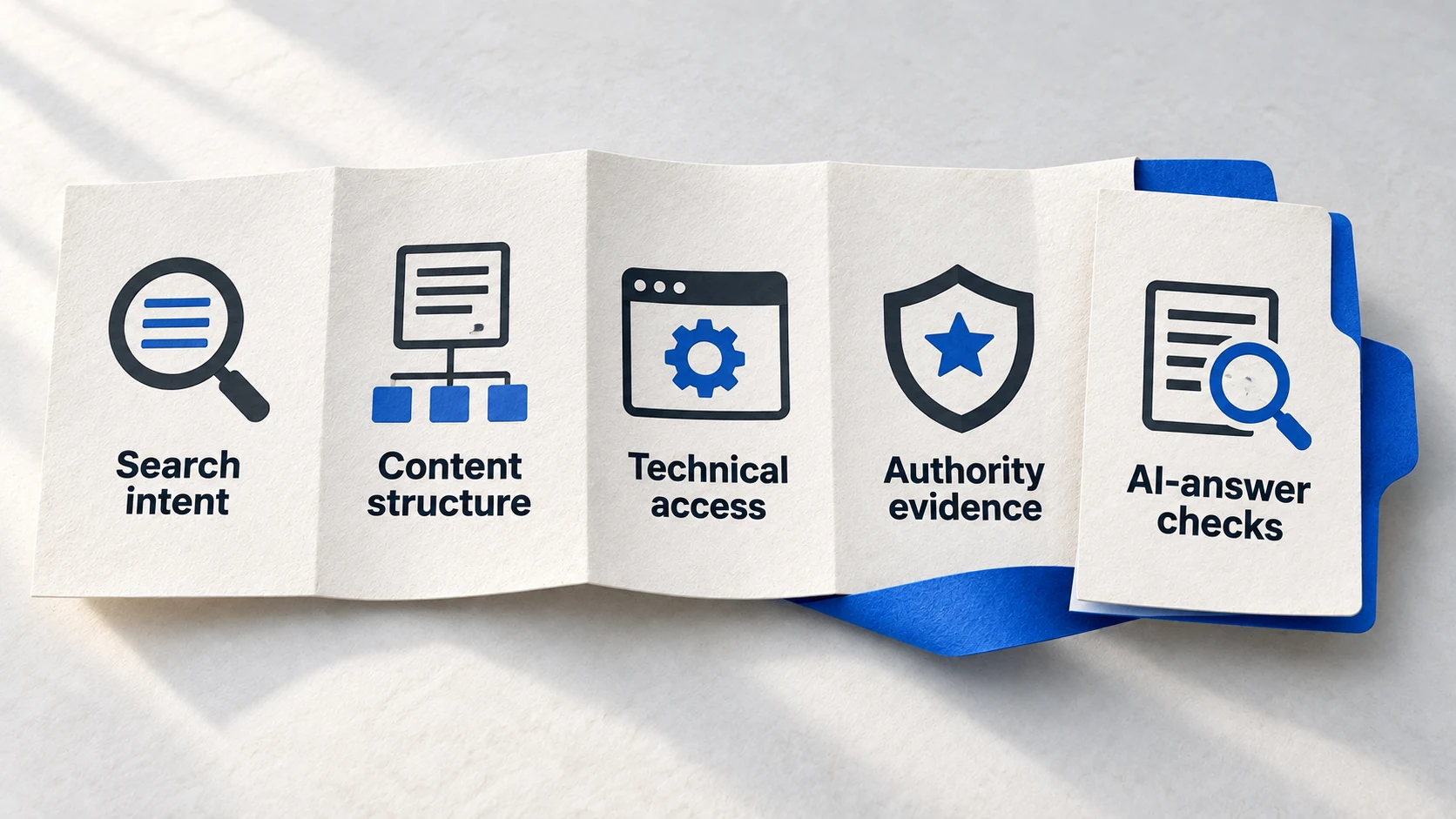
Let's get specific about what carries over directly from SEO to GEO. These aren't skills that need modification-they transfer exactly as they are.
User Intent Understanding
The heart of good SEO has always been understanding what users actually want-not just what they type. This skill transfers completely to GEO. When someone asks ChatGPT "what's the best CRM for small businesses," they want a thoughtful recommendation, not a keyword match.
Your years of analyzing search queries, understanding informational vs. transactional intent, and mapping user journeys? That expertise applies directly to AI search. The only difference is the interface-users are asking AI engines instead of Google, but the underlying intent analysis is identical.
SEO application: Keyword intent analysis → GEO application: Question intent mapping
Content Structure & Quality
Your H1-H2-H3 hierarchy skills? Still critical. Clear heading structures, logical flow, proper formatting-AI engines don't just use your structure as a signal. They extract answers directly from it.
If anything, content structure matters MORE for GEO than it did for SEO. Google could rank poorly structured content if it had enough backlinks or satisfied other ranking factors. AI engines struggle to cite content they can't parse clearly. Your expertise in creating well-structured, scannable content is now more valuable than ever.
SEO application: Heading hierarchy for rankings → GEO application: Heading hierarchy for extraction
E-E-A-T Signals
Experience, Expertise, Authoritativeness, and Trust matter even more for AI search. AI engines are trying to recommend sources, not just rank pages. Wikipedia accounts for nearly 48% of ChatGPT's top-cited sources-that's E-E-A-T in action.
Every hour you spent building author pages, establishing credentials, earning quality backlinks, and creating comprehensive content that demonstrates expertise? That work pays dividends in AI search. The difference is that AI engines can verify E-E-A-T signals more systematically than Google ever could.
SEO application: Author pages, credentials → GEO application: Citation-worthy authority
Technical Foundations
Site speed, crawlability, mobile optimization-all still critical. AI engines pull from existing search indexes. If Google can't crawl your content, AI can't cite it. Your technical SEO is the gateway to AI visibility.
Schema markup, which many SEO professionals have been implementing for years, becomes even more valuable in GEO. AI engines use structured data to understand entity relationships, verify credentials, and extract specific information types. If you've already mastered technical SEO, you're ahead of the curve.
SEO application: Crawlability for indexing → GEO application: Crawlability for AI access
Authority Building
Building credibility through mentions, citations, and third-party recognition transfers completely. AI engines specifically look for sources they can trust when making recommendations.
The digital PR work you've been doing-getting mentioned in industry publications, building relationships with journalists, earning coverage on authoritative sites-this directly improves your AI citation chances. AI engines notice when trusted sources reference you, just as Google's algorithm did.
SEO application: Backlinks from quality sites → GEO application: Mentions from trusted sources
Analytics & Measurement
The hypothesis-test-measure-refine loop is identical. The metrics change-citation frequency instead of just rankings-but analytical thinking remains critical. Same mental model, new data points.
Your ability to interpret data, spot patterns, and make optimization decisions? That's the same skill set GEO demands. You're not learning a new way to think-you're applying proven analytical frameworks to a new channel.
SEO application: Ranking reports → GEO application: Citation tracking + AI referral analytics
What Evolves (The 40%)
Some skills don't transfer directly-they need to evolve. These aren't losses; they're adaptations. Think of them as refinements to tactics you already understand.
SEO vs GEO: What Changes
| Aspect | SEO Approach | GEO Evolution |
|---|---|---|
| Keyword Strategy | Target specific keywords with exact-match optimization | Answer complete questions with semantic understanding |
| Content Priority | Optimize title tags and meta descriptions for click-through | Front-load answers in the first 100 words for extraction |
| Authority Building | Build link volume from diverse sources | Earn quality citations from recognized authorities |
| Success Metric | Maximize traffic sessions and page views | Prioritize qualified AI referrals with higher conversion intent |
| Content Creation | Create content around keyword difficulty and search volume | Create content that AI engines can confidently recommend |
Keyword Strategy → Question Mapping
Exact-match keyword optimization becomes less relevant. AI engines understand semantic meaning, not keyword density. What matters now is comprehensively answering the questions your audience asks AI engines.
This doesn't mean abandoning keyword research. It means shifting focus from "What keywords should I target?" to "What questions is my audience asking, and how can I provide the most complete answer?" The research methods are similar-you're still analyzing search behavior-but the application changes.
The evolution: From "targeting keywords" to "answering questions."
Meta Optimization → Content Optimization
AI engines read your entire content, not just meta tags. Gaming metadata while having thin content doesn't work. What matters is front-loading your best answer in the first 100 words.
The good news: If you've been writing quality content all along (rather than relying on meta tag tricks), this evolution is trivial. You're already doing the hard part. You just need to restructure slightly to put your strongest answer upfront.
The evolution: From "optimizing metadata" to "optimizing the content itself."
Link Quantity → Citation Quality
Hundreds of mediocre backlinks matter less than one mention in a trusted source. AI engines care about who vouches for you, not how many sites link to you.
If you've been doing white-hat SEO focused on earning quality links from relevant sites, this shift is minimal. If you've been relying on link volume tactics, you'll need to adjust-but the relationship-building and outreach skills you have still apply. They just need to be targeted differently.
The evolution: From "building link volume" to "earning trusted citations."
Traffic Volume → Traffic Quality
AI-referred visitors convert at 4.4x the rate of traditional organic traffic. You might get fewer visitors, but they're significantly more qualified. Success metrics shift from sessions to conversions.
This is actually good news for SEO professionals who understand conversion optimization. If you've been focused on qualified traffic rather than vanity metrics, you're already thinking the right way. The shift is about reframing success: 1,000 highly qualified visitors from AI search are worth more than 10,000 casual browsers from traditional search.
The evolution: From "maximize visits" to "maximize value per visit."
Mindset Shift: SEO to GEO
Why SEO Experience Is Your Advantage
Here's what the "SEO is dead" narrative misses completely:
The people who will struggle most with GEO aren't SEO professionals. They're people who never understood search at all. They're starting from zero.
You? You're starting from 60%.
Starting from Zero
• Learning what "intent" means
• Understanding content structure basics
• Building authority from scratch
• Learning to measure anything
• No existing relationships or trust signals
Starting from SEO
• Adapting intent analysis to AI
• Adjusting structure for extraction
• Leveraging existing authority
• Adding new metrics to existing framework
• Building on established trust and relationships
As Search Engine Land puts it: "GEO isn't the death of SEO. It's what happens when search becomes multi-platform, multi-modal, and powered by AI."
The skills that made you good at SEO-understanding users, creating valuable content, building authority, measuring results-these are exactly the skills that GEO rewards. The manipulation tactics that sometimes worked in SEO don't work in GEO. But genuine expertise? That transfers completely.
The game isn't over. The rules have evolved. And you already know most of them.
Your 4-Week Transition Roadmap
Theory is helpful. But you need a practical plan. Here's a 4-week roadmap for SEO professionals transitioning to GEO, building on your existing expertise:
Week 1: Foundation & Audit
- Test your top 10 ranking pages with AI tools (ChatGPT, Perplexity, Gemini)
- Document which pages get cited and which get ignored
- Identify the gap between SEO ranking and AI citation
- Review your existing schema markup-is it comprehensive?
- Audit your author bios and entity pages for completeness
Week 2: Content Restructuring
- Choose 3-5 high-value pages currently NOT getting AI citations
- Rewrite opening paragraphs with answer-first structure
- Add FAQ schema to pages answering common questions
- Strengthen E-E-A-T signals (credentials, sources, expertise indicators)
- Test restructured pages with AI tools-did citations improve?
Week 3: Authority Enhancement
- Implement Person and Organization schema with entity linking
- Build comprehensive About page demonstrating expertise
- Get mentioned on 1-2 authoritative sites (guest posts, quotes, PR)
- Update all author bios with professional credentials and links
- Submit structured data to AI-accessible indexes (Bing, Google)
Week 4: Measurement & Scale
- Set up AI citation tracking for key queries
- Compare AI referral traffic to traditional organic (quality vs quantity)
- Identify which content types get cited most frequently
- Create GEO content brief template based on learnings
- Apply successful patterns to next 10-20 pages
By the end of 4 weeks, you'll have practical GEO experience, measurable results, and a systematic approach to scaling. You're not starting over-you're building on everything you already know.
FAQ
Do I have to start over if I'm an SEO professional?
How long will it take to transition from SEO to GEO?
Is SEO dead or dying?
What's the most important new skill for GEO?
Your SEO Skills Are Your Head Start
Now find out how ready your content is for AI visibility.
I've built a system to help brands go from invisible to cited in AI responses. But before I share it with you, I want you to see exactly where you stand.
Take the GEO Readiness Quiz →60 seconds · Personalized report · Free
Continue Learning
Dive deeper into AI search with these related articles:
7 SEO Skills That Transfer to GEO (And 3 That Don't)
Your SEO expertise isn't wasted. Learn exactly which skills carry over to GEO and which need updating.
From Keyword Research to Intent Optimization: The Complete Translation
Transform your keyword research skills into powerful intent optimization. A practical guide for SEO professionals moving to GEO.
Why SEO Experience Is Your Competitive Advantage in GEO
Your SEO background gives you a 6-12 month head start in GEO. Here's how to leverage your existing expertise.