GEO & AI Search
Perplexity vs ChatGPT: Different Engines, Different Optimization
Quick Answer
Perplexity and ChatGPT require different optimization strategies because they cite different sources. Research on AI citation patterns shows Perplexity concentrates 46.7% of its top citations on Reddit, while ChatGPT concentrates 47.9% on Wikipedia. Perplexity is search-first with real-time citations; ChatGPT is conversation-first, choosing when to search. Optimize for Perplexity through community engagement and niche expertise. Optimize for ChatGPT through authoritative, encyclopedic content.
You ask both platforms the same question. ChatGPT cites Wikipedia, Reuters, and academic sources. Perplexity cites Reddit threads, expert blogs, and niche review sites. Same query, completely different sources.
This isn't random. Each platform has distinct citation preferences shaped by its architecture. TryProfound research reveals that Perplexity and ChatGPT share only 25.19% of cited domains-meaning nearly 75% of the sites one platform cites, the other ignores.
Understanding these differences isn't academic. It determines where you invest your optimization efforts and what content strategies actually move the needle.
The Fundamental Difference: Search-First vs Conversation-First
The core architectural difference shapes everything else. Perplexity is search-first-it fetches real-time web data and provides citations by default for every response. ChatGPT is conversation-first-it decides whether to search based on the prompt and context.
| Attribute | Perplexity | ChatGPT |
|---|---|---|
| Primary Function | Search engine with AI synthesis | Conversational AI with optional search |
| Citation Behavior | Always cites sources by default | Cites when it decides search is needed |
| Real-Time Data | Yes, all queries search live web | Selective based on prompt context |
| Interface Design | Research engine with chat overlay | Chat interface with search capabilities |
| Best For | Fact-gathering, breaking news, research | Creative work, synthesis, analysis |
This means content optimized for Perplexity needs to be findable in real-time search. Content optimized for ChatGPT needs to be authoritative enough to be pre-trained or valuable enough to surface when ChatGPT does decide to search.
Citation Patterns: What Each Platform Prefers
The citation data tells a clear story about each platform's priorities.
Research Finding
Perplexity achieves 95% citation accuracy vs ChatGPT's 88%
According to 2025 benchmarks, Perplexity delivers 10 citations in 2 minutes with 95% accuracy. ChatGPT takes 2:40 for the same number of citations with 88% accuracy. More importantly, 87% of researchers said Perplexity's citations needed no edits, compared to just 62% for ChatGPT.
Source: Zapier Benchmark 2025
This accuracy difference matters for your optimization strategy. Perplexity's higher accuracy comes from its search-first design-it's built around verifiable, linked sources. ChatGPT's lower accuracy reflects its broader conversational scope where citations are secondary to the response quality.
Perplexity Citation Profile
- • Recency-weighted: Heavily favors recently published content
- • Community-validated: Reddit and forums signal credibility
- • Source-transparent: Every claim gets a linked citation
- • Niche-friendly: Specialized sources valued for relevant queries
ChatGPT Citation Profile
- • Authority-weighted: Established institutions preferred
- • Encyclopedic: Wikipedia-style comprehensiveness rewarded
- • Domain-age favored: 45.8% of cited domains are 15+ years old
- • Mainstream-leaning: Major news outlets and reference sources
Source Preferences: Authority vs Community
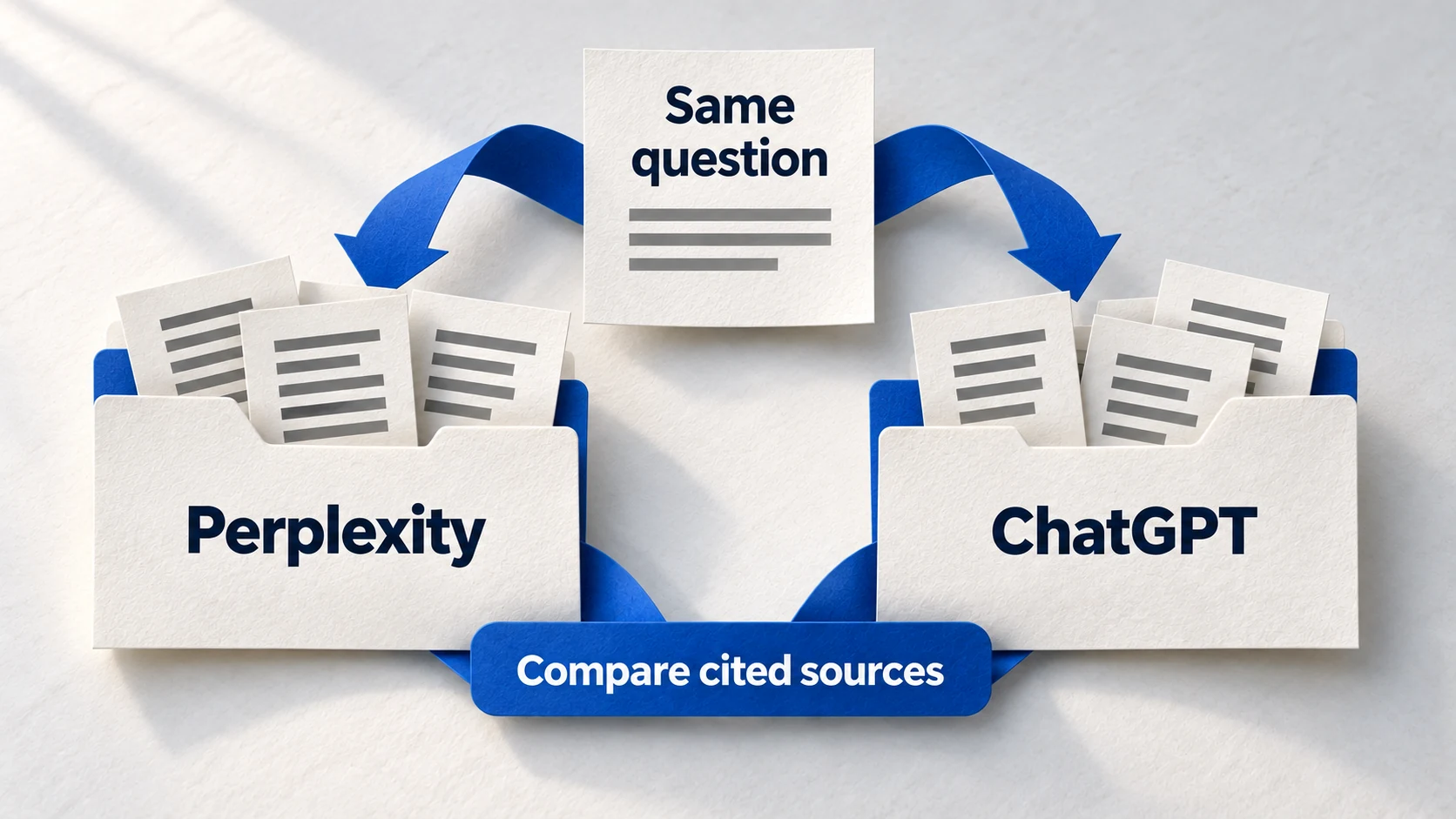
The most striking difference is what each platform considers a trustworthy source. According to TryProfound's analysis, the concentration within each platform's top 10 sources tells the story:
ChatGPT Top Source
47.9%
of top-source citations go to Wikipedia
Wikipedia at 7.8% of total citations, followed by Reuters (~6%), Financial Times (3%). User-generated content and vendor blogs virtually absent (under 3%).
Perplexity Top Source
46.7%
of top-source citations go to Reddit
Reddit at 6.6% of total citations, followed by YouTube (2.0%). Strong preference for niche platforms like NerdWallet, Consumer Reports, and industry-specific review sites.
The strategic implication: If your content strategy relies on community engagement, expert Reddit participation, and niche authority, prioritize Perplexity optimization. If you're building encyclopedic reference content and seeking mainstream credibility, prioritize ChatGPT optimization.
Neither is inherently better-they serve different search intents and different user behaviors. But knowing which one aligns with your existing content strengths helps you allocate optimization resources effectively.
Platform-Specific Optimization Strategies
Based on citation pattern research, here are targeted strategies for each platform:
Optimizing for ChatGPT
Build Wikipedia-style content
Comprehensive, neutral, well-sourced. ChatGPT's heavy Wikipedia reliance means it favors content with similar characteristics: exhaustive coverage, multiple citations, objective tone.
Get mentioned in established publications
Reuters, Financial Times, major industry publications matter. Being cited by these sources transfers their authority to your content in ChatGPT's evaluation.
Domain age and authority signals
45.8% of ChatGPT's cited domains are 15+ years old. If you're on a newer domain, compensate with stronger backlinks from authoritative sources.
Factual reference content
Create content that answers questions definitively. "What is X" and "How does Y work" queries are where ChatGPT most often cites sources.
Optimizing for Perplexity
Build genuine Reddit presence
This isn't about spamming links-it's about becoming a recognized expert in relevant subreddits. Helpful, knowledgeable contributions get cited. Self-promotional content gets ignored or banned.
Create niche-specific expert content
Perplexity favors specialized sources for relevant queries. NerdWallet for finance, Consumer Reports for products, industry-specific publications for B2B. Find your niche equivalent.
Prioritize recency
Perplexity weights recent content more heavily than ChatGPT. Keep content updated. Add timestamps. Reference current events and recent data when relevant.
Participate in community discussions
YouTube comments, Quora answers, industry forums-these peer-to-peer information sources feed Perplexity's citation engine.
Domain Overlap: Where They Agree
Despite their differences, TryProfound research shows 25.19% of domains are cited by both platforms-the highest overlap between any two AI engines studied (confirmed as of March 2026). This shared territory represents your efficiency opportunity.
New Data - Seer Interactive (2026)
87% of ChatGPT (SearchGPT) citations match Bing's top-ranked pages
This confirms the Bing connection is strong: optimizing for Bing improves ChatGPT visibility. The ChatGPT-Bing pathway is the most direct route to AI search citation for new content.
What Both Platforms Value
Clear, structured content
Answer-first formatting, proper heading hierarchy, scannable sections work for both.
Verifiable claims with sources
Both platforms prefer content that cites authoritative sources for claims.
Author credentials, expertise demonstrations, trust markers improve citation likelihood on both.
Technical accessibility
.com domains represent 80%+ of citations on both platforms. Proper indexing matters.
A recommended workflow from Zapier's comparison: Use Perplexity for time-sensitive queries and fact-gathering that requires source transparency. Use ChatGPT for synthesis, analysis, and creative interpretation of information you've verified. Your content strategy should serve both use cases.
Practical Workflow: Testing Your Visibility
Here's something most optimization guides miss: you can test your current visibility across both platforms in about fifteen minutes, and what you discover will tell you exactly where to focus your efforts.
Start with Perplexity. Open it in a new tab and ask a question directly related to your core expertise-something your ideal customer would actually search. Watch what sources it pulls. Are you there? Are your competitors? If a competitor shows up and you don't, note exactly what content of theirs is being cited. That's your gap.
Now do the same test in ChatGPT with browsing enabled. Ask the exact same question. Compare the results. If you show up in one but not the other, you've just identified which platform's preferences align with your current content strengths-and which one needs more attention.
The 15-Minute Visibility Audit
List 5 questions your ideal customer asks in your domain
Ask each question in Perplexity-note which sources are cited
Ask the same questions in ChatGPT with browsing-note the differences
For questions where competitors appear and you don't, examine their cited content
Prioritize the platform where you have existing strengths (content type, community presence)
The insight you'll gain from this simple exercise is worth more than any theoretical framework. You're not guessing about platform preferences anymore-you're seeing exactly how each one evaluates content in your specific niche, with your specific competitors, for your specific audience.
Run this audit once a month. AI citation patterns shift faster than Google rankings ever did-what works in January might not work in March. But that volatility cuts both ways. A competitor who dominated last quarter might be invisible now, and that gap is your opportunity.
The choice between optimizing for Perplexity vs ChatGPT isn't either/or-it's about understanding which platform aligns with your current strengths and where you can build competitive advantage fastest.
If you're already creating authoritative, well-sourced reference content, ChatGPT optimization will yield faster results. If you have strong community presence and niche expertise, Perplexity is your faster path. The 25% overlap means improvements to either will partially transfer. Start where you're strong, then expand.
FAQ
Should I optimize for Perplexity or ChatGPT first?
Does Reddit engagement really matter for AI citations?
How do citation accuracy rates compare between the platforms?
Can I use the same content strategy for both platforms?
Which Platform Should You Prioritize?
Your optimization strategy should match your content strengths. The 25% domain overlap means improving one platform often helps the other.
Discover which AI platforms your current content is best positioned for.
Take the GEO Readiness Quiz →60 seconds · Personalized report · Free
Continue Learning
Dive deeper into AI search with these related articles:
How ChatGPT, Claude, and Perplexity Actually Find and Cite Content
Each AI platform works differently. Learn the mechanics behind how ChatGPT, Claude, and Perplexity discover and cite your content.
How ChatGPT Decides What to Cite (And What to Ignore)
Ever wondered why ChatGPT cites some websites and ignores others? Learn the citation mechanics and how to increase your chances of being cited.
The Content Marketer's Guide to Getting Cited by AI
72.4% of AI-cited content includes answer capsules. Learn the content traits that make AI engines cite your work.