AI Agents for Leaders Who Have No Time to Learn AI · Section 5 · Resources
Prepare for conversations you cannot afford to avoid, Complete Resource Pack
Every request, file and link from the lectures in one place. Copy a request with one click.
 Arun Nagarathanam · 20 Oct 2026 Guide · 33 of 42 in this course

Lecture 5.1 · People Leadership
Which conversation are you putting off?
Name a conversation you have been postponing, and separate what you already know from what only the other person can tell you.

Ideas to keep
- 01Clara, a customer-service manager, has postponed a 1-on-1 with Liam twice. His last 2 shift notes left out unresolved customer issues, and 2 customers called back the next morning to repeat their problem from the beginning.
- 02What Clara knows: Tuesday's and Thursday's shift notes left out 2 open billing problems, and both customers had to call back and explain them again. What she does not know: why Liam left those details out.
- 03Trying to decide the whole exchange in advance often makes you sound like a prosecutor, which makes the other person defensive even when your words are polite.
- 04A different way in: arrive ready to state the one observation you know for certain, and to ask an open question you are genuinely willing to hear answered.
- 05Preparation can separate proven facts from frustration and put your opening question into fair, calm words. Only the conversation itself can tell you what obstacle the other person actually faced.
Try it (optional)
- Think of one conversation in your working week that you have been putting off, or follow Clara's case without sharing any personal details.
- Write down what you know for certain from records or what you saw.
- Write down, separately, what only the other person can tell you.
Files and links
Clara and Liam are a prepared fictional example written for this course.
- Download the Section 5 starter materials (zip)/downloads/leaders/section-05/section-05-starter-materials.zip
- Clara and Darius, the prepared example/resources/library/leaders/clara-and-darius-prepared-example
Lecture 5.2 · Feedback and Coaching
How do you raise a problem without assuming the motive?
Replace an assumed motive with what you observed, its verified impact and the support you can offer, then open with a question that invites an honest answer.

Ideas to keep
- 01Clara's frustrated thought: "Liam is rushing out the door at shift close and does not care about leaving a mess for the morning shift." Said aloud, it would leave Liam defending his character instead of fixing the shift notes.
- 02Instead of asking AI to polish the accusation into softer corporate language, Clara uses feedback-coaching, the starter-pack skill that separates what was observed from what is only assumed.
- 03Clara asks the agent to ask clarifying questions before proposing any wording. Its 4 questions cover the observed action, the verified impact, the expectation set earlier, and the support she can realistically offer.
- 04When the agent asks whether the notes prove why the section was left blank, Clara recognizes that "rushing" and "not caring" are guesses she cannot verify.
- 05Coaching means understanding the real obstacle a colleague is hitting and helping them build a workable way forward.
- 06The 3-part test for any feedback opening: can the colleague recognize the specific event, understand why its impact matters, and give an honest answer that could change your understanding of the problem?
Try it (optional)
- Open practice/people-leadership-prep.html and go to the 01 Observation vs motive tab.
- Compare the initial frustrated thought with the prepared coaching opening, and read why each matters.
- If you want to try it, remove identifying personal details from your own situation and run the request below in an AI product your employer permits.
- Answer the agent's questions before it proposes wording, then check its opening against the 3-part test.
I need to prepare for a 1-on-1 feedback conversation with a team member whose last 2 shift notes omitted unresolved billing callbacks, which led to 2 customers calling back the next morning to repeat their issue. Right now I feel frustrated that they are rushing at 5 p.m. and not thinking about the morning shift.

Before drafting any feedback wording, ask me questions to separate what is proven by the work records from what I am assuming about their motive, confirm what expectation was set previously, and check what practical support I can realistically offer. Then propose a short opening statement and an open coaching question that invites their perspective.
Files and links
Whenever you prepare a real people conversation with AI, remove identifying personal details and use only the non-confidential facts of the work.
- Observation vs motive in the prepared example/resources/library/leaders/clara-and-darius-prepared-example#observation
- Clara and Darius case files: records, rounds and assignment/resources/library/leaders/clara-and-darius-case-files
- The feedback-coaching skill/resources/library/leaders/feedback-coaching-skill
Lecture 5.3 · AI Role-Play
What will you say if the conversation gets difficult?
Rehearse your prepared opening aloud against several plausible reactions, and use the agent's feedback to hear where you stopped listening.

Ideas to keep
- 01If you have only practiced the version where the colleague nods and agrees, the first tense reply can throw you off balance.
- 02Using AI to simulate another person's plausible responses in a practice exchange, so you can test and refine your words, is called role-play.
- 03The simulated responses are authored rehearsal possibilities drawn from common workplace friction, not a psychological profile of Liam or a prediction of what he will say.
- 04Clara runs 3 short rounds: the simulated Liam is unsure what counts as an unresolved issue, feels squeezed by end-of-shift call volume, or disagrees that the missing note caused the repeat call. She speaks each reply with the microphone on.
- 05Practicing only until the simulated colleague agrees is a common mistake. Real readiness comes from testing how you respond to disagreement or a complication you did not expect.
- 06In Round 2, Clara first answered with a rule. Her revised reply listened to the late escalation, explored the overtime limit and kept the expectation that the morning shift needs warning of open issues.
Try it (optional)
- Open the 02 Role-play rounds tab in practice/people-leadership-prep.html.
- Compare Clara's first spoken reply with her revised reply in Round 2.
- If you have a prepared opening of your own, run the request below and answer each round aloud.
- After each round, read the agent's quoted critique against the 4 listening checks before trying the reply again.
Here is my prepared opening: "In Tuesday and Thursday's shift notes, the 2 open billing problems were not listed, which meant 2 customers had to repeat their full history to the morning team. What made capturing those open issues difficult at the end of those shifts?"

Role-play the colleague across 3 separate short rounds so I can practice responding aloud:
Round 1: The colleague is unsure what counts as an unresolved issue.
Round 2: The colleague raises end-of-shift call volume and a 4:55 p.m. escalation against the 5 p.m. log-off rule.
Round 3: The colleague disagrees that the missing note caused the repeat customer call.

After each round, quote my exact reply and evaluate it against 4 criteria: did I state the concern clearly, ask an open question, attend to what the colleague said before answering, and separate a newly surfaced fact from an assumption?
Files and links
The simulated rounds are rehearsal possibilities, not predictions of a real colleague.
- Role-play rounds in the prepared example/resources/library/leaders/clara-and-darius-prepared-example#roleplay
- The conversation-rehearsal skill/resources/library/leaders/conversation-rehearsal-skill
Lecture 5.4 · People Delegation
How do you delegate without taking the work back?
Write an assignment that gives a colleague real ownership, with a desired result, decision freedom, support and an agreed check-in.

Ideas to keep
- 01Leaders often delegate and then end up reviewing every tiny sentence or taking the work back at the first obstacle. Both traps happen when ownership is named in theory but never defined in practice.
- 02Darius asks Tessa to create an onboarding guide for new starters arriving on the first of next month, so a new starter can complete all first-day essentials without hunting down a manager.
- 03The people-delegation method has 4 parts: the desired result, the colleague's decision freedom, the available support, and the agreed check-in or return point.
- 04His first draft said "you fully own" the guide, then dictated 5 section headings, the font layout and approval after every page. That turns the colleague into a typist and the leader into a bottleneck.
- 05In the repaired assignment Tessa chooses the layout and proposes the sequence of first-day tasks. Any change to which security permissions new starters receive on day one comes back to Darius.
- 06When Tessa flags that the IT contact is on leave, Darius does not take the IT section back. He confirms a backup IT contact by tomorrow afternoon, and Tessa keeps owning the complete guide.
Try it (optional)
- Open the 03 Written assignment tab in practice/people-leadership-prep.html and read the 4 parts.
- Find the line in the support part that changed after Tessa raised her concern.
- If you are about to delegate something, run the request below with your own details.
- Check the result: could your colleague say in their own words what result they are aiming for, which choices are theirs, and when they come back to you?
I am delegating the creation of a new-starter onboarding guide to a colleague for our next cohort arriving on the first of next month. We have existing rough onboarding notes and a confirmed start date, and the desired result is a guide that lets a new starter complete all first-day essentials independently.

Prepare a written assignment with 4 parts:
1. The desired outcome and quality criteria (without micromanaging the exact headings or every small step).
2. The colleague's decision freedom (layout and task sequence) versus what must return to me for a decision (any change to required security-access approvals).
3. The support available (existing notes and a named IT operations contact for system setup facts).
4. A single check-in point around a complete working draft 10 days before the start date, or earlier if an unresolved blocker appears.
Files and links
Darius and Tessa are a prepared fictional example written for this course.
- The written assignment in the prepared example/resources/library/leaders/clara-and-darius-prepared-example#assignment
- The people-delegation skill/resources/library/leaders/people-delegation-skill
Lecture 5.5 · People Leadership
What will you say, and what will you ask?
See the one principle behind both cases, and carry one honest open question into every feedback, coaching or delegation conversation.

Ideas to keep
- 01The goal of preparing a people conversation with AI is not walking in with all the answers. It is walking in ready to state what you know clearly and ready to hear the answer you do not have yet.
- 02Clara's accusation became a specific observation of 2 incomplete notes, their impact on 2 repeat calls, and an open question about what made the end-of-shift note difficult.
- 03Darius's micromanaged list became a clear outcome, real freedom over layout and sequence, a named support contact, and a return rule for security-permission changes.
- 04Useful preparation separates what you already know from what only the other person can tell you. A simulated exchange never means you have understood the real colleague.
- 05Before any feedback, coaching or delegation conversation, name at least one honest question that must stay unanswered until the other person speaks.
- 06The same 4 parts of Darius's assignment decide whether delegating to AI agents saves you effort or creates a second job of supervising and fixing the software.
Try it (optional)
- Pick the conversation you named in Lecture 5.1.
- Write what you will state clearly, then the one question that must stay open until the other person answers.
- If the conversation hands over work, check that it names the result, what they can decide, their support and when the work comes back.
Files and links
Section 6 applies the same 4 parts to delegating routines and multi-step workflows to AI agents.
- Open questions, in the prepared example/resources/library/leaders/clara-and-darius-prepared-example#open-questions
- The communication and people leadership workflow/resources/library/leaders/communication-and-people-leadership-workflow
- Open the interactive people leadership page/downloads/leaders/section-05/people-leadership-prep.html
More in this section
Keep going
Keep building
More from Aruntastic
Practical courses for people who want to build useful things with AI.

AI SEO Course 2026: From Zero to Page-One Results
Research search demand, structure useful pages, and work through technical and off-page SEO.
Open the course →
AEO, GEO, AI SEO: Get Cited by ChatGPT, Google, Perplexity
Study how AI search finds information, and make your pages clear enough to be cited.
Open the course →
Microsoft PowerPoint Presentation 2026 for Professionals
Learn visual hierarchy, slide composition, typography and animation through practical work.
Open the course →
AI Agents for Leaders Who Have No Time to Learn AI
If you can delegate to a person, you can delegate to an AI agent. You keep the judgment. For managers and founders.
Open the course →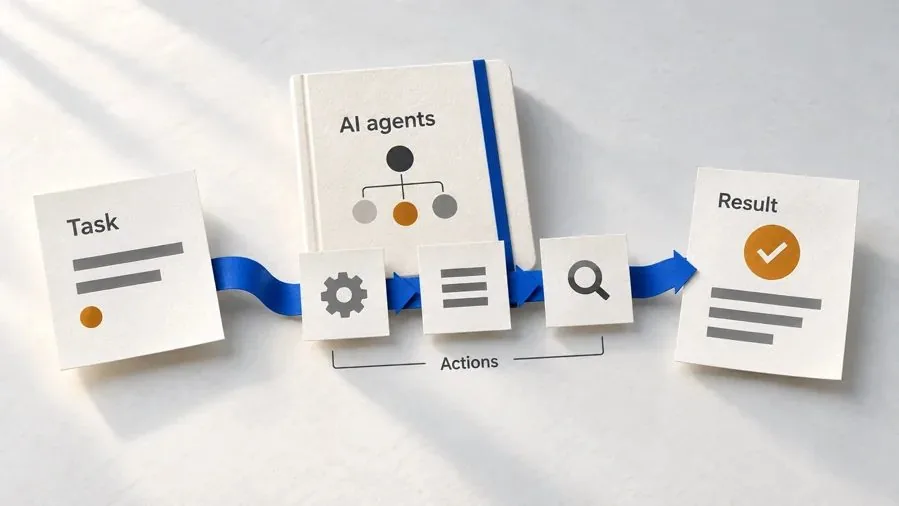
Introduction to Agentic AI and AI Agents
Learn how to direct an AI agent at work, with agentic workflows, RAG and MCP explained from a real first run.
Open the course →Toolkits and programme
Go deeper

Toolkit
SEO Accelerator Toolkit
150+ copy-paste AI prompts for audience research, keywords, content, technical SEO and link building.

Toolkit
GEO Accelerator Toolkit
100 detailed AI prompts for GEO audits, entity building, content structure and client reporting.

Programme
GEO Authority Accelerator
A complete GEO programme on our learner platform: nine modules and a 30, 60, 90 day roadmap. The GEO Accelerator Toolkit is included.
Claude certification practice
Preparing for a Claude certification?
Practice exams written by Arun: 600 questions across 4 mock exams and 2 drill banks. Unofficial preparation, not affiliated with Anthropic.
 CCAR-F
 CCAO-F
 CCDV-F
 CCAR-P
Keep going
This resource is part of a six-section course.
Follow the lectures on Udemy, then come back here whenever you want the files, requests and notes for a section.
Open the course AI Agents for Leaders Who Have No Time to Learn AI · Udemy