AI Agents for Leaders Who Have No Time to Learn AI · Section 5 · Skills
Feedback Coaching Skill
Prepare specific feedback openings and open coaching questions from observed behavior, verified impact, and realistic support without assuming motives.
 Arun Nagarathanam · 20 Oct 2026 Toolkit · 37 of 42 in this course

Section 5 · Skill
How to use this file
An exclusive resource for students of Arun's AI Agents for Leaders Who Have No Time to Learn AI course.
Prepare specific feedback openings and open coaching questions from observed behavior, verified impact, and realistic support without assuming motives.
Follow along
- Save the file below as
skills/feedback-coaching/SKILL.md, beside the communication workflow. It reads the sharedskills/meetings-and-follow-through/references/working-contract.md, which is in the starter zip and on the meeting workflow page. - You rarely call this skill on its own. The workflow page lists when it is used and what it passes on.
Before you rely on it
These are authored course materials. They have not been run in a live agent yet, so nothing here proves that a tool will load them, follow them or save anything. Try them on the fictional practice files first and check every result yourself.
File 1
feedback-coaching/SKILL.md
---
name: feedback-coaching
description: Prepare specific feedback openings and open coaching questions from observed behavior, verified impact, and realistic support without assuming motives.
---

# Feedback coaching

Help the leader prepare for a two-way feedback or coaching conversation that states clear observations and invites the colleague's perspective. Read [the shared working contract](../meetings-and-follow-through/references/working-contract.md) first. Remind the leader to omit identifying personal details and use only non-confidential work facts.

## Interview before drafting

Before proposing feedback wording, ask the leader focused questions to establish:
1. **Observed behavior**: what specific actions or omissions are documented in the work records.
2. **Verified impact**: what concrete effect those actions had on customers, colleagues, or commitments.
3. **Prior expectations**: what standard or agreement was already in place.
4. **Feasible support**: what practical help, checklist, or pairing the leader can genuinely offer.

## Strip assumed motives and build an open question

1. Separate proven observations from guessed motives (such as "rushing" or "not caring about the next shift"). Never state a motive that the work records cannot establish, and do not speculate about whether AI was used to write a colleague's note when the operational gap is missing information.
2. Draft a concise opening that states the specific observation and its verified impact in calm, plain language.
3. Pair the observation with an open coaching question asking what made the step difficult, so the colleague can offer an honest explanation that could change the leader's understanding.
More in this section
Keep going
- Download the Section 5 starter materials (zip)
- Download the A4 study guide (PDF)
- Prepare for conversations you cannot afford to avoid, Complete Resource Pack
- Notes: Prepare for conversations you cannot afford to avoid
- Clara and Darius, a Prepared Example
- Clara and Darius Case Files: Shift Records, Role-Play Rounds and Assignment
- People Delegation Skill
Keep building
More from Aruntastic
Practical courses for people who want to build useful things with AI.

AI SEO Course 2026: From Zero to Page-One Results
Research search demand, structure useful pages, and work through technical and off-page SEO.
Open the course →
AEO, GEO, AI SEO: Get Cited by ChatGPT, Google, Perplexity
Study how AI search finds information, and make your pages clear enough to be cited.
Open the course →
Microsoft PowerPoint Presentation 2026 for Professionals
Learn visual hierarchy, slide composition, typography and animation through practical work.
Open the course →
AI Agents for Leaders Who Have No Time to Learn AI
If you can delegate to a person, you can delegate to an AI agent. You keep the judgment. For managers and founders.
Open the course →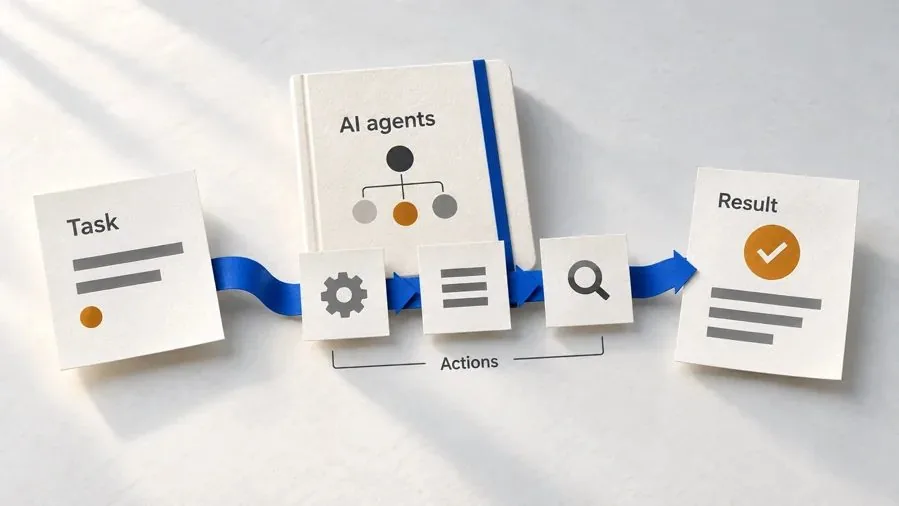
Introduction to Agentic AI and AI Agents
Learn how to direct an AI agent at work, with agentic workflows, RAG and MCP explained from a real first run.
Open the course →Toolkits and programme
Go deeper

Toolkit
SEO Accelerator Toolkit
150+ copy-paste AI prompts for audience research, keywords, content, technical SEO and link building.

Toolkit
GEO Accelerator Toolkit
100 detailed AI prompts for GEO audits, entity building, content structure and client reporting.

Programme
GEO Authority Accelerator
A complete GEO programme on our learner platform: nine modules and a 30, 60, 90 day roadmap. The GEO Accelerator Toolkit is included.
Claude certification practice
Preparing for a Claude certification?
Practice exams written by Arun: 600 questions across 4 mock exams and 2 drill banks. Unofficial preparation, not affiliated with Anthropic.
 CCAR-F
 CCAO-F
 CCDV-F
 CCAR-P
Keep going
This resource is part of a six-section course.
Follow the lectures on Udemy, then come back here whenever you want the files, requests and notes for a section.
Open the course AI Agents for Leaders Who Have No Time to Learn AI · Udemy