AI Agents for Leaders Who Have No Time to Learn AI · Section 5 · Skills
People Delegation Skill
Prepare a written assignment for a colleague that defines the desired outcome, decision freedom, available support, and return conditions without micromanaging.
 Arun Nagarathanam · 20 Oct 2026 Toolkit · 38 of 42 in this course

Section 5 · Skill
How to use this file
An exclusive resource for students of Arun's AI Agents for Leaders Who Have No Time to Learn AI course.
Prepare a written assignment for a colleague that defines the desired outcome, decision freedom, available support, and return conditions without micromanaging.
Follow along
- Save the file below as
skills/people-delegation/SKILL.md, beside the communication workflow. It reads the sharedskills/meetings-and-follow-through/references/working-contract.md, which is in the starter zip and on the meeting workflow page. - You rarely call this skill on its own. The workflow page lists when it is used and what it passes on.
Before you rely on it
These are authored course materials. They have not been run in a live agent yet, so nothing here proves that a tool will load them, follow them or save anything. Try them on the fictional practice files first and check every result yourself.
File 1
people-delegation/SKILL.md
---
name: people-delegation
description: Prepare a written assignment for a colleague that defines the desired outcome, decision freedom, available support, and return conditions without micromanaging.
---

# People delegation

Help the leader prepare to hand ownership of a project or recurring responsibility to a colleague while keeping clear boundaries on discretion and support. Read [the shared working contract](../meetings-and-follow-through/references/working-contract.md) first.

## Four-part written assignment

From the leader's natural explanation and supplied notes, prepare a written assignment covering:
1. **Desired result and quality criteria**: what the finished work must let the user or team accomplish, without dictating every small step, heading, or approval after every page.
2. **Decision freedom vs. return point**: which choices belong to the colleague (such as layout, structure, and task sequence) and which exceptions or policy changes must return to the leader for a decision.
3. **Available support**: existing notes, templates, and named contacts who can resolve factual questions.
4. **Agreed check-in**: a review point built around a complete working draft or a newly exposed blocker, rather than approval after every page.

## Repair micromanagement and avoid taking work back

1. Flag and remove instructions that say "you own this" while micromanaging every step.
2. When the colleague raises a missing input or unavailable contact during the delegation conversation, help the leader adjust the support path or timeline so ownership remains with the colleague rather than reverting to the leader.
More in this section
Keep going
- Download the Section 5 starter materials (zip)
- Download the A4 study guide (PDF)
- Prepare for conversations you cannot afford to avoid, Complete Resource Pack
- Notes: Prepare for conversations you cannot afford to avoid
- Clara and Darius, a Prepared Example
- Clara and Darius Case Files: Shift Records, Role-Play Rounds and Assignment
- Feedback Coaching Skill
Keep building
More from Aruntastic
Practical courses for people who want to build useful things with AI.

AI SEO Course 2026: From Zero to Page-One Results
Research search demand, structure useful pages, and work through technical and off-page SEO.
Open the course →
AEO, GEO, AI SEO: Get Cited by ChatGPT, Google, Perplexity
Study how AI search finds information, and make your pages clear enough to be cited.
Open the course →
Microsoft PowerPoint Presentation 2026 for Professionals
Learn visual hierarchy, slide composition, typography and animation through practical work.
Open the course →
AI Agents for Leaders Who Have No Time to Learn AI
If you can delegate to a person, you can delegate to an AI agent. You keep the judgment. For managers and founders.
Open the course →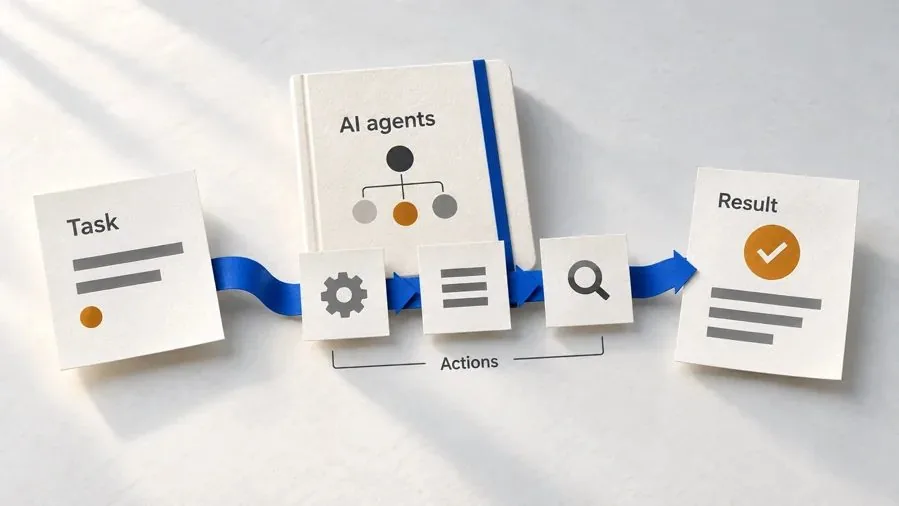
Introduction to Agentic AI and AI Agents
Learn how to direct an AI agent at work, with agentic workflows, RAG and MCP explained from a real first run.
Open the course →Toolkits and programme
Go deeper

Toolkit
SEO Accelerator Toolkit
150+ copy-paste AI prompts for audience research, keywords, content, technical SEO and link building.

Toolkit
GEO Accelerator Toolkit
100 detailed AI prompts for GEO audits, entity building, content structure and client reporting.

Programme
GEO Authority Accelerator
A complete GEO programme on our learner platform: nine modules and a 30, 60, 90 day roadmap. The GEO Accelerator Toolkit is included.
Claude certification practice
Preparing for a Claude certification?
Practice exams written by Arun: 600 questions across 4 mock exams and 2 drill banks. Unofficial preparation, not affiliated with Anthropic.
 CCAR-F
 CCAO-F
 CCDV-F
 CCAR-P
Keep going
This resource is part of a six-section course.
Follow the lectures on Udemy, then come back here whenever you want the files, requests and notes for a section.
Open the course AI Agents for Leaders Who Have No Time to Learn AI · Udemy