AI Agents for Leaders Who Have No Time to Learn AI · Section 5 · Prepared example
Clara and Darius, a Prepared Example
The page the lectures open: an assumed motive replaced by an observation and a question, a reply repaired after role-play, and an assignment Tessa can truly own.
 Arun Nagarathanam · 20 Oct 2026 Template · 35 of 42 in this course

Section 5 · Lectures 5.1 to 5.5
About this page
Prepared fictional example. Clara, Liam, Darius and Tessa are invented for this course. The shift records, role-play exchanges and written assignment are authored teaching material, not output from an observed agent run.
This is the text of the people leadership page shown in Section 5. The same page, with its four tabs, is in the starter zip as practice/people-leadership-prep.html.
Files and links
- Open the interactive people leadership page/downloads/leaders/section-05/people-leadership-prep.html
- Clara and Darius case files: the records and rounds it was prepared from/resources/library/leaders/clara-and-darius-case-files
Tab 01 · Lectures 5.1 and 5.2
Observation vs. assumed motive
Clara separates what the shift records prove from her frustrated guess about Liam’s motive.
From assumed motive to grounded opening
| Stage | Wording | Why it matters |
|---|---|---|
| Initial frustrated thought (Assumed motive) | “Liam is rushing out the door at shift close and does not care about leaving a mess for the morning shift.” | Claims a motive the shift notes cannot prove; invites character defense instead of problem-solving. |
| Prepared coaching opening (Grounded in records) | “In Tuesday and Thursday’s shift notes, the 2 open billing problems were not listed, which meant 2 customers had to repeat their full history to the morning team. What made capturing those open issues difficult at the end of those shifts?” | Names the 2 specific shift notes and 2 repeat customer calls, then asks an open question that allows an honest explanation. |
In Tuesday and Thursday’s shift notes, the 2 open billing problems were not listed, which meant 2 customers had to repeat their full history to the morning team. What made capturing those open issues difficult at the end of those shifts?
Judge any feedback opening by whether the colleague can
- Recognize the specific event.
- Understand why its impact matters.
- Give an honest answer that could change your understanding of the problem.
Tab 02 · Lecture 5.3
Role-play rehearsal
Testing Clara’s opening across 3 plausible reactions exposes where she repeated a rule before listening to a late-call obstacle.
Round 2: Simulated colleague raises a late escalation 5 minutes before shift cutoff
| First spoken reply (Before critique) | “Everyone gets late calls, so you still have to fill out the shift note before logging off.” |
|---|---|
| Revised spoken reply (After listening critique) | “That late escalation is important context, so tell me how you are currently handling the overtime limit and what would let you flag the open customer issue in one line for the morning shift.” |
That late escalation is important context, so tell me how you are currently handling the overtime limit and what would let you flag the open customer issue in one line for the morning shift.
Simulated role-play responses are rehearsal possibilities, not predictions of a real colleague.
Tab 03 · Lecture 5.4
Written assignment for delegation
Darius repairs a micromanaged draft assignment for Tessa’s new-starter onboarding guide.
Four-part written assignment for Tessa: New-starter onboarding guide (Cohort arriving first of next month)
| 1. Desired result | A guide that lets a new starter complete all first-day essentials independently without hunting down a manager for basic setup steps. |
|---|---|
| 2. Decision freedom vs. return point | Tessa chooses the guide’s layout and task sequence. Any change to which security permissions new starters receive on day one returns to Darius for a decision. |
| 3. Available support | Existing rough onboarding notes + named IT contact (adjusted during meeting: Darius will confirm a backup IT contact by tomorrow afternoon while the primary contact is on leave). |
| 4. Agreed check-in | Review one complete working draft 10 days before the cohort arrives, or sooner if an unresolved blocker appears. |
Check any assignment by whether your colleague could explain
- What result they are aiming for.
- Which choices are theirs to make.
- When they should come back to you.
Tab 04 · Lecture 5.5
What remains open for the room
Preparation states what you know and leaves one honest question open for the human conversation—while the same 3 things (the result, what can be done alone, and what must come back) prepare you for Section 6’s agentic workflows.
Prepared course illustration for Section 5. Simulated role-play responses are rehearsal possibilities, not predictions of a real colleague.
More in this section
Keep going
- Download the Section 5 starter materials (zip)
- Download the A4 study guide (PDF)
- Prepare for conversations you cannot afford to avoid, Complete Resource Pack
- Notes: Prepare for conversations you cannot afford to avoid
- Clara and Darius Case Files: Shift Records, Role-Play Rounds and Assignment
- Feedback Coaching Skill
- People Delegation Skill
Keep building
More from Aruntastic
Practical courses for people who want to build useful things with AI.

AI SEO Course 2026: From Zero to Page-One Results
Research search demand, structure useful pages, and work through technical and off-page SEO.
Open the course →
AEO, GEO, AI SEO: Get Cited by ChatGPT, Google, Perplexity
Study how AI search finds information, and make your pages clear enough to be cited.
Open the course →
Microsoft PowerPoint Presentation 2026 for Professionals
Learn visual hierarchy, slide composition, typography and animation through practical work.
Open the course →
AI Agents for Leaders Who Have No Time to Learn AI
If you can delegate to a person, you can delegate to an AI agent. You keep the judgment. For managers and founders.
Open the course →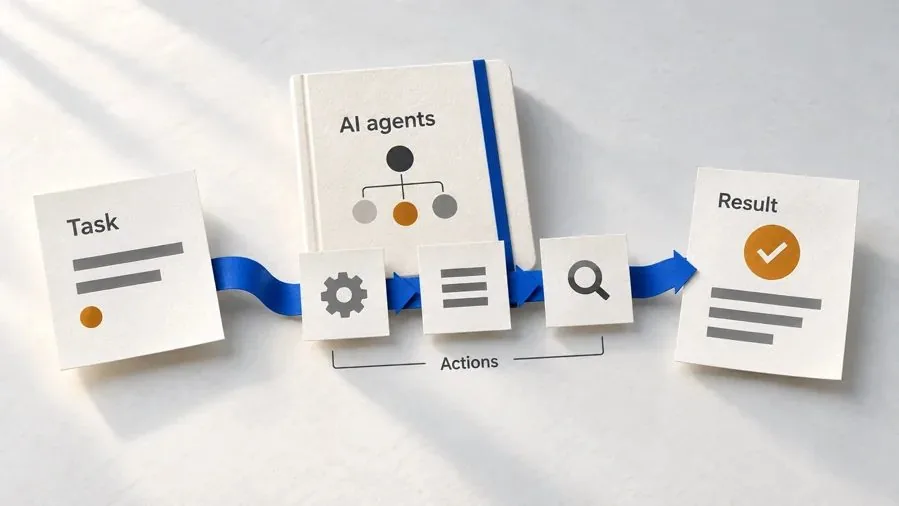
Introduction to Agentic AI and AI Agents
Learn how to direct an AI agent at work, with agentic workflows, RAG and MCP explained from a real first run.
Open the course →Toolkits and programme
Go deeper

Toolkit
SEO Accelerator Toolkit
150+ copy-paste AI prompts for audience research, keywords, content, technical SEO and link building.

Toolkit
GEO Accelerator Toolkit
100 detailed AI prompts for GEO audits, entity building, content structure and client reporting.

Programme
GEO Authority Accelerator
A complete GEO programme on our learner platform: nine modules and a 30, 60, 90 day roadmap. The GEO Accelerator Toolkit is included.
Claude certification practice
Preparing for a Claude certification?
Practice exams written by Arun: 600 questions across 4 mock exams and 2 drill banks. Unofficial preparation, not affiliated with Anthropic.
 CCAR-F
 CCAO-F
 CCDV-F
 CCAR-P
Keep going
This resource is part of a six-section course.
Follow the lectures on Udemy, then come back here whenever you want the files, requests and notes for a section.
Open the course AI Agents for Leaders Who Have No Time to Learn AI · Udemy