GEO & AI Search
The sameAs Property: Connecting Your Digital Identity
Quick Answer
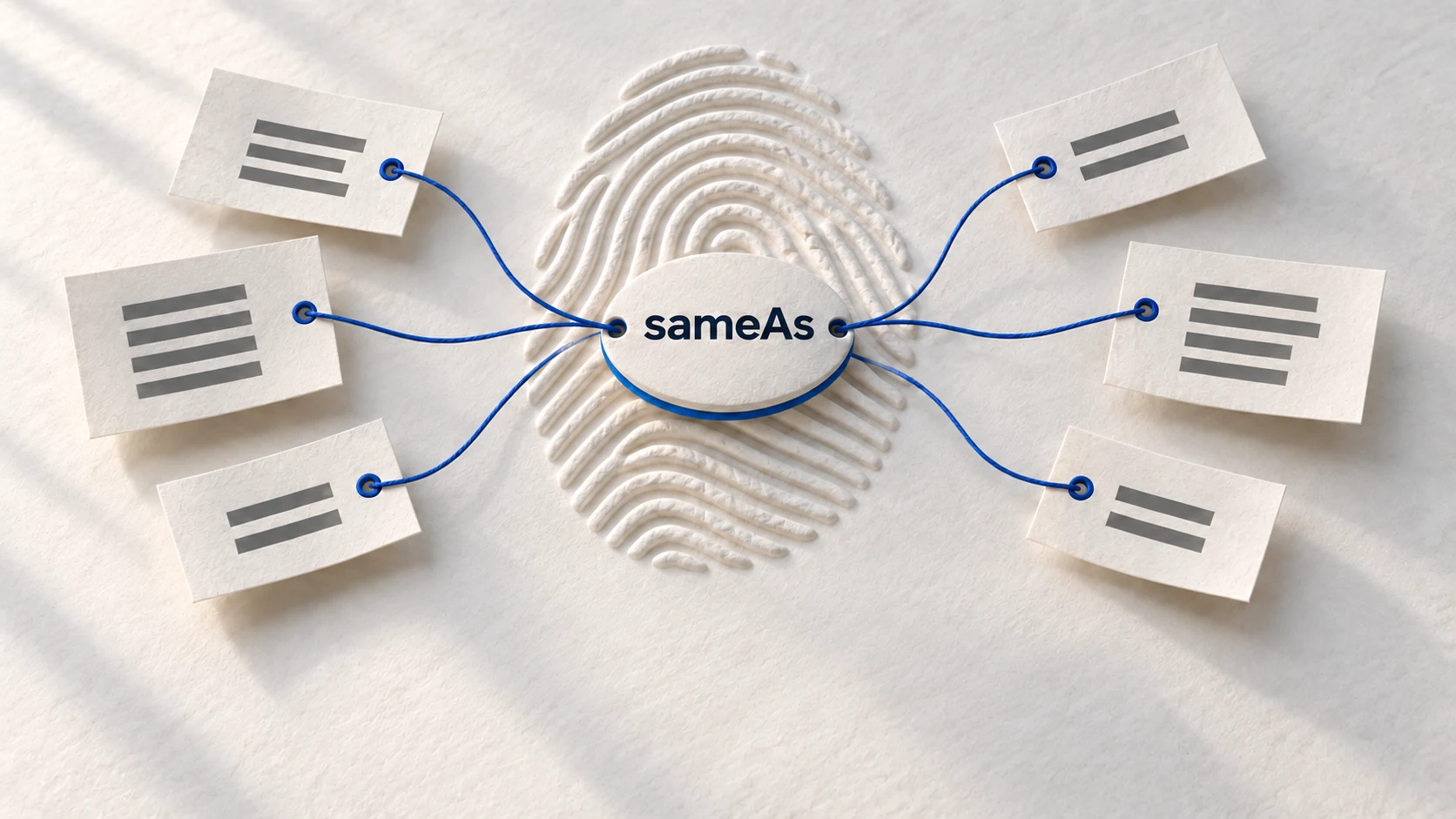
The sameAs property in schema markup connects your website to your other verified online identities-social profiles, Wikipedia, Wikidata, and business directories. sameAs acts like a digital fingerprint, telling search engines and AI platforms that all these profiles represent the same entity. This helps AI systems cross-reference your brand across multiple sources, dramatically increasing citation probability. Sources with strong sameAs links to authoritative references receive 2-3x higher weighting in AI responses.
You've built a comprehensive About page. You've got Organization schema in place. Your LinkedIn profile is current, your Wikidata entry exists, your industry directory listings are accurate.
But search engines and AI platforms see these as separate entities. Your website is one thing. Your LinkedIn is another. Your Wikidata entry is a third. They don't know these all represent the same brand-because you haven't told them.
The sameAs property fixes this. It's a single line of schema markup that connects all your verified presences into one unified digital identity. Here's exactly how to implement it.
What Is the sameAs Property?
The sameAs property is a Schema.org vocabulary term that provides "a URL of a reference Web page that unambiguously indicates the item's identity." In plain English: it tells machines that your website and your LinkedIn profile (or Wikipedia page, or Wikidata entry) are the same entity.
The Digital Fingerprint Analogy
Think of sameAs as your entity's fingerprint across the web. Just as fingerprints uniquely identify a person, sameAs URLs uniquely identify your brand across different platforms.
Without sameAs: "Acme Inc. on LinkedIn" and "Acme Inc. on Crunchbase" might be different companies for all Google knows.
With sameAs: Google confidently understands that both profiles represent the same verified entity.
Entity Disambiguation
sameAs helps search engines distinguish between entities with similar names. "Paris" could be the city, the person, or the brand-sameAs links clarify which entity you're referencing.
Entity Consolidation
When your brand has multiple verified presences, sameAs consolidates them into one recognized entity. This prevents split entity signals that confuse AI systems.
Why sameAs Matters for AI Visibility
AI platforms cross-reference entities across multiple sources before citing them. When your sameAs links point to authoritative references, AI systems can verify your identity with high confidence.
2-3x
higher weight for sources with sameAs links
Document architecture analysis shows sources with Wikidata Q-IDs, sameAs properties, and verified identifiers receive significantly more weight in AI responses.
Source: Entity Recognition Research →86%
of AI citations from brand-managed sources
Strong sameAs connections to Wikipedia, Wikidata, and authoritative directories dramatically increase your chances of being the cited source.
Source: Yext →The verification principle: AI models don't decide who is right-they decide what is provable. They prefer structures based on stable entities (Wikidata Q-IDs, Schema.org), consistent semantics (sameAs, @id), and verifiable links.
How AI Uses sameAs
- Cross-reference verification: AI checks if your claims are consistent across linked profiles
- Authority confirmation: Links to Wikipedia and Wikidata signal established authority
- Entity confidence: Multiple verified links increase confidence in citing your brand
- Disambiguation: sameAs helps AI distinguish you from similarly-named entities
What URLs to Include in sameAs
Quality beats quantity. Include only active, authoritative profiles that genuinely represent your brand.
1 Priority: Knowledge Bases
• Wikidata (if you have an entry)
• Wikipedia (if notable enough)
• Crunchbase (for businesses)
• Google Knowledge Graph ID (if available)
These carry the most weight for entity verification and AI citation.
2 Professional Networks
• LinkedIn Company Page
• LinkedIn Personal Profile (for Person schema)
• GitHub (for tech companies/developers)
• Industry-specific directories
3 Social Media (Only Active Profiles)
• Twitter/X (if actively used)
• YouTube channel
• Facebook Business Page
• Instagram (if brand-relevant)
Only include social profiles you've posted to within the last 6 months.
The quality principle: When it comes to sameAs, think quality over quantity. Link to profiles that genuinely represent your brand and contribute to its authority. An outdated Twitter account you haven't used since 2012 weakens your signal rather than strengthening it.
How to Implement sameAs Schema
sameAs is implemented within your Organization, Person, or LocalBusiness schema. Here's the JSON-LD format. (See our schema guide for more implementation details.)
{
  "@context": "https://schema.org",
  "@type": "Organization",
  "name": "Your Company Name",
  "url": "https://yourwebsite.com",
  "sameAs": [
    "https://www.wikidata.org/wiki/Q12345678",
    "https://www.linkedin.com/company/yourcompany",
    "https://www.crunchbase.com/organization/yourcompany",
    "https://twitter.com/yourcompany",
    "https://www.youtube.com/c/yourcompany"
  ]
}
Implementation Checklist
Audit Your Online Presences
List all verified profiles: social media, directories, knowledge bases. Note which are active and which are abandoned.
Verify URL Accuracy
Visit each URL to confirm it loads correctly and displays current, accurate information about your brand.
Add sameAs to Your Schema
Include the sameAs array in your Organization schema on your Entity Home (About page).
Validate with Google Rich Results Test
Run your page through Google's Rich Results Test to confirm no errors in your schema implementation.
Maintain Quarterly
Review sameAs links every quarter. Remove dead links, add new verified profiles, update URLs that have changed.
Most CMS platforms and SEO plugins (Rank Math, Yoast) have built-in fields for sameAs URLs. If you're using these tools, look for "Additional Profiles" or "Social Profiles" in your settings.
Common sameAs Mistakes to Avoid
These mistakes can undermine your entity signals rather than strengthen them.
Including Dead or Outdated Profiles
A 404 error or abandoned profile sends negative signals. AI systems may question whether your other links are reliable.
Fix: Test every sameAs URL. If it doesn't load or hasn't been updated in a year, remove it.
Linking to Profiles with Inconsistent Information
If your LinkedIn says "Founded 2015" but your Crunchbase says "Founded 2014," you're creating entity confusion, not resolving it.
Fix: Before adding sameAs links, ensure all linked profiles have consistent core information.
Including Irrelevant or Low-Authority Sites
Linking to every directory that has your business listed dilutes your signal. Obscure directories don't help entity verification.
Fix: Stick to authoritative platforms: Wikidata, Wikipedia, LinkedIn, major industry directories.
Using Wrong URL Formats
sameAs requires full, canonical URLs. Shortened links, redirect URLs, or incorrect formats break the connection.
Fix: Use the full URL as it appears in your browser: "https://www.linkedin.com/company/yourcompany" not "linkedin.com/yourcompany".
Never Updating sameAs After Implementation
URLs change. Profiles get deleted. Platforms rebrand. Your sameAs array becomes stale.
Fix: Schedule quarterly audits of your sameAs links as part of your GEO maintenance routine.
The consistency requirement: sameAs tells AI systems "these are all me." But if those profiles contradict each other, you're telling AI systems "I'm inconsistent." Verify information matches across all linked profiles before implementing sameAs.
FAQ
How many sameAs URLs should I include?
Does sameAs directly improve search rankings?
Should I include social media profiles I rarely use?
Can I use sameAs for Person schema too?
Ready to Connect Your Digital Identity?
The sameAs property is your entity's fingerprint.
Implement sameAs schema today and help AI platforms recognize you across the web.
Take the GEO Readiness Quiz →60 seconds · Personalized report · Free
Continue Learning
Dive deeper into AI search with these related articles:
Entity Optimization Masterclass: AI Brand Recognition
Master the complete framework for establishing your brand as a recognized entity in AI systems. From Entity Homes to Wikidata to knowledge panels.
Brand Consistency Audit: Finding and Fixing Entity Confusion
Learn how to audit your brand's online presence for entity confusion issues. Step-by-step guide to identifying and fixing the inconsistencies that prevent AI citations.
Organization Schema: The Foundation of Entity Establishment
Learn how Organization schema creates machine-readable entity profiles that AI engines use when deciding which brands to cite and recommend.