AI Agents for Leaders Who Have No Time to Learn AI · Section 4 · Notes
Notes: Send messages your colleagues recognize as yours
Read a lecture instead of watching it, then make each strategy yours.
 Arun Nagarathanam · 20 Oct 2026 Notes · 27 of 42 in this course

Lecture 4.1
Can AI help while you still sound like you?
I want AI to help with the messages that carry your name without changing what you promised or how you sound. This lecture shows what a smooth draft can quietly get wrong.
Key ideas
- 01The decision: What you chose, with its conditions. Marcus chose a 3-week trial, nothing bigger.
- 02The expanded promise: A line in the draft that commits you to more than you decided, such as ending all coordination delays.
- 03Your manner of speaking: How colleagues recognise you in a message, and how they judge whether you mean it.
Start with what Marcus decided. He is a department manager in a prepared example, and he wants to change his team's weekly planning meeting.
After reviewing his week, he settles on four things:
- Routine status updates are written in the project folder before the Tuesday meeting.
- The 30-minute meeting is spent on decisions.
- Each unresolved blocker gets one owner.
- The new format runs for 3 weeks as a trial, and then he checks whether the meeting still runs over.
Then read the draft. The AI draft on his screen is grammatically smooth, and it announces that the new format will eliminate cross-team coordination delays across the department. Marcus never decided that.
Clearer wording is help I welcome. A changed commitment is different, because the first ordinary project delay after the announcement makes the sender look like someone who over-promised.
Your colleagues plan their week around the commitments in your messages. They also know how you normally write, so a message from a plain-spoken manager that arrives full of stiff buzzwords and grand guarantees makes people tune out or wonder what the polish is hiding.
Adding "make this sound professional" to a request cannot fix this, because the AI does not yet know what your voice sounds like. The next lecture teaches it.
Lecture 4.2
Why does the draft sound nothing like you?
Instead of describing your style with adjectives, you show AI three messages you wrote and tell it what you like. Then you decide which of its proposed rules are really yours.
Key ideas
- 01Your own examples: 3 short messages you wrote and are permitted to share, plus a spoken note about what you like and dislike.
- 02Quoted evidence: The line from your messages that supports each proposed rule, so you know where the rule came from.
- 03Keep, change, remove: Your decision on each proposed rule before anything is saved.
- 04Voice skill: A saved skill holding your curated writing preferences. The starter pack names it personal-voice.
Words like "warm and professional" tell AI very little. Marcus gives it 3 short updates he wrote himself and says out loud what he likes: the decision and its reason in the first paragraph, everyday words instead of corporate jargon, and a clear action for the reader.
He asks the agent to propose recurring writing rules from those examples, with the supporting line quoted beside each rule. The quote is there because an agent can turn one phrase from one old email into a permanent habit.
The agent proposes three rules, and Marcus treats each one differently:
- Keep. Open with the confirmed decision and its practical reason before the next steps. That matches how he writes on every project.
- Change. Keep every sentence under 12 words. His messages were short, but a hard limit could cut the reason a colleague needs. He rewrites it as: prefer clear, concise sentences, without removing the reason behind an action or a condition on a decision.
- Remove. Close announcements with "effective immediately until audit closure". The quote shows it came from a single compliance note 2 months ago.
He also checks that no colleague names or past project dates are left inside the general rules.
Then he tests the rules on a real draft. He applies them to his Tuesday announcement and checks two things: that it sounds like him, and that it still says 3-week trial. When both hold, he asks the agent to save the curated rules as his personal-voice skill.
From then on the skill carries how you write, and each new message only needs the facts of that decision.
Make it yours
- Freelancer or consultant
- Your input
- 3 short client updates you wrote and are allowed to share.
- Ask AI
- Propose my writing rules and quote the line behind each.
- Check
- No rule is built on one unusual message.
- Small business owner
- Your input
- 3 messages you sent your staff, plus what you like about them.
- Ask AI
- Suggest rules from these, with the supporting wording beside each.
- Check
- No names or old dates are inside the saved rules.
- On a team at work
- Your input
- 3 permitted team updates and a spoken note on your preferences.
- Ask AI
- Propose rules I can keep, change or remove.
- Check
- A test draft sounds like you and keeps your exact decision.
Lecture 4.3
How do you explain the same decision to different people?
One decision often has to reach readers who need different things from it. I want each of them to get what they need while the promise stays exactly the same.
Key ideas
- 01Decision record: The confirmed decision with its facts and conditions, given to the agent as the source for every draft.
- 02What varies: Emphasis and level of detail, chosen for the work each reader has to do.
- 03What stays fixed: The decision, its conditions and its commitments, identical in every draft.
Marcus gives the agent his saved personal-voice skill and his confirmed decision record.
The record holds four facts:
- Routine status updates are posted in the project folder before 9 a.m. on Tuesdays.
- The 30-minute meeting focuses on decisions and blockers.
- Each unresolved blocker gets one named follow-up owner.
- Marcus reviews the format after 3 weeks to see whether meeting spillover dropped.
The same decision creates different work for each reader.
- His 8 team members need to know when the routine starts, where to post their status before 9 a.m., and how to bring a blocker to the meeting.
- His senior sponsor needs the operational reason, how accountability for blockers is protected, and what Marcus will measure at 3 weeks before making the format permanent.
Then he checks both drafts against the record. The sponsor draft says the new format "will keep delivery on schedule", which edges toward a promise he never made. He changes it to "should help us catch blockers earlier, and I will check after 3 weeks whether the meeting still runs over."
The team draft says, "If you are stuck on something, bring it on Tuesday, even if you do not have a fix yet." That keeps early warnings welcome. A draft telling people to exhaust every workaround first would have discouraged them.
Before I approve drafts like these, I check that each reader can tell:
- What changed.
- What response I need from them.
- What I have not decided yet.
Make it yours
- Freelancer or consultant
- Your input
- One decision you need to explain to a client team and to its sponsor.
- Ask AI
- Draft a message for each reader from this decision record.
- Check
- Neither draft promises more than the record says.
- Small business owner
- Your input
- A policy change that affects your staff and your business partner.
- Ask AI
- Prepare 2 drafts that keep the same commitment.
- Check
- Staff can tell what changed and what you need from them.
- On a team at work
- Your input
- A confirmed team decision and the senior person who oversees it.
- Ask AI
- Compare both drafts against my decision record.
- Check
- Raising a blocker early is still welcome in the team draft.
Lecture 4.4
Can you explain your recommendation under pressure?
A recommendation that reads well on paper can still stumble when someone challenges it out loud. Rehearsing with AI finds the weak answer while you still have time to fix it.
Key ideas
- 01Spoken opening: About 60 seconds that state the change, the reason and how you will check it.
- 02Plausible questions: Challenges drawn from the tension in your proposal, not a prediction of what a specific person will say.
- 03Answer first: You answer aloud before reading the agent's suggestion, so you hear your own reasoning.
- 04Starting number: The measurement you take before a change, so a later check has something to compare against.
Marcus has to present his 3-week trial to the senior sponsor in the weekly delivery review, and he expects questions. Reading his notes word for word will not answer a direct question about why he chose this.
He asks the agent for two things:
- A short spoken opening built from his decision record: the change, the reason and the 3-week check.
- 3 plausible questions the sponsor might ask, such as why now, what the team gains, and how he will know the trial worked.
He answers before he reads. He turns on the microphone, as Alex did in the first section, and speaks his answer to the last question. Typing works too.
The question is, "After 3 weeks, how will you know whether the meeting runs over less than it does now?" Marcus talks about how frustrating the long status round has become for his team, and hearing his own answer next to the question shows the gap. He never said how he will measure the change.
When he checks his records, he finds he knows half of the answer. The meeting has been running past its 30 minutes, but he has never counted by how much, so after 3 weeks he would have nothing to compare against.
His revised answer says what he knows and what he still has to check. The meeting has been running over, the new format is meant to bring it back inside 30 minutes, and before the review he will check how long each of the last 4 Tuesday meetings ran.
A good rehearsal does not build a more assertive tone or invent support on the spot. It separates what you know from what you still need to verify, and that is what lets you answer a hard question calmly.
Make it yours
- Freelancer or consultant
- Your input
- A recommendation you will present to a client.
- Ask AI
- Give me a 60-second opening and 3 plausible questions.
- Check
- Your spoken answer says how you will measure the result.
- Small business owner
- Your input
- A change you want to propose to a partner or investor.
- Ask AI
- Ask me 3 questions so I can answer aloud first.
- Check
- You have a starting number, or a plan to get one.
- On a team at work
- Your input
- The decision record behind your next recommendation to a sponsor.
- Ask AI
- Help me shape a short spoken opening, then question me.
- Check
- You can say what you know and what you still need to verify.
Lecture 4.5
Would you put your name on this message?
This section ends with one test you can run on any AI-prepared message, and with the situation a well-written message cannot handle on its own.
Key ideas
- 01The signature test: My actual commitment, my voice, and what this reader needs to know, with no hidden tradeoff.
- 02Broadcast message: One message to many readers. It can explain a decision and invite a response.
- 03Room for a reply: As a leader, you own the meaning of your message and the space for the other person's response.
Marcus's messages became trustworthy through changes you could see. Both drafts kept the exact 3-week trial condition, made each reader's requested action clear, and sounded like his direct, considerate voice. In his rehearsal, speaking aloud replaced a story about frustration with a plan to measure the change.
The test I use before my name goes on a draft:
- Does it preserve my actual commitment?
- Does it reflect my voice?
- Does it tell this reader what they need to know, without hiding the tradeoff?
Passing that test is not the end of the exchange. After Marcus sends his announcement, a senior analyst replies that posting by 9 a.m. on Tuesdays will be hard, because she leads an early support call with a client in another time zone.
Asking AI for another polished paragraph that repeats the 9 a.m. rule more firmly would miss what she needs. A finished message cannot supply her experience or solve an obstacle Marcus has not yet heard out.
When the situation moves from announcing a policy to addressing someone's performance, coaching a skill gap or assigning ownership of work, a one-way message is not enough. Preparing for those two-way conversations is the next section.
Quick reference
Words used in this section
| Voice skill | A saved skill with your curated writing preferences. The starter pack names it personal-voice. |
|---|---|
| Evidence | The line from your own messages that supports a proposed rule. |
| Commitment | What a message promises. Colleagues plan their work around it. |
| Decision record | The confirmed choice with its reason, conditions and review point. |
| Meeting spillover | A meeting running past its planned time. |
| Starting number | The measurement you take before a change, so a later check can compare. |
Build a voice skill
| Give it | 3 short messages you wrote and may share, plus what you like and dislike. |
|---|---|
| Ask for | Proposed rules, each with the supporting line quoted. |
| Keep | Rules that match how you write across all your work. |
| Change | Rules that are too rigid, such as a hard word limit that cuts reasons. |
| Remove | One-off phrases, colleague names and past project dates. |
| Test | Apply the rules to one draft: it sounds like you and keeps your exact decision. |
One decision, several readers
| Varies | Emphasis and level of detail, for the work each reader has to do. |
|---|---|
| Stays fixed | The decision, its conditions and its commitments. |
| Each reader can tell | What changed, what response you need, and what you have not decided yet. |
Rehearse a recommendation
| Opening | About 60 seconds: the change, the reason, the check. |
|---|---|
| Questions | 3 plausible challenges, such as why now, what the team gains, how you will know it worked. |
| Answer | Aloud first, then read the agent's suggestion. |
| Revise | Say what you know, and name what you still need to verify. |
Numbers from the Marcus example
| 3 | Writing samples Marcus supplies, and the trial length in weeks. |
|---|---|
| 30 minutes | The Tuesday planning meeting. |
| 9 a.m. | Status updates are posted in the project folder by then on Tuesdays. |
| 8 | Team members who receive the team draft. |
| 4 | Past Tuesday meetings Marcus will time to get his starting number. |
More in this section
Keep going
- Download the Section 4 starter materials (zip)
- Download the A4 study guide (PDF)
- Send messages your colleagues recognize as yours, Complete Resource Pack
- Marcus's Messages, a Prepared Example
- Marcus Case Files: Writing Samples, Decision Record and Drafts
- Communication and People Leadership Workflow
- Leadership Communication Skill
- Conversation Rehearsal Skill
Keep building
More from Aruntastic
Practical courses for people who want to build useful things with AI.

AI SEO Course 2026: From Zero to Page-One Results
Research search demand, structure useful pages, and work through technical and off-page SEO.
Open the course →
AEO, GEO, AI SEO: Get Cited by ChatGPT, Google, Perplexity
Study how AI search finds information, and make your pages clear enough to be cited.
Open the course →
Microsoft PowerPoint Presentation 2026 for Professionals
Learn visual hierarchy, slide composition, typography and animation through practical work.
Open the course →
AI Agents for Leaders Who Have No Time to Learn AI
If you can delegate to a person, you can delegate to an AI agent. You keep the judgment. For managers and founders.
Open the course →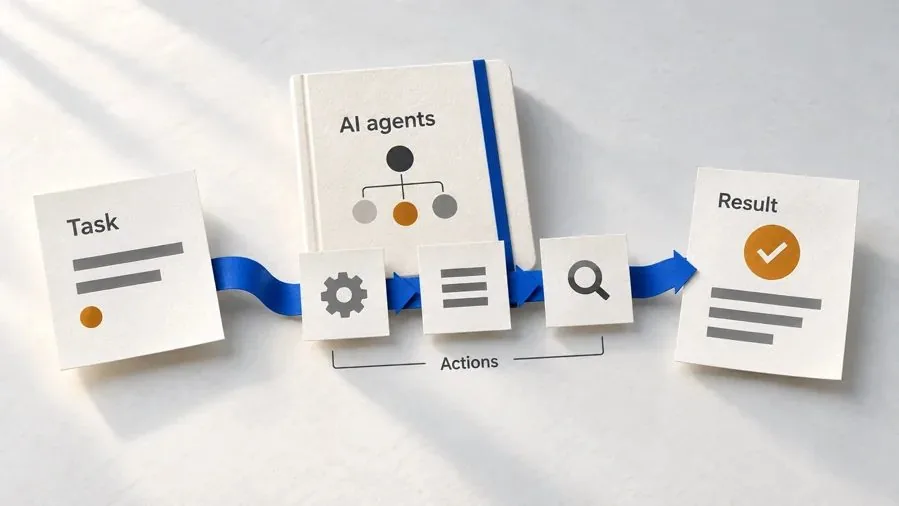
Introduction to Agentic AI and AI Agents
Learn how to direct an AI agent at work, with agentic workflows, RAG and MCP explained from a real first run.
Open the course →Toolkits and programme
Go deeper

Toolkit
SEO Accelerator Toolkit
150+ copy-paste AI prompts for audience research, keywords, content, technical SEO and link building.

Toolkit
GEO Accelerator Toolkit
100 detailed AI prompts for GEO audits, entity building, content structure and client reporting.

Programme
GEO Authority Accelerator
A complete GEO programme on our learner platform: nine modules and a 30, 60, 90 day roadmap. The GEO Accelerator Toolkit is included.
Claude certification practice
Preparing for a Claude certification?
Practice exams written by Arun: 600 questions across 4 mock exams and 2 drill banks. Unofficial preparation, not affiliated with Anthropic.
 CCAR-F
 CCAO-F
 CCDV-F
 CCAR-P
Keep going
This resource is part of a six-section course.
Follow the lectures on Udemy, then come back here whenever you want the files, requests and notes for a section.
Open the course AI Agents for Leaders Who Have No Time to Learn AI · Udemy