AI Agents for Leaders Who Have No Time to Learn AI · Section 4 · Prepared example
Marcus's Messages, a Prepared Example
The page the lectures open: the voice rules Marcus kept, changed and removed, two drafts that keep one promise, and the gap his rehearsal found.
 Arun Nagarathanam · 20 Oct 2026 Template · 28 of 42 in this course

Section 4 · Lectures 4.2 to 4.5
About this page
Prepared fictional example. Marcus, his 8-person team, the senior analyst and the senior sponsor are invented for this course. The voice rules, drafts and rehearsal are authored teaching material, not output from an observed agent run. No message has been sent.
This is the text of the communication page shown in Section 4. The same page, with its four tabs, is in the starter zip as practice/leadership-communication.html.
Files and links
- Open the interactive communication page/downloads/leaders/section-04/leadership-communication.html
- Marcus case files: the samples and decision it was prepared from/resources/library/leaders/marcus-case-files
Tab 01 · Lecture 4.2
Voice skill curation
Marcus supplies 3 permitted past updates and a spoken explanation, then curates the agent’s proposed rules before saving personal-voice.
Proposed rules, evidence and decisions
| Agent-proposed rule | Quoted sample evidence | Marcus’s curation action | Saved rule in personal-voice |
|---|---|---|---|
| 1. State decision and reason in the opening lines | Samples 1 & 2 openings + spoken note | KEEP | Open updates with the confirmed decision and practical reason before listing next steps. |
| 2. Never exceed 12 words per sentence | “We paused external file exports on staging.” “Use the internal test bucket today, effective immediately until audit closure.” (all under 12 words) | CHANGE (Too rigid; risks cutting needed reasons) | Prefer clear, concise sentences without removing the reason behind a request or condition. |
| 3. Close with “effective immediately until audit closure” | Sample 3 compliance note | REMOVE (One-off incident phrase from 2 months ago) | Excluded so isolated incident phrases and past dates never enter the reusable skill. |
The quoted evidence is what lets Marcus spot rule 3 at once: the phrase came from one unusual compliance note, not from how he writes.
Tab 02 · Lecture 4.3
Team and sponsor drafts
Two audience drafts built from the same confirmed Tuesday planning-meeting decision. Marcus checks each against the decision record. He changes one line in the sponsor draft, from “will keep delivery on schedule” to “should help us catch blockers earlier, and I will check after 3 weeks whether the meeting still runs over.” The team draft needs no change.
Subject: Tuesday planning meeting: 30-minute focus on blockers starting next week

Starting next Tuesday, we are moving routine status updates into the project folder so our 30-minute planning meeting can focus on decisions and blockers.

Please post your brief status update in the project folder before 9 a.m. each Tuesday. In the meeting, we will focus on what is stuck and assign one follow-up owner to each unresolved blocker. If you are stuck on something, bring it on Tuesday, even if you do not have a fix yet.

We will test this routine for 3 weeks and check together whether it reduces meeting spillover.

Thanks,
Marcus
Subject: Department planning cadence: 3-week trial to protect blocker resolution

From next Tuesday, routine status updates move into the project folder, so our 30-minute meeting can focus on decisions and blockers.

Every unresolved blocker raised in the meeting will have a single named owner so accountability stays clear. We will run this format as a 3-week trial before deciding whether to make it permanent. It should help us catch blockers earlier, and I will check after 3 weeks whether the meeting still runs over.

Best,
Marcus
Before approving drafts like these, check that each reader can tell
- What changed.
- What response you need from them.
- What you have not decided yet.
Tab 03 · Lecture 4.4
Spoken rehearsal
Marcus rehearses presenting the 3-week Tuesday trial aloud to the senior sponsor in the weekly delivery review. The agent drafts 3 plausible questions from his decision record: why now, what the team gains, and how he will know it worked.
One question, two answers
| Challenge question | “After 3 weeks, how will you know whether the meeting runs over less than it does now?” |
|---|---|
| First spoken attempt (gap exposed) | Explained how frustrating the long status round has become for the team, but never said how he will measure the change. |
| What he finds | The meeting has been running past its 30 minutes, but he has never counted by how much, so he has no starting number. |
The Tuesday meeting has been running past its 30 minutes. The new format is meant to bring it back inside 30 minutes. I do not yet have the starting number, so before this review I will check how long each of the last 4 Tuesday meetings actually ran. After 3 weeks, I will compare the new meetings against that number.
The questions are plausible challenges drawn from the supplied material, not a prediction of what the sponsor will say.
Tab 04 · Lecture 4.5
Where a broadcast message ends
After the team announcement goes out, a senior analyst replies that posting status updates before 9 a.m. on Tuesdays will be difficult, because she leads an early support call with a client in another time zone.
Another polished paragraph repeating the 9 a.m. rule is not the answer. A broadcast message can explain the decision and invite a response, but it cannot solve an obstacle that has not yet been heard out. Opening a two-way conversation is the subject of Section 5.
Prepared course illustration for Section 4. All drafts remain unsent teaching examples.
More in this section
Keep going
- Download the Section 4 starter materials (zip)
- Download the A4 study guide (PDF)
- Send messages your colleagues recognize as yours, Complete Resource Pack
- Notes: Send messages your colleagues recognize as yours
- Marcus Case Files: Writing Samples, Decision Record and Drafts
- Communication and People Leadership Workflow
- Leadership Communication Skill
- Conversation Rehearsal Skill
Keep building
More from Aruntastic
Practical courses for people who want to build useful things with AI.

AI SEO Course 2026: From Zero to Page-One Results
Research search demand, structure useful pages, and work through technical and off-page SEO.
Open the course →
AEO, GEO, AI SEO: Get Cited by ChatGPT, Google, Perplexity
Study how AI search finds information, and make your pages clear enough to be cited.
Open the course →
Microsoft PowerPoint Presentation 2026 for Professionals
Learn visual hierarchy, slide composition, typography and animation through practical work.
Open the course →
AI Agents for Leaders Who Have No Time to Learn AI
If you can delegate to a person, you can delegate to an AI agent. You keep the judgment. For managers and founders.
Open the course →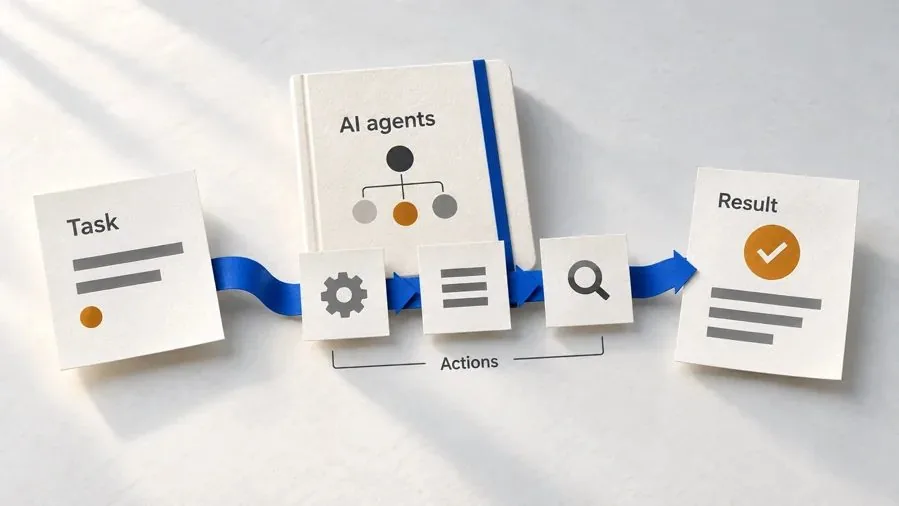
Introduction to Agentic AI and AI Agents
Learn how to direct an AI agent at work, with agentic workflows, RAG and MCP explained from a real first run.
Open the course →Toolkits and programme
Go deeper

Toolkit
SEO Accelerator Toolkit
150+ copy-paste AI prompts for audience research, keywords, content, technical SEO and link building.

Toolkit
GEO Accelerator Toolkit
100 detailed AI prompts for GEO audits, entity building, content structure and client reporting.

Programme
GEO Authority Accelerator
A complete GEO programme on our learner platform: nine modules and a 30, 60, 90 day roadmap. The GEO Accelerator Toolkit is included.
Claude certification practice
Preparing for a Claude certification?
Practice exams written by Arun: 600 questions across 4 mock exams and 2 drill banks. Unofficial preparation, not affiliated with Anthropic.
 CCAR-F
 CCAO-F
 CCDV-F
 CCAR-P
Keep going
This resource is part of a six-section course.
Follow the lectures on Udemy, then come back here whenever you want the files, requests and notes for a section.
Open the course AI Agents for Leaders Who Have No Time to Learn AI · Udemy