AI Agents for Leaders Who Have No Time to Learn AI · Section 4 · Skills
Leadership Communication Skill
Draft and adapt leadership announcements or recommendations for different audiences while preserving the confirmed decision, conditions, and personal voice.
 Arun Nagarathanam · 20 Oct 2026 Toolkit · 31 of 42 in this course

Section 4 · Skill
How to use this file
An exclusive resource for students of Arun's AI Agents for Leaders Who Have No Time to Learn AI course.
Draft and adapt leadership announcements or recommendations for different audiences while preserving the confirmed decision, conditions, and personal voice.
Follow along
- Save the file below as
skills/leadership-communication/SKILL.md, beside the communication workflow. It reads the sharedskills/meetings-and-follow-through/references/working-contract.md, which is in the starter zip and on the meeting workflow page. - You rarely call this skill on its own. The workflow page lists when it is used and what it passes on.
Before you rely on it
These are authored course materials. They have not been run in a live agent yet, so nothing here proves that a tool will load them, follow them or save anything. Try them on the fictional practice files first and check every result yourself.
File 1
leadership-communication/SKILL.md
---
name: leadership-communication
description: Draft and adapt leadership announcements or recommendations for different audiences while preserving the confirmed decision, conditions, and personal voice.
---

# Leadership communication

Help the leader explain a confirmed decision or recommendation to one or more audiences (such as an immediate delivery team and a senior sponsor) without altering the underlying commitment. Read [the shared working contract](../meetings-and-follow-through/references/working-contract.md) first.

## Inputs and voice alignment

1. Retrieve or request the confirmed decision record (choice, reasons, conditions, tradeoffs, and review date).
2. Apply curated rules from [personal-voice](../personal-voice/SKILL.md) when available.
3. Identify each target audience and what work the message performs for them:
   - **Immediate team**: when the change starts, what routine steps change, how to prepare, and how to raise an unresolved blocker safely.
   - **Senior stakeholder or sponsor**: the operational reason for the change, how accountability is maintained, and what will be observed at the review point before making the change permanent.

## Commitment fidelity checks

1. Keep the decision, conditions, and commitments identical across all audience drafts while adjusting detail and tone for each reader's role.
2. Never inflate a bounded operational change into a guarantee that all future delays or coordination issues will disappear.
3. Never phrase efficiency rules in a way that discourages team members from surfacing early blockers or questions.
4. Verify that every recipient can see what changed, what response is needed from them, and what has not been decided yet. All messages remain unsent drafts for the leader's inspection.
More in this section
Keep going
- Download the Section 4 starter materials (zip)
- Download the A4 study guide (PDF)
- Send messages your colleagues recognize as yours, Complete Resource Pack
- Notes: Send messages your colleagues recognize as yours
- Marcus's Messages, a Prepared Example
- Marcus Case Files: Writing Samples, Decision Record and Drafts
- Communication and People Leadership Workflow
- Conversation Rehearsal Skill
Keep building
More from Aruntastic
Practical courses for people who want to build useful things with AI.

AI SEO Course 2026: From Zero to Page-One Results
Research search demand, structure useful pages, and work through technical and off-page SEO.
Open the course →
AEO, GEO, AI SEO: Get Cited by ChatGPT, Google, Perplexity
Study how AI search finds information, and make your pages clear enough to be cited.
Open the course →
Microsoft PowerPoint Presentation 2026 for Professionals
Learn visual hierarchy, slide composition, typography and animation through practical work.
Open the course →
AI Agents for Leaders Who Have No Time to Learn AI
If you can delegate to a person, you can delegate to an AI agent. You keep the judgment. For managers and founders.
Open the course →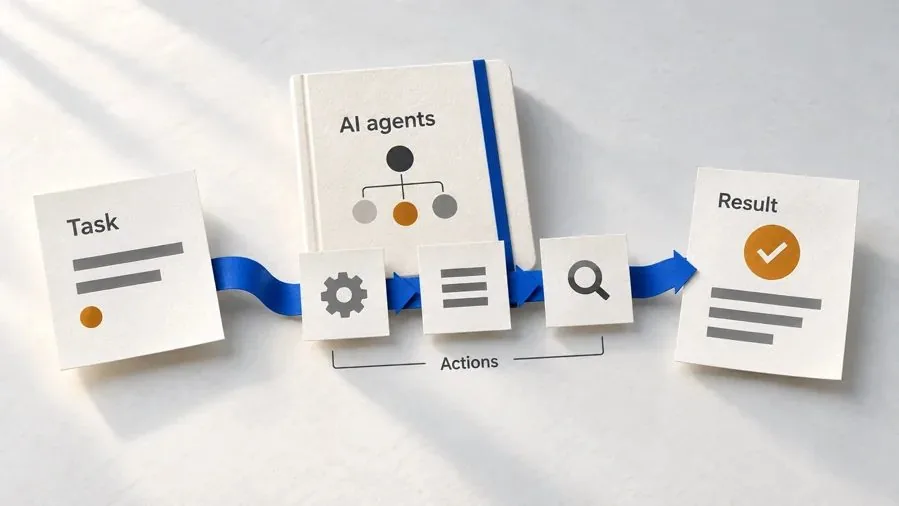
Introduction to Agentic AI and AI Agents
Learn how to direct an AI agent at work, with agentic workflows, RAG and MCP explained from a real first run.
Open the course →Toolkits and programme
Go deeper

Toolkit
SEO Accelerator Toolkit
150+ copy-paste AI prompts for audience research, keywords, content, technical SEO and link building.

Toolkit
GEO Accelerator Toolkit
100 detailed AI prompts for GEO audits, entity building, content structure and client reporting.

Programme
GEO Authority Accelerator
A complete GEO programme on our learner platform: nine modules and a 30, 60, 90 day roadmap. The GEO Accelerator Toolkit is included.
Claude certification practice
Preparing for a Claude certification?
Practice exams written by Arun: 600 questions across 4 mock exams and 2 drill banks. Unofficial preparation, not affiliated with Anthropic.
 CCAR-F
 CCAO-F
 CCDV-F
 CCAR-P
Keep going
This resource is part of a six-section course.
Follow the lectures on Udemy, then come back here whenever you want the files, requests and notes for a section.
Open the course AI Agents for Leaders Who Have No Time to Learn AI · Udemy