GEO & AI Search
HARO and Beyond: Reactive PR for GEO
Quick Answer
Reactive PR through platforms like HARO, Qwoted, and Featured.com places your expertise on publications AI engines already cite-the fastest path to citation authority. HARO was acquired and relaunched by Featured.com in April 2025, with users reporting increased success rates. Analysis shows Business & Finance requests make up 27% of all queries, and expert commentary requests exceed 50% of opportunities. Success requires responding within 60 minutes with 4-5 specific, quotable sentences. One quote in a Tier 1 publication can generate citation authority that persists for months.
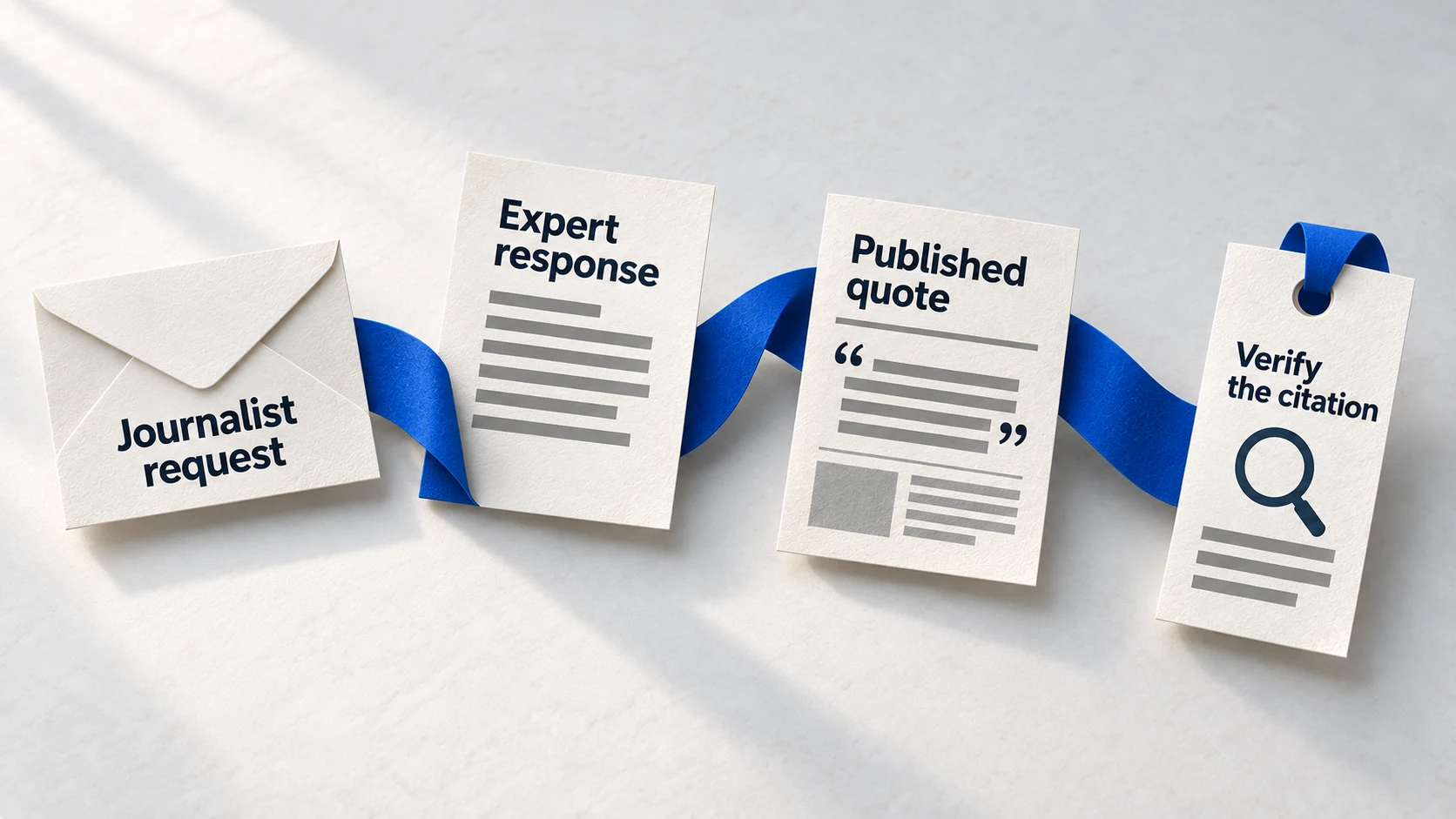
Right now, a journalist at a major publication needs an expert source. They've posted a request. Dozens of people will respond. One will get quoted. That one quote will appear in AI citations for months.
Proactive PR-pitching stories, building relationships, creating news-takes months to generate results. Reactive PR responds to existing demand. Journalists need sources today. You provide expertise. They publish. AI learns your name. (For the complete PR approach, see our Digital PR Playbook for GEO.)
The efficiency math is compelling: one HARO response that lands in a Tier 1 publication delivers more GEO value than a month of other PR activities.
Why Reactive PR Is a GEO Multiplier
Reactive PR works because it inverts the traditional PR challenge. Instead of convincing journalists to cover you, you answer their existing questions. The demand already exists-you're fulfilling it.
50%+
of journalist requests specifically seek expert commentary
More than half of all HARO and similar platform requests are looking for quotable expertise-exactly what builds AI citation authority.
Source: AllDigitalPR →27%
of requests fall into Business & Finance category
Business-related expertise is highly sought-if you have professional experience, there's sustained demand for your insights.
Source: AllDigitalPR →The Citation Chain Effect
When a journalist quotes you in an authoritative publication, multiple GEO benefits compound (this is the core of authority building in the AI era):
- Immediate: Third-party mention on AI-trusted publication
- Short-term: AI engines index the article, learn your name-topic association
- Medium-term: Other publications may cite the original article, amplifying mentions
- Long-term: AI systems cite you directly based on established authority pattern
The efficiency advantage: One successful reactive PR response takes 15-30 minutes. The resulting mention can influence AI citations for 6-12 months. No other PR tactic offers this effort-to-impact ratio for GEO.
HARO, Qwoted, Featured: Platform Comparison
Multiple platforms connect journalists with sources. Each has different characteristics, user bases, and success rates. For GEO purposes, publication quality matters more than response volume.
| Platform | Status (2025) | Cost | Best For |
|---|---|---|---|
| HARO (Featured.com) | Active ✓ | Free newsletter | High volume, broad categories, established journalist base |
| Qwoted | Active ✓ | Free tier + paid | Higher-quality requests, profile matching, verified journalists |
| Featured.com Direct | Active ✓ | Free | Modern interface, higher conversion rates reported |
| Source of Sources (SOS) | Active ✓ | Free | Emerging alternative, growing journalist network |
| Connectively (Cision) | Discontinued | - | Shut down Dec 2024 after HARO rebrand |
HARO's 2025 Evolution
After a turbulent transition-Cision acquired HARO, rebranded it to Connectively, then shut it down-Featured.com purchased the HARO brand in April 2025 and relaunched it as a free newsletter service.
Post-Relaunch Performance:
- • 15,000+ connections in first 15 days
- • Users report higher conversion rates than old HARO
- • 4-5 sentence responses achieving placements
- • Combined with Featured's modern interface
Platform Selection for GEO
For maximum GEO impact, prioritize platform selection based on publication quality, not request volume:
- • HARO/Featured: Broad reach, good for starting out, high volume
- • Qwoted: Higher-quality journalist verification, better for targeted approaches
- • Multi-platform approach: Subscribe to all major platforms, respond selectively to high-quality opportunities
The Response Strategy That Gets Quoted
Most HARO responses never get read. Competition is intense-journalists receive dozens to hundreds of responses per query. The responses that win share specific characteristics.
Speed: Respond Within 60 Minutes
The highest conversion rates come from responses sent within 15-60 minutes of the query. If you're not in the first 50 responses, your chances drop significantly. Set up email alerts and respond immediately to relevant queries.
Research finding: YouTube case studies show conversion rates peak for responses within the first hour.
Brevity: 4-5 Sentences Maximum
Journalists need quotable content, not essays. The ideal response is a direct answer in 2-3 sentences, followed by 1-2 sentences of supporting context. Long responses get skipped.
Pattern: Direct answer + one specific data point or example + brief credential context.
Specificity: Concrete Data Over Generic Advice
"Businesses should focus on customer experience" loses to "In our work with 47 businesses, customer experience improvements drove 23% revenue increases." Specificity is quotable; generality isn't. This is the same principle that makes thought leadership content get cited.
Example: Numbers, timeframes, named examples, verifiable claims.
Relevance: Match the Query Exactly
Answer exactly what was asked, not what you wish was asked. If the query requests "3 tips for X," provide exactly 3 tips. If it asks for a specific perspective, stay on that angle.
Filter: Only respond to queries where you have genuine, specific expertise. Skip general topics.
Response Template
[Direct answer to the question - 2 sentences max]
[One specific example or data point that supports the answer]
[Brief credential: "In my X years of Y..." - 1 sentence]
[Sign-off with name, title, company, and email/LinkedIn]
Total length: 4-5 sentences. Anything longer reduces your chances.
Winning Response Traits
- • Sent within 60 minutes of query
- • 4-5 sentences total length
- • Specific numbers or examples
- • Direct answer in first sentence
- • Clear, quotable phrasing
Responses That Get Ignored
- • Sent hours or days later
- • Multiple paragraphs of context
- • Vague, generic advice
- • Doesn't answer the specific question
- • Self-promotional pitch hidden in response
Targeting Tier 1 Publications
Not all HARO placements are equal for GEO. A quote in Forbes or Business Insider delivers exponentially more AI citation value than a mention on a low-authority blog. Filter aggressively for high-impact opportunities.
Publication Filtering Strategy
Check Publication Disclosure
Many HARO queries disclose the publication. Prioritize requests that name recognized outlets (Forbes, Entrepreneur, Inc, industry-specific authorities). Anonymous queries are lower priority.
Verify AI Citation History
Test whether the publication appears in AI responses. Query ChatGPT and Perplexity with relevant topics. If the publication never appears in citations, the GEO value is limited.
Assess Topic Alignment
Even high-authority publications have varying AI citation rates by topic. A business publication's tech coverage may get cited more than its lifestyle content. Match your expertise to their strongest areas.
Publication Tiers for GEO
Tier 1: Prioritize
Forbes, Business Insider, Entrepreneur, TechCrunch, major industry publications. These are frequently cited by AI systems.
Tier 2: Good Value
Industry verticals, established niche publications, regional business journals. Solid authority signals.
Tier 3: Lower Priority
Generic blogs, unnamed publications, content farms. Limited GEO value; skip unless building initial portfolio.
Scaling Reactive PR for Consistent Citations
Sporadic HARO responses generate sporadic results. Consistent reactive PR builds compounding citation authority. The goal is sustainable volume on high-quality opportunities.
Daily Monitoring System
Set up email filters for HARO, Qwoted, and Featured.com alerts. Check morning and afternoon batches. Block 30 minutes daily for review and response-treat it as non-negotiable calendar time.
Target: Review all relevant queries within 2 hours of receipt.
Response Templates
Pre-write paragraphs for your core expertise areas. When relevant queries appear, customize rather than write from scratch. Templates reduce response time from 30 minutes to 10 minutes.
Categories: Create 5-10 template paragraphs covering your main expertise topics.
Quality Over Quantity Filter
Respond to 3-5 high-quality opportunities per day rather than 15-20 mediocre ones. Each response should target Tier 1 or Tier 2 publications. Skip requests that don't meet your criteria.
ROI math: 5 responses × 12% success rate × Tier 1 publications = more value than 20 responses × 5% × Tier 3.
Tracking and Optimization
Track every response: query topic, publication (if known), response time, outcome. After 50 responses, analyze patterns. Which topics convert best? What response length wins? Optimize based on data.
Metrics: Response count, placement rate, publication tier distribution, AI citation appearances.
The compounding effect: Each successful placement increases your credibility for future pitches. Journalists research sources-seeing your name in other publications increases response rates. Early effort builds momentum that makes later effort more effective.
FAQ
Is HARO still active in 2026?
What's a realistic success rate for HARO pitches?
How does reactive PR help with AI citations?
Should I focus on HARO or guest posting for GEO?
Ready to Turn Journalist Requests into Citations?
Reactive PR is the most efficient path to Tier 1 publication mentions.
One well-placed quote can create lasting AI citation authority.
Take the GEO Readiness Quiz →60 seconds · Personalized report · Free
Continue Learning
Dive deeper into AI search with these related articles:
The Digital PR Playbook for GEO: Earned Media as Authority Signals
85% of AI brand mentions come from third-party sources. Learn the Digital PR strategies that build citation authority—from thought leadership to reactive PR to directory listings.
Thought Leadership Content That AI Wants to Cite
Original research gets 30-40% more AI citations. Learn how to create thought leadership content with unique data, named frameworks, and expert positioning that makes AI engines quote you.
Authority Building in the AI Era: Beyond Backlinks
Backlinks aren't enough anymore. Learn the authority signals AI engines actually prioritize.