GEO & AI Search
GEO Toolkit Category 1: Entity and Authority Prompts (Complete Collection)
Quick Answer
Entity and Authority prompts establish your brand's AI-recognizable identity before you optimize content. This category includes 10 prompts covering Entity Readiness Audit, About Page Optimization, Schema Completeness, Cross-Platform Consistency, sameAs Connection Mapping, Knowledge Panel Assessment, Author Bio Optimization, Credentials Verification, Third-Party Mention Audit, and Entity Gap Analysis. AI platforms verify who you are before deciding whether to cite you. These prompts build that foundation.
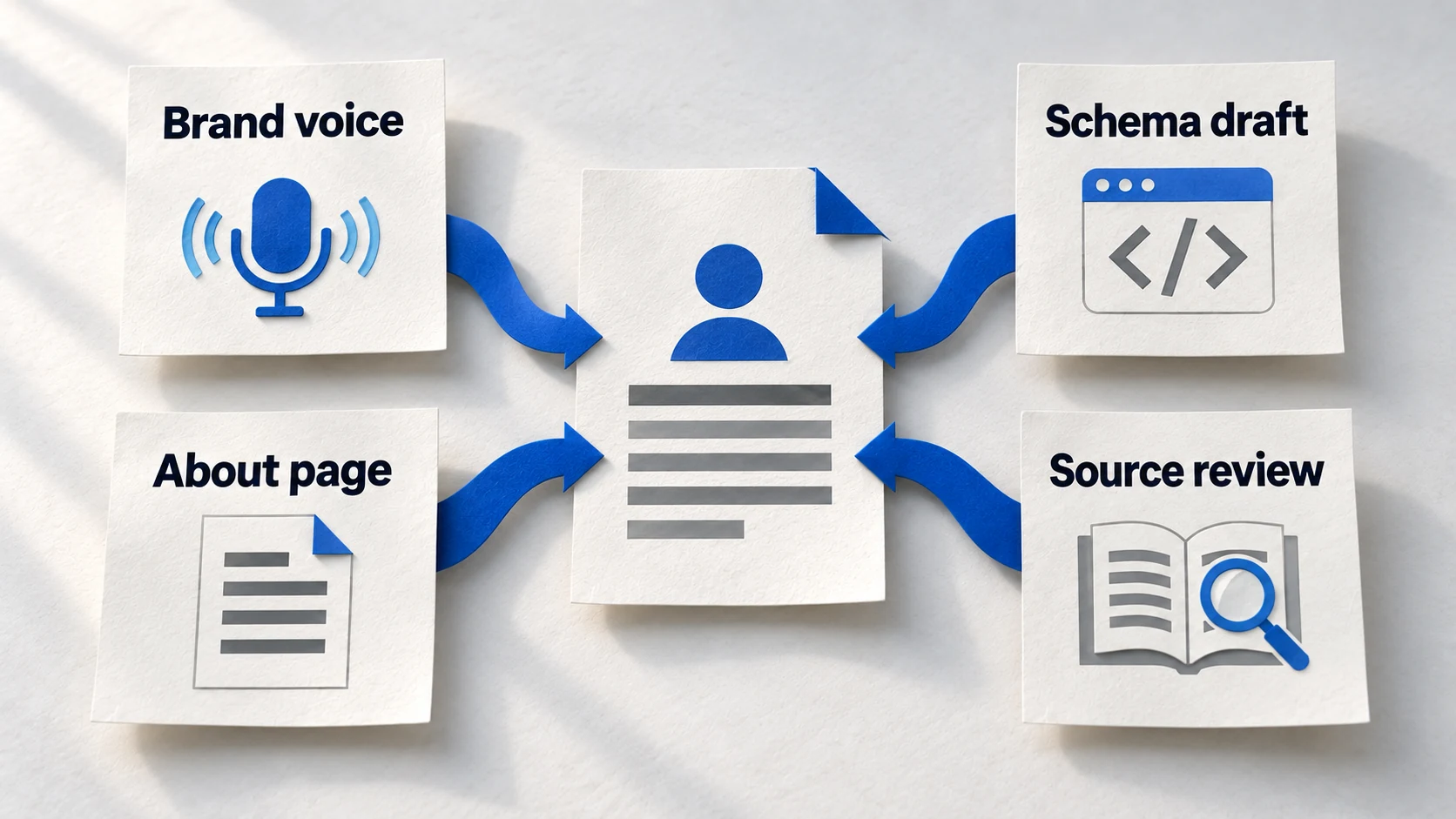
Content optimization without entity foundation is like building a house on sand. You can have perfect answer capsules, flawless heading structure, and comprehensive FAQ sections-but if AI platforms don't know who you are, they won't cite you.
The Entity and Authority category is deliberately positioned first in the GEO Accelerator Toolkit. Before you can optimize content for AI citations, AI platforms need to understand your brand identity, verify your credentials, and confirm you're a real entity worth trusting. These 10 prompts systematically build that foundation.
Each prompt is designed to produce specific, actionable outputs-not vague recommendations. You'll get audit scorecards, rewrite templates, schema markup, and priority-ranked action items. Copy, paste, add your information, and execute.
Why Entity Prompts Come First
AI platforms don't just read your content-they verify your identity. When ChatGPT or Perplexity considers citing your website, they're asking: "Who is this? Are they credible? Can we trust this information?" Entity signals answer those questions before content quality even comes into play.
86%
of AI brand mentions come from brand-managed sources
This means AI platforms heavily rely on what you tell them about yourself-but only if your entity signals are clear enough for them to trust. Poor entity signals = invisible brand.
Source: Yext (6.8M citations study)Definition
Entity
In GEO context, an entity is a distinct, identifiable thing-a person, organization, product, or concept-that AI platforms can recognize and connect across different data sources. Your brand becomes an 'entity' when AI can confidently say 'this website, this LinkedIn profile, and this Wikipedia mention all refer to the same thing.'
Think of entity building as creating your digital passport. Without it, you're an anonymous visitor. With it, AI platforms can verify your identity, check your credentials, and confidently recommend you as a source.
Entity Building Progression
Week 1
Foundation Audit
Prompts #1-3: Assess current entity status, optimize About page, verify consistency
Week 2
Schema & Connections
Prompts #4-6: Complete schema markup, map sameAs links, assess Knowledge Panel potential
Week 3
Author Authority
Prompts #7-8: Optimize author bios, verify credentials visibility
Week 4
Validation & Gaps
Prompts #9-10: Audit third-party mentions, identify remaining gaps
Schema Foundation Prompts
Schema markup is how you explicitly tell AI platforms what your entity is. Without schema, AI has to guess based on context. With proper schema, you're providing verified information they can trust.
Prompt #1: Entity Readiness Audit
What it does: Creates a comprehensive 5-dimension scorecard of your current entity signals. This is your diagnostic-it tells you exactly where your entity is strong and where it's invisible to AI platforms.
Your input: Your homepage URL and About page URL.
Expected output: Scorecard (1-5 per dimension), specific gaps identified, and priority-ranked fixes.
What to do next: Focus on the lowest-scoring dimension first. Use subsequent prompts (#2-10) to address specific gaps.
Copy this prompt:
You are a GEO (Generative Engine Optimization) specialist. Analyze the following website for entity recognition by AI platforms.

Evaluate these 5 entity dimensions (score 1-5 each):
1. About Page Quality: Does the page clearly establish who the brand/person is, what they do, and why they're credible?
2. Schema Signals: Is Organization/Person schema likely present? Are sameAs links connecting to other platforms?
3. Author Attribution: Is content attributed to named individuals with credentials visible?
4. Third-Party Validation: Based on the claims made, is there evidence of external validation (awards, media mentions, industry recognition)?
5. Cross-Platform Consistency: Does the brand present consistently across visible platforms?

For each dimension:
- Score 1-5
- Identify the specific gap
- Provide one concrete fix

End with an Entity Readiness Score (out of 25) and the single highest-priority improvement.

Website to analyze:
[PASTE YOUR HOMEPAGE URL AND ABOUT PAGE URL HERE]
Prompt #2: Entity Home Optimizer (About Page)
What it does: Rewrites your About page using the Entity Home framework-the structure that tells AI platforms exactly who you are, what you do, and why you're credible. No fluff, just the signals AI needs.
Your input: Your current About page content (full text).
Expected output: Rewritten About page with clear entity statement, credentials, topic expertise, social proof, and verification elements.
What to do next: Compare output to current page. Implement structural changes while maintaining brand voice. Add the generated Organization schema.
Copy this prompt:
You are a GEO content strategist. Rewrite the following About page using the Entity Home framework for maximum AI recognition.

The Entity Home framework requires:
1. Entity Statement: One clear sentence defining who/what this brand is
2. Credibility Signals: Specific achievements, credentials, or recognition (not generic claims)
3. Topic Expertise: Explicit list of areas this brand has authority to speak on
4. Social Proof: Named clients, publications, awards, or metrics that verify claims
5. Contact & Verification: Clear ways AI can verify this entity exists

Rewrite the About page to include all 5 elements. Maintain brand voice but prioritize clarity over creativity.

After the rewrite, provide:
- Organization schema markup for this entity
- 3 sameAs URLs that should be linked (infer from content)
- The single most important credibility signal to add if missing

Current About page content:
[PASTE YOUR ABOUT PAGE CONTENT HERE]
Prompt #3: Cross-Platform Consistency Checker
What it does: AI platforms cross-reference information across multiple sources. Inconsistent information-different founding dates, varied descriptions, conflicting credentials-creates confusion and reduces citation confidence. This prompt audits your key platforms for consistency.
Your input: Content from your website About page, LinkedIn profile, and any other major platform profiles.
Expected output: Inconsistency report highlighting conflicts, unified messaging template, and priority fixes.
What to do next: Update all platforms to match the unified template. Start with highest-traffic platforms (LinkedIn, Google Business Profile if applicable).
Copy this prompt:
You are an entity consistency auditor. Compare the following brand information across platforms to identify inconsistencies that confuse AI platforms.

Analyze for consistency across:
1. Brand/Person Name: Exact match? Variations?
2. Founding Date/Career Start: Same year everywhere?
3. Core Description: Do the descriptions align?
4. Key Credentials: Listed consistently? Missing on some platforms?
5. Contact Information: Phone, email, address match?
6. Expertise Claims: Same topics/skills emphasized?

For each inconsistency found:
- Quote the conflicting information
- Explain why this hurts entity recognition
- Provide the recommended unified version

End with a Consistency Score (1-10) and a prioritized fix list.

Platform content to compare:

WEBSITE ABOUT PAGE:
[PASTE CONTENT]

LINKEDIN PROFILE:
[PASTE CONTENT]

OTHER PLATFORM (if applicable):
[PASTE CONTENT]
Prompt #4: Schema Completeness Audit
What it does: Having schema markup and having complete schema markup are different. Many sites have basic Organization schema that misses critical properties AI platforms need-sameAs links, expertise areas, credential verification. This prompt audits your schema for GEO completeness.
Your input: Your current schema markup (view source or use Rich Results Test to extract).
Expected output: Property-by-property audit, missing elements identified, and complete schema template with additions.
What to do next: Implement the enhanced schema. Test with Google's Rich Results Test. Monitor for errors.
Copy this prompt:
You are a schema markup specialist for GEO. Audit the following schema for completeness-not just validity, but whether it contains the properties AI platforms need for entity recognition.

Required properties for GEO effectiveness:
- Organization/Person: @type, name, url, description, logo/image
- sameAs: Links to all official social profiles and directories
- knowsAbout: Explicit expertise areas
- founder/employee: Person schema for key individuals
- award, memberOf: Third-party validation signals

For the provided schema:
1. List each property present
2. List each property missing (from the required list)
3. Rate schema completeness (1-10) with explanation
4. Provide the enhanced schema markup with missing properties added

Current schema to audit:
[PASTE YOUR CURRENT SCHEMA MARKUP HERE]

If you don't have schema, paste your About page content and I'll generate complete schema from scratch.
Prompt #5: sameAs Connection Mapper
What it does: The sameAs property tells AI platforms "these different profiles all refer to the same entity." Research shows sameAs-connected entities receive 2-3x higher weighting in AI responses. This prompt maps all your digital presences that should be connected.
Your input: Your brand name and website URL.
Expected output: Complete list of platforms to claim, URLs to include in sameAs, priority tiers, and implementation checklist.
What to do next: Claim any platforms you haven't already. Add sameAs URLs to your schema. Verify each profile is complete and consistent.
Copy this prompt:
You are a digital presence mapper for entity recognition. Create a comprehensive sameAs connection strategy for the following brand.

Brand: [YOUR BRAND NAME]
Website: [YOUR WEBSITE URL]
Type: [Organization / Person / Both]
Industry: [YOUR INDUSTRY]

Generate:

1. Platform Audit Checklist
   List all platforms where this type of brand should have a presence:
   - Social (LinkedIn, Twitter, Facebook, Instagram, YouTube)
   - Professional (Crunchbase, AngelList, Glassdoor)
   - Industry-specific directories
   - Review platforms (if applicable)
   - Knowledge bases (Wikipedia, Wikidata)

2. sameAs URL Template
   Provide the exact URLs that should appear in sameAs array (use placeholder format for ones that need to be claimed):
   "sameAs": [
     "https://linkedin.com/company/[brand]",
     "https://twitter.com/[brand]",
     etc.
   ]

3. Priority Tiers
   - Tier 1 (Critical): Must have for AI recognition
   - Tier 2 (Important): Significantly improves entity signals
   - Tier 3 (Beneficial): Nice to have

4. Missing Presence Checklist
For any platform the brand likely doesn't have yet, explain why it matters for GEO. Pro Tip
The sameAs property is one of the most underutilized entity signals. A brand with 10+ connected profiles sends a much stronger entity signal than a brand with just a website. Start with LinkedIn, Twitter, and Crunchbase-these are heavily referenced by AI platforms.
Author Authority Prompts
Organizations have entity signals, but content is written by people. AI platforms increasingly look for author attribution-who wrote this, what are their credentials, and can we verify their expertise? Author authority prompts establish the human experts behind your content.
Prompt #6: Knowledge Panel Readiness Assessment
What it does: Google Knowledge Panels are strong entity verification signals. If Google displays a Knowledge Panel for your brand, AI platforms treat your entity as verified. This prompt assesses whether you're Knowledge Panel-ready and what gaps to close.
Your input: Your brand information, current Wikipedia/Wikidata status, and notable achievements.
Expected output: Readiness score, specific gaps, and action plan for Knowledge Panel eligibility.
What to do next: Focus on the gaps identified. For most brands, Wikidata entry + consistent sameAs + notable third-party mentions are the key triggers.
Copy this prompt:
You are a Knowledge Panel eligibility assessor. Evaluate whether the following brand/person is ready for a Google Knowledge Panel.

Brand/Person: [NAME]
Type: [Organization / Person]
Website: [URL]
Industry: [INDUSTRY]
Notable Achievements: [LIST 3-5 NOTABLE ITEMS - media features, awards, significant clients, etc.]
Current Wikidata Entry: [Yes/No - link if yes]
Current Wikipedia Entry: [Yes/No - link if yes]

Assess:

1. Notability Score (1-10)
   - Is there enough third-party coverage to establish notability?
   - List specific evidence of notability

2. Entity Verification Score (1-10)
   - Can Google verify this entity exists across multiple sources?
   - Which sources currently mention this entity?

3. Knowledge Graph Signals (1-10)
   - Are the right structured data signals in place?
   - sameAs connections, schema markup, Wikidata

4. Gap Analysis
   - What's the single biggest gap preventing Knowledge Panel?
   - What are secondary gaps?

5. Action Plan
   - 3 specific actions to improve Knowledge Panel readiness
   - Priority order with expected timeline
Prompt #7: Author Bio Optimizer
What it does: Author bios are how AI platforms verify content credibility. A weak bio ("John is a content writer") gives no authority signal. A strong bio connects the author to their expertise, credentials, and verifiable presence. This prompt transforms author bios for AI recognition.
Your input: Current author bio + credentials and experience to include.
Expected output: Optimized bio, Person schema, and recommended sameAs links for the author.
What to do next: Update author bios across all content. Add Person schema to author pages. Ensure author LinkedIn matches bio claims.
Copy this prompt:
You are an author authority specialist. Optimize the following author bio for AI recognition and E-E-A-T signals.

Current author bio:
[PASTE CURRENT BIO]

Additional information to incorporate:
- Years of experience: [X years]
- Credentials: [degrees, certifications, titles]
- Notable work: [publications, clients, projects]
- Expertise areas: [specific topics]
- Social profiles: [LinkedIn, Twitter, etc.]

Create:

1. Optimized Author Bio (75-150 words)
   - Lead with credibility signal (title, years, notable client)
   - Include specific expertise areas (not vague)
   - Reference verifiable credentials
   - End with connection to current role

2. Person Schema Markup
   - Include all required properties for AI recognition
   - sameAs links to professional profiles
   - knowsAbout properties

3. Bio Variations
   - Short version (25-50 words) for article footers
   - LinkedIn-optimized version
   - Twitter bio (160 characters)

4. Missing Authority Signals
   - What credentials should this author highlight more?
   - What third-party validation is missing?
Prompt #8: Credentials Verification Audit
What it does: AI platforms verify credentials-they check if claimed expertise is backed by evidence. This prompt audits whether your credentials are verifiable (can AI find external confirmation?) or unverifiable (claims without evidence).
Your input: List of credentials, achievements, and claims made on your website.
Expected output: Verification status for each credential, gaps to fill, and recommended actions.
What to do next: For unverifiable credentials, either get external documentation or reduce prominence. Focus on verifiable credentials in author bios and About pages.
Copy this prompt:
You are a credential verification specialist. Audit the following claims for verifiability-can AI platforms find external confirmation of these credentials?

Claims to verify:
[LIST ALL CREDENTIALS, ACHIEVEMENTS, AND CLAIMS FROM YOUR WEBSITE]

For each claim, assess:

1. Claim: [The exact claim]
2. Verification Status:
   - VERIFIED: External source confirms (list source)
   - PARTIALLY VERIFIED: Some external evidence exists
   - UNVERIFIED: No external confirmation found
   - UNVERIFIABLE: Nature of claim makes verification impossible

3. Verification Sources
   - Where should this claim be externally documented?
   - LinkedIn, awards database, media mentions, certifications, etc.

4. Recommended Action
   - If unverified: How to get external verification?
   - If unverifiable: Should claim be reduced in prominence?

End with:
- Overall Verification Score (% of claims verified)
- Top 3 credentials to strengthen
- Claims to consider removing or rewording
Third-Party Validation Prompts
What you say about yourself matters. What others say about you matters more. AI platforms heavily weight third-party mentions-if authoritative sources reference your brand, you're more likely to be cited. These prompts help you audit and build third-party validation.
85%
of AI brand mentions come from third-party sources
Your website alone isn't enough. AI platforms look for external validation before citing you. Third-party mentions on authoritative sites significantly boost citation probability.
Source: AirOps ResearchPrompt #9: Third-Party Mention Audit
What it does: Inventories your current third-party presence-where you're mentioned, who references you, and how AI platforms would perceive your external authority. Most brands underestimate their existing mentions and miss opportunities to leverage them.
Your input: Brand name, known mentions (media coverage, directory listings, guest posts, etc.).
Expected output: Mention inventory, authority ranking of sources, gaps to fill, and amplification opportunities.
What to do next: Ensure all mentions are linked in your schema (if they reference you by name). Identify high-authority gaps to pursue. Use learnings for Digital PR strategy (Category 4).
Copy this prompt:
You are a third-party mention auditor for GEO. Inventory and analyze the following brand's external presence.

Brand: [YOUR BRAND NAME]
Industry: [YOUR INDUSTRY]

Known third-party mentions:
[LIST ALL KNOWN MENTIONS - media coverage, directory listings, guest posts, podcast appearances, awards, etc.]

Analyze:

1. Mention Inventory
   For each mention:
   - Source name and URL
   - Authority level (High/Medium/Low based on domain reputation)
   - Mention type (citation, quote, directory listing, award, etc.)
   - Is the mention linked to your website?

2. Authority Distribution
   - How many High/Medium/Low authority mentions?
   - Are mentions concentrated in one type or distributed?

3. Gap Analysis
   - What types of mentions are missing? (e.g., media coverage, industry awards, directory listings)
   - Which high-authority sources in your industry should mention you but don't?

4. Amplification Opportunities
   - Which existing mentions could be leveraged more (added to sameAs, featured on site)?
   - Which mentions are underutilized?

5. Priority Targets
   - Top 5 third-party sources to pursue next
   - Approach strategy for each
Prompt #10: Entity Gap Analysis (Comprehensive)
What it does: After running prompts #1-9, you'll have lots of findings. This prompt synthesizes everything into a prioritized action plan-the comprehensive gap analysis that tells you exactly what to do next and in what order.
Your input: Outputs from prompts #1-9 (or as many as you've completed).
Expected output: Prioritized gap list, 30/60/90 day action plan, and quick wins vs. long-term projects.
What to do next: Execute the action plan. Re-run Prompt #1 (Entity Readiness Audit) at 30 and 60 days to measure progress.
Copy this prompt:
You are a GEO strategist. Synthesize the following entity audit findings into a prioritized action plan.

Findings from Entity Audits:
[PASTE OUTPUTS FROM PROMPTS #1-9 - include as many as you've completed]

Create a comprehensive Entity Gap Analysis:

1. Gap Priority Matrix
   Categorize all identified gaps into:
   - Critical (blocks AI visibility): Must fix immediately
   - Important (significantly hurts visibility): Fix within 30 days
   - Beneficial (improves visibility): Fix within 90 days
   - Nice-to-have: When resources allow

2. Quick Wins (< 1 hour each)
   List 5 actions that can be completed quickly with high impact

3. 30-Day Action Plan
   Week-by-week breakdown of priority actions

4. 60-Day Milestone Goals
   What should be true about entity signals at 60 days?

5. 90-Day Vision
   Full entity maturity-what does success look like?

6. Resource Requirements
   - Actions you can do yourself
   - Actions requiring external help (developer, PR, etc.)
   - Estimated time investment

7. Success Metrics
   How to measure entity improvement:
   - Entity Readiness Score progression
   - Knowledge Panel status
   - AI visibility in test queries
Implementation Sequence
Don't run all 10 prompts at once. The Entity category is designed as a sequence-each prompt builds on the previous. Here's the recommended implementation order:
Entity Prompt Implementation Order
- 1
Audit First (#1, #3)
Run Entity Readiness Audit and Consistency Checker to understand current state
- 2
Foundation (#2, #4, #5)
Optimize About page, complete schema, map sameAs connections
- 3
Author Authority (#6, #7, #8)
Knowledge Panel assessment, author bios, credential verification
- 4
Synthesis (#9, #10)
Third-party audit and comprehensive gap analysis
Entity Category Completion Checklist
- Entity Readiness Score: 20+ out of 25
- About page follows Entity Home framework
- Cross-platform consistency verified
- Schema includes all required properties + sameAs
- Author bios optimized with Person schema
- Credentials are externally verifiable
- Third-party mention inventory complete
- 90-day action plan in place
FAQ
How long does entity building take before I see AI visibility results?
Should I run all 10 prompts at once or space them out?
What if I don't have a company-just a personal brand?
Can I skip the schema prompts if I already have schema markup?
Which prompt is most important if I can only run one?
Want the Complete 100-Prompt Toolkit?
This post covers Category 1 (prompts 1-10). The full GEO Accelerator Toolkit includes 100 prompts across 6 categories.
The complete toolkit is available in the GEO Accelerator Course.
Take the GEO Readiness Quiz →60 seconds · Personalized report · Free
Continue Learning
Dive deeper into AI search with these related articles:
The GEO Accelerator Toolkit: AI Prompts for Every Stage of Optimization
100 copy-paste AI prompts organized into 6 categories covering entity building, content structuring, AI platform optimization, digital PR, and measurement. Sample prompts from each category included.
Entity Optimization Masterclass: AI Brand Recognition
Master the complete framework for establishing your brand as a recognized entity in AI systems. From Entity Homes to Wikidata to knowledge panels.
E-E-A-T in the AI Era: How to Build Machine Trust
85% of AI-cited sources show strong E-E-A-T signals. Learn how to build Experience, Expertise, Authoritativeness, and Trust that AI engines recognize.