GEO & AI Search
The AI Toolkit You Actually Need: Cutting Through GEO Tool Overwhelm
Quick Answer
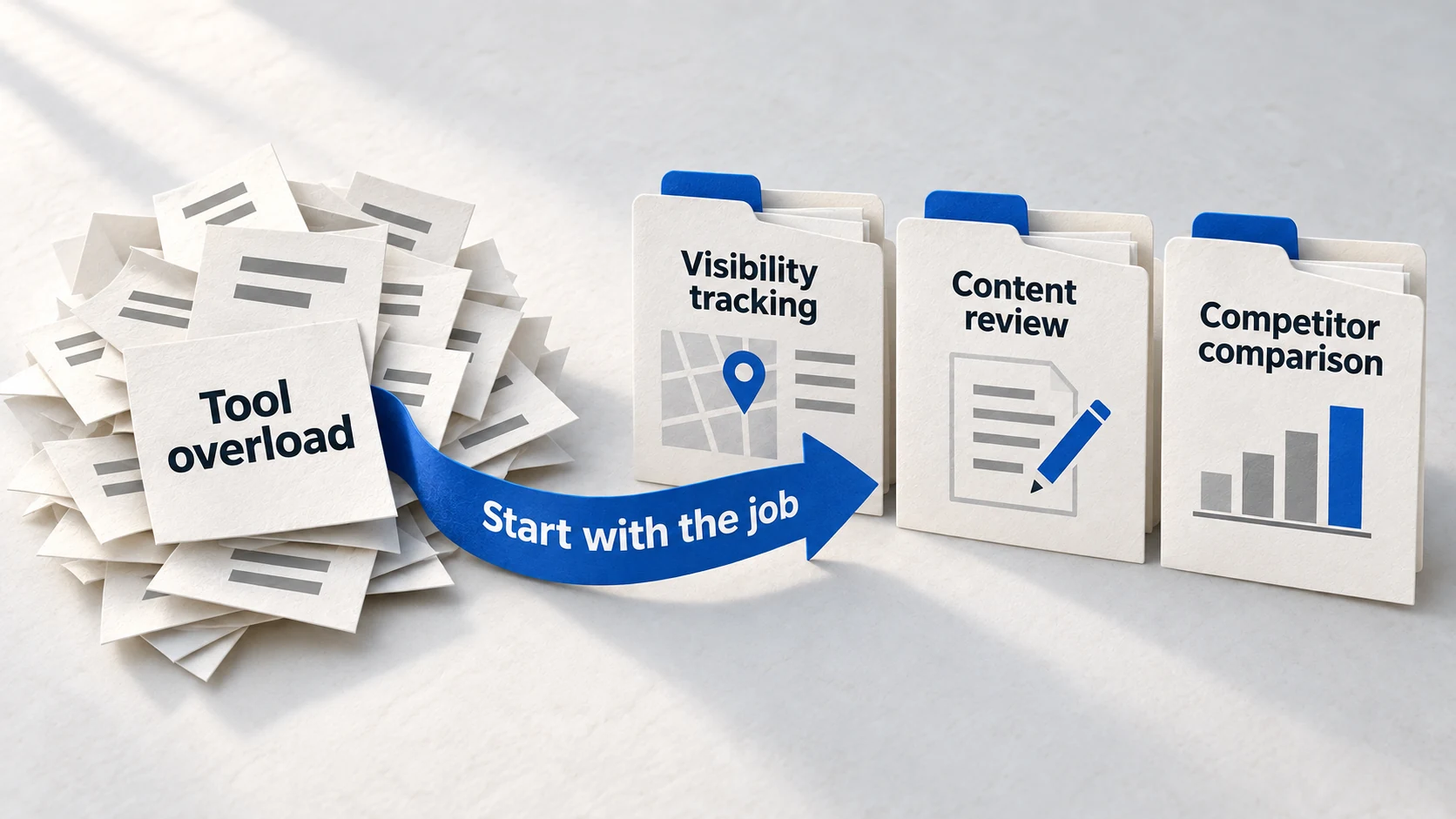
The essential GEO toolkit has three layers: visibility tracking (where you appear), content optimization (what to improve), and competitive analysis (how you compare). Start with free tools like HubSpot's AI Search Grader and Geoptie's free suite to establish baselines. Add paid tools only when you need deeper tracking or specific capabilities. Most practitioners need 2-3 focused tools, not a dozen overlapping subscriptions. The goal is actionable visibility data, not dashboard complexity.
Your inbox is full of GEO tool launches. Every day, another platform promises AI visibility tracking, citation monitoring, or "revolutionary" optimization features. You've signed up for three free trials, abandoned two, and still aren't sure which tools you actually need.
Here's the uncomfortable truth: 62% of marketers now use more tools than they did two years ago, according to the 2025 State of Your Stack Survey. Yet martech utilization dropped to just 33%-meaning the typical organization pays for triple the software it actually uses.
This guide cuts through the noise. I'll show you which GEO tools actually matter, which free options deliver real value, and exactly how to choose what you need based on your budget and goals. No affiliate links, no vendor partnerships-just honest recommendations based on what works.
62%
use more tools than 2 years ago
Yet only 33% of tool capability is actually used.
Source: MarTech →$99-500
typical monthly GEO tool range
From basic tracking to enterprise-grade platforms.
Source: Semrush →4-8 wks
to see initial AI citations
3-6 months for consistent citation patterns.
Source: Conductor →The Tool Overwhelm Problem
GEO tools are multiplying faster than anyone can evaluate them. The problem isn't lack of options-it's knowing which options solve your actual problems versus which ones just create new dashboards to check.
33%
martech capability actually used
The typical enterprise pays for triple the software it uses. Tool sprawl is a symptom of unclear goals, not insufficient tooling.
Source: MarTech 2025 SurveyWhy does this happen? Because buying a tool feels like progress. It's easier to subscribe to another platform than to define what you're actually trying to accomplish. The GEO market makes this worse by constantly launching new "essential" features.
The solution isn't avoiding tools-it's ruthless prioritization. Before evaluating any GEO tool, answer three questions: What visibility metric are you trying to improve? What data are you missing that prevents improvement? What action will you take when you have that data?
How to Read This Funnel: Start at the top with the full market. Each stage filters tools based on practical criteria-needs, budget, sustainability. Most practitioners end up with 2-3 tools that actually get used.
Tool Selection Framework
50+
All Available GEO Tools
The market is saturated with options
10-15
Tools Matching Core Needs
Filter by your actual requirements
5-8
Tools Within Budget
Remove what you can't sustain
2-3
Final Toolkit
Focused, actionable, maintainable
Understanding GEO Tool Categories
GEO tools fall into three functional categories. Understanding what each category does-and what you actually need from each-prevents buying overlapping features.
How to Read This Scorecard: Ratings show each tool's strength in three categories (1-5 scale). A perfect "5" means the tool excels in that category. Look for tools that score highest in your priority area-not tools that score moderately everywhere.
GEO Tool Category Comparison
| Factor | Visibility Tracking | Content Optimization | Competitive Analysis |
|---|---|---|---|
| Semrush AI Toolkit | ●●●●● | ●●●●○ | ●●●●● |
| Conductor | ●●●●● | ●●●●● | ●●●●○ |
| Otterly | ●●●●● | ●●○○○ | ●●●○○ |
| Profound | ●●●●● | ●●●○○ | ●●●●○ |
| Geoptie (Free) | ●●●●○ | ●●●●○ | ●●●○○ |
| HubSpot AI Grader (Free) | ●●●○○ | ●●○○○ | ●●●●○ |
| Frase.io | ●●●○○ | ●●●●● | ●●○○○ |
The Three Tool Categories Explained
1. Visibility Tracking
Monitors where and how often AI engines mention you.
- • Citation frequency across platforms
- • Sentiment of AI mentions
- • Query triggers
- • Competitive share of voice
2. Content Optimization
Analyzes and improves content for AI visibility.
- • Answer capsule analysis
- • Semantic clarity scoring
- • Schema validation
- • E-E-A-T signal detection
3. Competitive Analysis
Compares your AI visibility to competitors.
- • Share of model visibility
- • Competitor citation tracking
- • Content gap identification
- • Benchmark comparisons
Pro Tip
Start with visibility tracking. You can't optimize what you can't measure. Once you know where you stand, add content optimization. Competitive analysis is valuable but optional in the first 90 days.
Free Tools to Start With (No Budget Required)
Before spending money on GEO tools, establish your baseline with free options. These tools provide enough data to understand your current AI visibility and identify priority improvements.
Best Free GEO Tools
HubSpot AI Search Grader
Scans ChatGPT, Perplexity, and Gemini for brand mentions. Shows frequency, sentiment, and competitive comparison.
Free
Learn more →Geoptie Free Suite
Four free tools: GEO Audit, Content Checker, Keyword Finder, and Rank Tracker across ChatGPT, Claude, Gemini, and Perplexity.
Free
Learn more →Mangools AI Grader
Quick AI visibility check with no login required. Analyzes content structure and simulates AI search behavior.
Free
Learn more →Frase.io Free Trial
Content optimization with AI citation tracking. Shows when ChatGPT or Perplexity cites your content.
Free trial
Learn more →Prerender.io Site Audit
Technical GEO audit ensuring your site is accessible to AI crawlers. Identifies render-blocking issues.
Free audit
Learn more →Google Rich Results Test
Validates schema markup-essential for entity signals AI engines use. Not GEO-specific but critical.
Free
Learn more →Free Tool Quick-Start Checklist
💡 See current brand mentions across AI platforms
💡 Visibility across 6 dimensions
💡 Ensure structured data is correct
💡 Citation frequency, sentiment, key queries
💡 Compare progress over time
✨ Save this template for consistent formatting across all platforms
Run these free tools for 2-4 weeks before considering paid options. You'll understand your baseline visibility, identify your biggest gaps, and know which paid features would actually help versus which are nice-to-have.
Paid Tools: How to Evaluate What You Need
Paid GEO tools range from $29/month for basic tracking to $1,000+/month for enterprise platforms. The right tool depends on your scale, budget, and specific gaps identified during baseline testing.
How to Read This Chart: Monthly pricing tiers across the most established GEO tools. Entry-level options provide core tracking; mid-tier adds optimization; enterprise includes multi-brand management and dedicated support.
Paid GEO Tools by Price Tier
| Tool | Entry Price | Mid-Tier | Enterprise | Best For |
|---|---|---|---|---|
| Otterly | $29/mo (10 prompts) | $189/mo (100 prompts) | $989/mo (1,000 prompts) | Prompt-specific tracking |
| Semrush AI Toolkit | $99/mo | Included in suite | Custom | Existing Semrush users |
| Geoptie | Free (beta) | $99/mo (est.) | Custom | All-in-one simplicity |
| Profound | $499/mo | Custom | Custom | Enterprise, product brands |
| Scrunch | $300/mo | $500/mo | $1,000/mo | Narrative control, sentiment |
| Peec AI | €89/mo | €199/mo | €499/mo | Real-time alerts |
| Conductor | Custom | Custom | Custom | Enterprise end-to-end AEO |
Evaluation Criteria That Matter
Must-Have Features
- ✓ Multi-platform tracking (ChatGPT, Perplexity minimum)
- ✓ Citation frequency over time (not just snapshots)
- ✓ Competitor comparison (at least 3 competitors)
- ✓ Exportable reports (for clients or stakeholders)
Nice-to-Have Features
- ○ Real-time alerts for new mentions
- ○ Sentiment analysis beyond positive/negative
- ○ Content optimization suggestions
- ○ API access for custom dashboards
The Starter Stack by Budget
Your ideal GEO toolkit depends on your budget and scale. Here are three practical combinations that avoid overlap while covering essential capabilities.
$0/month
Bootstrap Stack
- • HubSpot AI Grader (baseline)
- • Geoptie Free Suite (tracking)
- • Google Rich Results Test (schema)
- • Manual ChatGPT/Perplexity testing
Best for: Freelancers, solo practitioners, testing GEO viability
$100-200/month
Growth Stack
- • Semrush AI Toolkit ($99/mo)
- • Geoptie Free Suite (supplemental)
- • Google Rich Results Test
- • Optional: Otterly Lite ($29/mo)
Best for: Small agencies, growing brands, serious GEO implementation
$500+/month
Enterprise Stack
- • Conductor (end-to-end AEO)
- • Profound (deep citation analysis)
- • Scrunch (narrative monitoring)
- • Custom dashboards
Best for: Large agencies, enterprise brands, multi-brand portfolios
Warning
Start one tier lower than you think you need. You can always upgrade-but downgrading feels like failure and often doesn't happen even when justified. Better to scale up than pay for unused features.
Choosing Your First GEO Tool
If you've completed baseline testing with free tools and identified gaps, use this framework to select your first paid investment.
How to Read This Decision Tree: Find the option that matches your current situation after baseline testing. Each branch leads to a specific tool recommendation with explanation of why it fits that gap.
GEO Tool Selection Decision
Question
What's your primary gap after baseline testing?
Start with visibility tracking
HubSpot AI Grader (free) or Otterly Lite ($29/mo) for prompt-specific monitoring across platforms
Start with content optimization
Frase.io or Geoptie Content Checker to improve answer capsule structure and semantic clarity
Start with competitive analysis
Semrush AI Toolkit ($99/mo) for competitive share of voice and content gap identification
Start with an all-in-one solution
Conductor (enterprise) or Geoptie (when paid tier launches) for integrated tracking + optimization
FAQ
What's the best free GEO tool to start with?
How much should I budget for GEO tools?
Do I need different tools than my SEO stack?
How do I know if a GEO tool is working?
Should I use one comprehensive platform or multiple specialized tools?
What's the difference between GEO tools and regular SEO tools?
Ready to Build Your GEO Toolkit?
The tools matter less than using them consistently. Start with free options, establish baselines, and add capabilities only when you hit specific walls.
Most practitioners need 2-3 focused tools, not 12 overlapping ones.
Take the GEO Readiness Quiz →60 seconds · Personalized report · Free
Continue Learning
Dive deeper into AI search with these related articles:
The Complete Schema Markup Guide for GEO
Master schema markup for AI visibility. Essential types, implementation strategy, and common mistakes.
The GEO Dashboard: What to Track and How to Report
Build a GEO dashboard that tracks citation frequency, brand visibility, share of voice, and AI referral traffic.
AI Citation Frequency: What It Is and How to Track It
Citation frequency measures how often AI models reference your content. Learn what it is and how to track it.