AI PowerPoint Course · Your First Pro Slides (Build Core Layouts with Confidence)
AI Prompt Toolkit: Foundational Layouts
 Arun Nagarathanam · 10 Jul 2026 Toolkit · 5 of 16 in this course
 An exclusive resource for students of Arun's AI PowerPoint Course.
Your First Pro Slides (Build Core Layouts with Confidence)
AI Quick Win (Structuring Your Entire Presentation)
Purpose: To get AI help in structuring the overall presentation (Title, Agenda, Section Dividers) based on notes.
Prompt Example:
Act as a world-class communication strategist. I am creating a presentation on 'Effective Time Management' for new managers. Based on my attached notes, architect the following structure:
1. The Title: A main title (4-6 words) that is powerful and a subtitle (8-12 words) that promises a transformation.
2. The Agenda: Exactly 4 core sections. For each, craft a short, compelling title and a single descriptive sentence (under 15 words) that frames the topic as a solution.
3. The Narrative Flow: Provide a concise title for each of the 4 Section Divider slides to guide the audience's journey. [cite: 11115, 11116]
Your First Pro Slides (Build Core Layouts with Confidence)
AI Content Strategy (Clear Slides in Seconds)
Purpose: To transform a dense paragraph into structured content (Title, Subtitle, 3 Headline/Description points) for a single slide.
First, paste the below big paragraph of text in a new chat
In the comprehensive domain of presentation design, a critical analysis reveals that the most frequent impediment to effective communication is the creation of overly dense, text-heavy slides. It is of paramount importance in this strategic paradigm to consider the holistic visual ecosystem of the slide, which necessitates the effective utilization of negative space. By ensuring that textual and graphical elements are not densely co-located, we facilitate a significant reduction in cognitive friction, thereby enhancing the audience's ability to scan and process information efficiently. This practice of creating 'breathing room' or generous spacing between distinct conceptual points on a list is a simple yet profoundly impactful lever for elevating clarity. Concurrently, a prevalent anti-pattern observed is the tendency to overload individual list items with a multiplicity of disparate concepts, often resulting in lengthy, multi-sentence bullet points. To counteract this, each bullet should be treated as an atomic unit of information, focused with laser precision on a single, solitary idea. This disciplined approach prevents the slide from devolving into a prose-like document, which fundamentally defeats the objective of a scannable list. Furthermore, to augment audience engagement and improve message retention, designers should look beyond conventional typographic markers. The integration of meaningful graphical symbols or icons serves as a powerful visual cue, creating a dual-coding effect where the textual information is reinforced by a visual signifier. This not only adds aesthetic polish but also leverages semiotics to make the core message of each point more immediate and memorable, ultimately allowing for the formatting of lists to achieve maximum readability and impact.
Then, paste in our master prompt
You are an expert presentation content strategist.
Your task is to transform the following dense paragraph into clear, concise, and scannable content for a single PowerPoint slide.
You must follow the 'Simplification Method' by breaking the text apart, trimming all jargon and filler words, and structuring the core ideas logically.
Your final output must adhere to these strict formatting rules:
1. **Overall Topic:**
   - First, provide a main **Title** that captures the central theme. The title must be exactly 5-7 words.
   - On the next line, provide a **Subtitle** that explains the goal. The subtitle must be exactly 7-9 words.
2. **Core Points:**
   - After the subtitle, you must extract exactly **THREE** distinct, actionable recommendations from the text.
   - Each recommendation must be presented as a **Headline** followed by a **Description** on the next line, with a blank line separating each of the three points.
   - The **Headline** must be a short, action-oriented phrase of 4 to 7 words.
   - The **Description** must be a single sentence of 10 to 15 words that elaborates on the headline.
Do not add any extra formatting, labels (like "Title:"), bullet points, or commentary.
The output should be only the text for the slide, formatted with line breaks as specified.
Your First Pro Slides (Build Core Layouts with Confidence)
AI Quick Win (The Quote Finder)
Purpose: To find impactful, lesser-known quotes relevant to the presentation's theme, avoiding clichés.
Prompt Example:
Find me three impactful and lesser-known quotes about 'resilience' or 'perseverance.' The tone must be professional and inspiring, suitable for a sophisticated business audience. I want to avoid clichés. Please credit the author for each.


Keep building
More from Aruntastic
Practical courses for people who want to build useful things with AI.

AI SEO Course 2026: From Zero to Page-One Results
Research search demand, structure useful pages, and work through technical and off-page SEO.
Open the course →
AEO, GEO, AI SEO: Get Cited by ChatGPT, Google, Perplexity
Study how AI search finds information, and make your pages clear enough to be cited.
Open the course →
Microsoft PowerPoint Presentation 2026 for Professionals
Learn visual hierarchy, slide composition, typography and animation through practical work.
Open the course →
AI Leadership: Gen AI for Leaders, A Practical Toolkit
A short course on using generative AI as a co-pilot, written for senior leaders.
Open the course →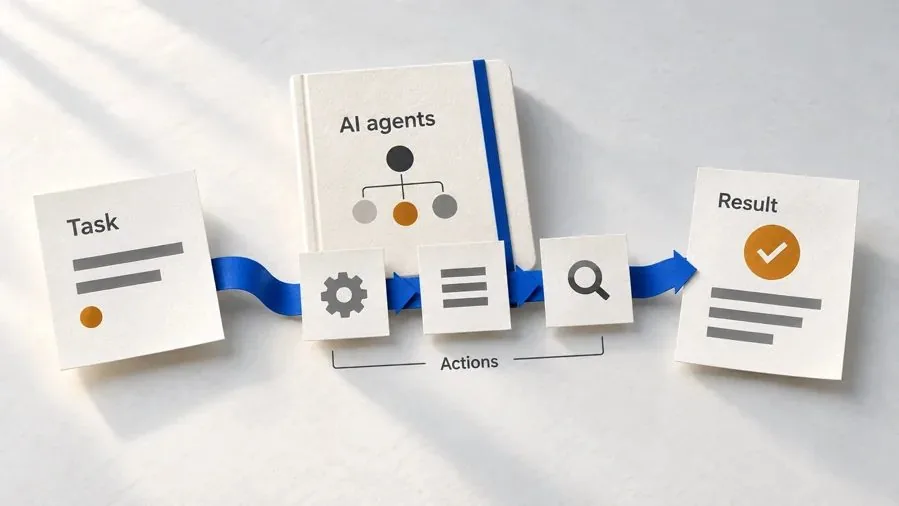
Agentic AI Explained: How AI Agents Actually Work
Coming soon. Follow real agent work, then learn how models, tools, memory and checks fit together.
Join the waitlist →Toolkits and programme
Go deeper
Toolkit
SEO Accelerator Toolkit
150+ copy-paste AI prompts for audience research, keywords, content, technical SEO and link building.
Toolkit
GEO Accelerator Toolkit
100 detailed AI prompts for GEO audits, entity building, content structure and client reporting.

Programme
GEO Authority Accelerator
A complete GEO programme on our learner platform: nine modules and a 30, 60, 90 day roadmap. The GEO Accelerator Toolkit is included.
Claude certification practice
Preparing for a Claude certification?
Practice exams written by Arun: 600 questions across 4 mock exams and 2 drill banks. Unofficial preparation, not affiliated with Anthropic.
 CCAR-F
 CCAO-F
 CCDV-F
 CCAR-P
Want the Full System Behind These Prompts?
This prompt toolkit is one piece of a much bigger presentation design system.
Take the free GEO Readiness Quiz to see exactly where your business stands with AI search engines today.
Take the GEO Readiness Quiz 60 seconds · Personalized report · Free