AI Agents for Leaders Who Have No Time to Learn AI · Section 3 · Notes
Notes: Choose what matters when everything feels urgent
Read a lecture instead of watching it, then make each strategy yours.
 Arun Nagarathanam · 20 Oct 2026 Notes · 21 of 42 in this course

Lecture 3.1
Can more AI output leave you with more decisions?
AI makes writing faster for everyone around you, so more of it reaches your desk. I want you to spot the one request in that pile that only you can decide.
Key ideas
- 01More output, same morning: When colleagues write with AI, proposals get longer, meeting notes arrive instantly and more threads ask you to confirm something.
- 02A summary is not a decision: It can tell you what happened yesterday. It cannot tell you whether lending a person away breaks a promise your team made.
- 03Loud versus consequential: The newest or most forceful message is not automatically the one that matters most.
- 04Your part: Knowing which promise is at risk, and who is affected if a date slips, belongs to you as the leader.
Elena's morning. In this prepared example, Elena manages a department, and her morning opens with a screen full of new requests.
Two of them look very different:
- an internal formatting request, stamped urgent and due at noon
- a short, polite message from a peer director asking to borrow Dev, a senior engineer, for 3 days
The red stamp pulls her eye first. Yet giving Dev away for 3 days would quietly delay a software release her team has promised a client for Friday.
What an agent can and cannot see. An agent can count 7 messages and notice that 2 are marked urgent. It cannot work out from that count what breaking Friday's promise would cost the client, or her team.
So the help worth having here is a sorted view that puts the request about Dev in front of Elena with the Friday release attached, so she thinks about it before she replies. Five more summaries would only add to the pile.
Lecture 3.2
What deserves your attention first?
I want your freshest attention on the decision with the biggest consequence, not on whatever arrived first. An attention queue does that sorting for you, and you correct its order with what only you know.
Key ideas
- 01Attention queue: A short, sorted view in 3 groups: decisions that need you, drafts ready to inspect, and items waiting on someone else.
- 02First pass: The agent ranked the noon formatting request first, only because noon was the earliest time on the list.
- 03Consequence of delay: What breaks, and for whom, if a decision waits. Elena ranks by this first.
- 04Exception rule: Anything that threatens a committed delivery date goes straight to the top at the next review.
Elena has 4 items waiting:
- a peer director asking to borrow Dev for 3 days
- a formatting request stamped urgent for noon
- a client progress update, drafted and ready to review
- a supplier pricing confirmation, waiting on the vendor's finance team
If she works down her inbox by arrival time, her best hour of the morning goes on the formatting request and the supplier thread. By the time she reaches Dev, the other director may already have written Dev into his plan.
Sorting into 3 groups. Elena gives the agent the 4 requests and her department's project records, and asks it to separate decisions that need her, drafts ready to inspect, and items waiting on someone else. The supplier thread goes to waiting, because nothing Elena does moves it until the vendor replies. The client update goes to drafts, for her afternoon review.
Correcting the order. Two decisions are left, and the agent first puts the formatting request on top because noon is the earliest time. Elena tells it what it could not know: Dev leads the engineering for Friday's committed client release, and a late formatting decision affects nobody outside the department.
Then she gives it her ranking rule, in this order:
- the consequence of delay
- how important the commitment is
- the actual deadlines
- what other work depends on the choice
With that rule, Dev's request moves to number 1, with a note from the project record about the Friday release.
One saved page, not a fresh list each morning. The queue lives as one page in her department project. At each review point the agent updates it and brings back only what needs Elena, and a change that threatens a committed date jumps to the top.
Make it yours
- Freelancer or consultant
- Your input
- This week's client emails and your list of promised delivery dates.
- Ask AI
- Sort into decide, review and waiting, ranked by what slips if I wait.
- Check
- Your top item is the one with a promise attached, not the newest email.
- Small business owner
- Your input
- Requests from staff, suppliers and customers sitting in your inbox.
- Ask AI
- Group them into my decisions, drafts and waiting items, with the owner of each.
- Check
- Nothing in waiting needs a reply from you.
- On a team at work
- Your input
- Requests your employer allows you to share, plus your team's committed dates.
- Ask AI
- Rank my decisions by consequence of delay, not by urgency labels.
- Check
- A request marked urgent with no external impact is not sitting at the top.
Lecture 3.3
What could change your mind?
A neat comparison table can make a big decision look simpler than it is. I want you to ask for the one assumption the attractive option depends on, because that is the fact that could change your mind.
Key ideas
- 01RFP: Request for proposal: a document from a prospective customer describing the work they want suppliers to bid on.
- 02Pivotal assumption: The single fact that must hold true for an option to succeed.
- 03Tradeoff: What you accept giving up, here a smaller first contract, to protect something that matters more.
- 04Condition that reopens the choice: The specific evidence, with a deadline, that would send you back to the option you set aside.
The situation. Maya, the proposals director from the previous section, is answering an RFP from Meridian Manufacturing for a 6-week data migration. Her only 2 senior integration specialists are booked on another client's launch, planned to run into weeks 3 and 4.
Her adapted skill already checks specialist time rather than total headcount, so the agent compares 3 options:
- bid on the full 6-week scope
- propose a narrower phased scope that moves integration to week 5
- decline to bid
Asking for the assumption. Maya does not stop at the option that looks best on paper. She asks the agent for the pivotal assumption behind the full-scope bid.
The answer is plain: the full bid works only if the other launch finishes early, by day 10 at the end of week 2, without a single day of spillover. Only then are both specialists free for Meridian in weeks 3 and 4.
Weighing it. That launch depends on a third-party vendor whose testing schedule is still unconfirmed. Betting the whole Meridian contract on day 10 is too risky, so Maya chooses the phased scope. She accepts a smaller first contract to protect the launch her team already promised.
She also names what would reopen full scope:
- written confirmation that the current launch has passed final testing
- early enough to free both specialists by day 10
- arriving before the bid is due on Friday, October 9, at 5 p.m.
Make it yours
- Freelancer or consultant
- Your input
- A project you were offered and the clients already on your calendar.
- Ask AI
- Compare taking it, taking part of it, or declining. What must be true for the full job?
- Check
- The assumption names a real date or person, not a vague risk.
- Small business owner
- Your input
- A large order or contract and your current staff and supplier capacity.
- Ask AI
- State the single assumption behind accepting the full order.
- Check
- You know what evidence would change your answer, and by when you need it.
- On a team at work
- Your input
- A proposal or capacity choice, and the commitments your team already holds.
- Ask AI
- Propose how you will compare the options first, then find the deciding assumption.
- Check
- The comparison counts the scarce skill, not total headcount.
Lecture 3.4
How will you remember why you chose it?
A good decision is easy to lose inside a long chat. I want the reason saved as a short record the agent drafts for you, so you can find it and explain it days later.
Key ideas
- 01Decision record: A short saved file with the choice, the reasons, the alternatives, the fact still to confirm and what would reopen the choice.
- 02Review, not a blank form: The agent drafts it from your discussion. Your job is to check that it means what you decided.
- 03Fact still to confirm: An open uncertainty kept visible, instead of written as settled.
- 04Save, then retrieve: Saving is half the loop. The other half is checking a fresh conversation can find the record and use it.
Thursday's question. The day before the bid is due, a commercial vice president asks whether the team can expand to the full 6-week scope. If Maya's reasoning is buried in a 30-message chat, rebuilding it is slow and easy to get wrong, and a new chat will not remember the old one on its own.
So right after confirming her choice, Maya asks the agent for a concise decision record with 5 items:
- the confirmed choice
- the reasons behind it
- the alternatives considered
- the fact still to confirm
- the condition that reopens full scope
When the draft comes back, she checks the 2 things automated summaries often get wrong:
- the record names the narrower phased scope as the final choice, even though the chat spent paragraphs on the full-scope bid
- the week-5 specialist hours are still listed as a fact to confirm before contract signature, not as settled
This draft gets both right, so she approves it, and the agent saves it in the Meridian Proposal project folder beside the RFP summary and the capacity note.
Checking it can be found. On Thursday, Maya opens a fresh conversation inside the same project and asks the agent to retrieve the record. It points to the saved file and reports both open items: the week-5 specialist hours, and the confirmation before Friday's deadline that would reopen full scope.
If a chat has no access to the project folder, the right answer is that the record is inaccessible, not a guess at the reasons from memory.
Make it yours
- Freelancer or consultant
- Your input
- The chat where you decided how to price or scope a client job.
- Ask AI
- Draft a decision record: choice, reasons, alternatives, open fact, what reopens it.
- Check
- The open fact is still written as open, not as settled.
- Small business owner
- Your input
- Your discussion about a supplier switch or a hire.
- Ask AI
- Write the decision record and save it in this project.
- Check
- A fresh chat in the same project can find the record and point to the file.
- On a team at work
- Your input
- A comparison chat about a team priority you just confirmed.
- Ask AI
- Prepare the decision record for the project folder, with 5 items.
- Check
- The record names your final choice, not the option the chat discussed most.
Lecture 3.5
Can you explain your choice and tradeoff?
A decision people can act on does not pretend every fact is certain. I want you to be able to say what you chose, what you gave up, and what you are still watching.
Key ideas
- 01Tradeoff you accepted: What you gave up to protect something that matters more.
- 02Uncertainty you are watching: The fact still to confirm, said out loud so colleagues know what to look for.
- 03Trustworthy, not weak: Naming the open question early stops a hidden risk from surfacing midway through delivery.
Elena, before and after. Her first suggested order put a routine formatting request on top because of its time stamp. Now she can say she is handling Dev's request first because lending Dev for 3 days would put Friday's committed client release at risk.
Maya's explanation from her saved record has 4 parts:
- the confirmed choice: propose the narrower phased scope for Meridian
- the protected commitment and accepted tradeoff: protect an existing client delivery, accept a smaller first contract
- the fact still to confirm: the week-5 specialist hours, with the engineering lead
- the condition that reopens full scope: confirmation before Friday's bid deadline that the active launch finished testing early
Some leaders worry that admitting an open uncertainty makes a decision sound weak. In practice it does the opposite, because colleagues know what to watch for instead of discovering the risk halfway through delivery.
Halfway through the course, you can now:
- hand an agent your meeting follow-through
- keep your background and methods in a project and a skill
- sort your week with an attention queue
- keep the reasons for a choice in a decision record
A decision sitting in a project folder only changes the work once the people around you understand what it means for them. Section 4 is about drafting those messages so they still sound like you.
Quick reference
Words used in this section
| Attention queue | Decisions that need you, drafts ready to inspect, items waiting on someone else. |
|---|---|
| Consequence of delay | What breaks, and for whom, if a decision waits. |
| RFP | Request for proposal: a customer's description of work they want suppliers to bid on. |
| Pivotal assumption | The single fact that must hold for an option to succeed. |
| Decision record | Choice, reasons, alternatives, fact still to confirm, condition that reopens it. |
Rank decisions by
| 1. Consequence of delay | What slips, and for whom. |
|---|---|
| 2. Commitment importance | Is a promise to a client or your team at stake? |
| 3. Actual deadlines | The real date, not the urgency label. |
| 4. Dependencies | What other work waits on this choice. |
Check before you rely on it
| An attention queue | The top item carries a consequence, not just the earliest time. |
|---|---|
| An option comparison | It names the one assumption behind the ambitious option. |
| A decision record | Final choice named correctly; the open fact still open. |
| Retrieval | A fresh chat points to the saved file, or says it cannot reach it. |
Numbers from the prepared examples
| 3 days | How long the peer director wants to borrow Dev. |
|---|---|
| Friday | Elena's release, committed to a client. |
| 6 weeks | Meridian's requested migration scope. |
| Day 10, end of week 2 | When the other launch must finish for the full bid to work. |
| Week 5, 20 hours | Specialist time the phased bid still needs confirmed. |
| Friday, October 9, 5 p.m. | The Meridian bid deadline. |
More in this section
Keep going
- Download the Section 3 starter materials (zip)
- Download the A4 study guide (PDF)
- Choose what matters when everything feels urgent, Complete Resource Pack
- Priorities and Decisions, a Prepared Example
- Elena and Meridian Case Files: Requests, RFP and Capacity Note
- Priorities and Decisions Workflow
- Priority Triage Skill
Keep building
More from Aruntastic
Practical courses for people who want to build useful things with AI.

AI SEO Course 2026: From Zero to Page-One Results
Research search demand, structure useful pages, and work through technical and off-page SEO.
Open the course →
AEO, GEO, AI SEO: Get Cited by ChatGPT, Google, Perplexity
Study how AI search finds information, and make your pages clear enough to be cited.
Open the course →
Microsoft PowerPoint Presentation 2026 for Professionals
Learn visual hierarchy, slide composition, typography and animation through practical work.
Open the course →
AI Agents for Leaders Who Have No Time to Learn AI
If you can delegate to a person, you can delegate to an AI agent. You keep the judgment. For managers and founders.
Open the course →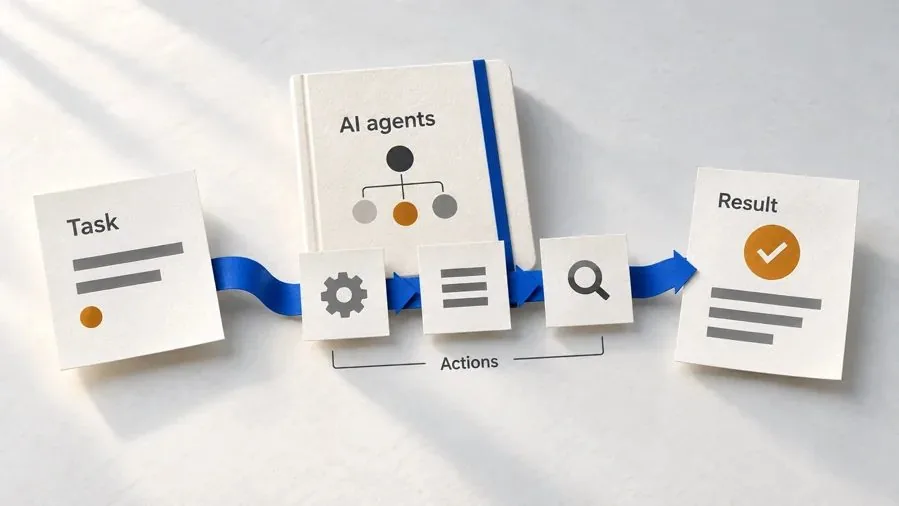
Introduction to Agentic AI and AI Agents
Learn how to direct an AI agent at work, with agentic workflows, RAG and MCP explained from a real first run.
Open the course →Toolkits and programme
Go deeper

Toolkit
SEO Accelerator Toolkit
150+ copy-paste AI prompts for audience research, keywords, content, technical SEO and link building.

Toolkit
GEO Accelerator Toolkit
100 detailed AI prompts for GEO audits, entity building, content structure and client reporting.

Programme
GEO Authority Accelerator
A complete GEO programme on our learner platform: nine modules and a 30, 60, 90 day roadmap. The GEO Accelerator Toolkit is included.
Claude certification practice
Preparing for a Claude certification?
Practice exams written by Arun: 600 questions across 4 mock exams and 2 drill banks. Unofficial preparation, not affiliated with Anthropic.
 CCAR-F
 CCAO-F
 CCDV-F
 CCAR-P
Keep going
This resource is part of a six-section course.
Follow the lectures on Udemy, then come back here whenever you want the files, requests and notes for a section.
Open the course AI Agents for Leaders Who Have No Time to Learn AI · Udemy