Claude Code Course
The Portfolio Site Kickoff Prompt
 Arun Nagarathanam · 31 Aug 2026 Prompt · 22 of 72 in this course
 An exclusive resource for students of Arun's Claude Code Course.
The tempting move is to type "build me a portfolio website" and hit enter. Claude Code would try, and the output from a vague prompt is unpredictable. You might get a React app when you wanted plain HTML, or a single-page layout when you wanted multiple sections.
This one is specific about four things: the technology, the structure, the features, and the constraints.
Before you run it: an empty folder, with your terminal sitting inside it.
Build a personal portfolio site using HTML, CSS, and vanilla JavaScript.
No frameworks.
Every line of code that Claude writes should be readable and understandable.

Structure:
a home page with a hero section that has a headline and a short introduction,
an about section with a bio,
a projects gallery with placeholder cards,
and a contact section with a form.

Features:
a dark mode toggle that remembers the user's choice between visits,
responsive navigation that collapses into a menu on mobile screens,
smooth scroll between sections when you click a nav link,
and a contact form with name, email, and message fields.

Constraints:
semantic HTML for accessibility,
mobile-first CSS so it looks right on phones before we think about desktops,
and a clean file structure with separate folders for styles, scripts, and images.
Notice the shape more than the wording, because the shape is what transfers to every project after this one.
What to watch while it runs
Before it writes a line of code, Claude loads a design skill on its own. It recognises this as a design task and pulls that in without being asked. Then it commits to a direction: a typeface pairing, a colour palette, and a point of view on how the code should read.
The quality of those decisions ties directly to the quality of your instructions. When you specified mobile-first CSS and semantic HTML, Claude folded those constraints into every file it created. Had you written "build me a portfolio website", it would have guessed at every one of them.
A few words you will meet
A hero section is the big intro area at the top of a page, the part you see before scrolling. A framework is a pre-built starter kit like React or Vue. Boilerplate is the standard starter code that ships with one. Semantic HTML means using tags like header, nav and article that describe what each part of the page is, instead of generic divs everywhere. Mobile-first CSS means designing for the phone screen first, then scaling up.
We skip the framework and the boilerplate here, because we want every line Claude writes to be readable.


Keep building
More from Aruntastic
Practical courses for people who want to build useful things with AI.

AI SEO Course 2026: From Zero to Page-One Results
Research search demand, structure useful pages, and work through technical and off-page SEO.
Open the course →
AEO, GEO, AI SEO: Get Cited by ChatGPT, Google, Perplexity
Study how AI search finds information, and make your pages clear enough to be cited.
Open the course →
Microsoft PowerPoint Presentation 2026 for Professionals
Learn visual hierarchy, slide composition, typography and animation through practical work.
Open the course →
AI Leadership: Gen AI for Leaders, A Practical Toolkit
A short course on using generative AI as a co-pilot, written for senior leaders.
Open the course →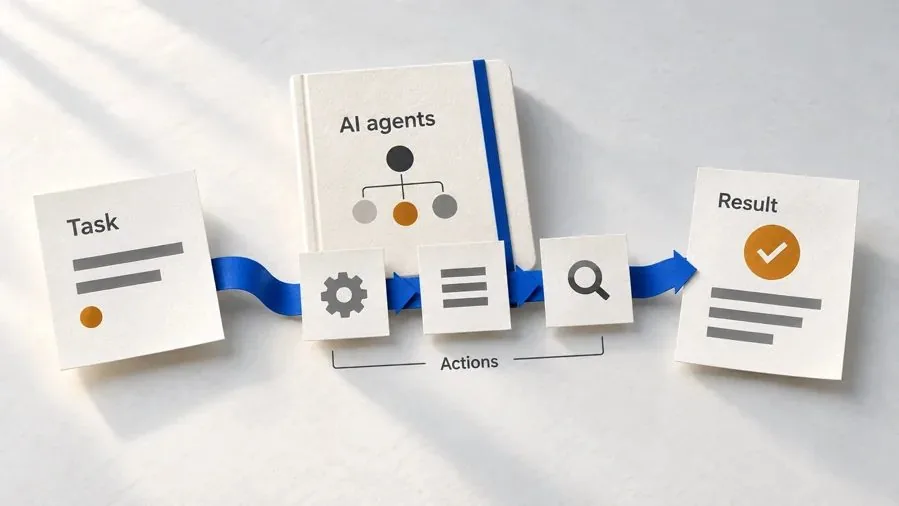
Agentic AI Explained: How AI Agents Actually Work
Coming soon. Follow real agent work, then learn how models, tools, memory and checks fit together.
Join the waitlist →Toolkits and programme
Go deeper

Toolkit
SEO Accelerator Toolkit
150+ copy-paste AI prompts for audience research, keywords, content, technical SEO and link building.

Toolkit
GEO Accelerator Toolkit
100 detailed AI prompts for GEO audits, entity building, content structure and client reporting.

Programme
GEO Authority Accelerator
A complete GEO programme on our learner platform: nine modules and a 30, 60, 90 day roadmap. The GEO Accelerator Toolkit is included.
Claude certification practice
Preparing for a Claude certification?
Practice exams written by Arun: 600 questions across 4 mock exams and 2 drill banks. Unofficial preparation, not affiliated with Anthropic.
 CCAR-F
 CCAO-F
 CCDV-F
 CCAR-P
See Where You Stand
This resource is one piece of a much bigger system.
Take the free Claude Code Readiness Quiz. It is 15 short situations, scored out of 100, and it tests how you handle a job rather than what you know about a tool, so you can take it without ever having opened Claude Code.
Take the Claude Code Readiness Quiz 15 situations · Scored out of 100 · Free