Claude Code Course
Permission Demo Prompts, Edit, Run and Say No
 Arun Nagarathanam · 31 Aug 2026 Prompt · 23 of 72 in this course
 An exclusive resource for students of Arun's Claude Code Course.
Claude reads any file in your project on its own, without asking. It needs to see your code, your folder structure, your naming patterns. That is the same thing a new teammate does when they pick up a task.
Everything else goes through you first. These three prompts put each kind of gate on screen so you recognise the pattern when it appears on work that matters.
One, the edit permission
Update the hero section styling to use a larger font size and more padding.
The terminal shows "Claude wants to Edit styles/main.css". You see exactly which file it wants to touch.
It arrives as a short numbered menu. Move through it with the arrow keys, or jump straight to a choice by pressing its number. Typing y or n does nothing here.
- Option one is yes, just this once.
- Option two is yes, and stop asking for the rest of this session.
- Option three is no, which also lets you tell Claude what to do differently.
Write permission and edit permission are independent of each other. Approving a write does not automatically approve edits.
Two, the command permission
Set up this project for deployment by initializing a git repository.
There it is: "Claude wants to run: git init", with the same numbered menu.
Command approvals have one difference from file approvals. These can be saved permanently for this project directory. Approve git commit once and select don't ask again, and Claude can commit in this project without asking in future sessions. File approvals only last for the current session, and tomorrow it asks again. That is a safety feature, not a bug.
Three, the one built to be refused
Run this one specifically so you can practise saying no.
Add a JavaScript animation library to the project.
Claude does not just install something. It stops and tells you that adding a library is a real decision, then asks which library and how to load it into the project. That pause is the permission system appearing in another form.
Say no at that point, or at the command prompt that follows. Nothing happens. No file changes, no package installed.
The safety net working as designed is worth feeling once, before you need it.
The reframe worth keeping
The risk was never really about permissions. It is about irreversibility. That menu is the last point where you can stop something you did not mean to start, because once you approve a destructive command, the file is gone, the package is installed, the repo is changed.


Keep building
More from Aruntastic
Practical courses for people who want to build useful things with AI.

AI SEO Course 2026: From Zero to Page-One Results
Research search demand, structure useful pages, and work through technical and off-page SEO.
Open the course →
AEO, GEO, AI SEO: Get Cited by ChatGPT, Google, Perplexity
Study how AI search finds information, and make your pages clear enough to be cited.
Open the course →
Microsoft PowerPoint Presentation 2026 for Professionals
Learn visual hierarchy, slide composition, typography and animation through practical work.
Open the course →
AI Leadership: Gen AI for Leaders, A Practical Toolkit
A short course on using generative AI as a co-pilot, written for senior leaders.
Open the course →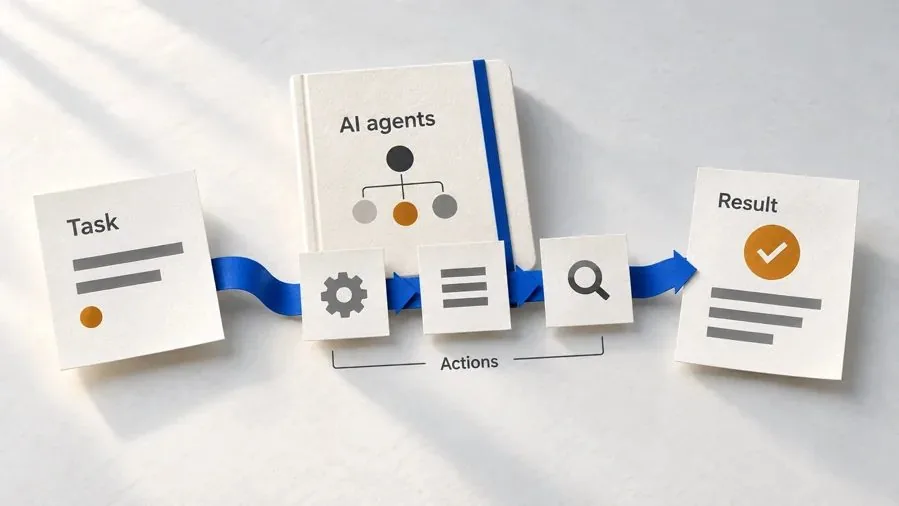
Agentic AI Explained: How AI Agents Actually Work
Coming soon. Follow real agent work, then learn how models, tools, memory and checks fit together.
Join the waitlist →Toolkits and programme
Go deeper

Toolkit
SEO Accelerator Toolkit
150+ copy-paste AI prompts for audience research, keywords, content, technical SEO and link building.

Toolkit
GEO Accelerator Toolkit
100 detailed AI prompts for GEO audits, entity building, content structure and client reporting.

Programme
GEO Authority Accelerator
A complete GEO programme on our learner platform: nine modules and a 30, 60, 90 day roadmap. The GEO Accelerator Toolkit is included.
Claude certification practice
Preparing for a Claude certification?
Practice exams written by Arun: 600 questions across 4 mock exams and 2 drill banks. Unofficial preparation, not affiliated with Anthropic.
 CCAR-F
 CCAO-F
 CCDV-F
 CCAR-P
See Where You Stand
This resource is one piece of a much bigger system.
Take the free Claude Code Readiness Quiz. It is 15 short situations, scored out of 100, and it tests how you handle a job rather than what you know about a tool, so you can take it without ever having opened Claude Code.
Take the Claude Code Readiness Quiz 15 situations · Scored out of 100 · Free