Claude Code Without Coding · Section 8 · Notes
Notes: Give Claude a Method It Can Reuse
The ideas worth keeping from each lecture, the steps to follow, and one question to check yourself.
 Arun Nagarathanam · 5 Oct 2026 Notes · 58 of 72 in this course
Lecture 8.1 · Skills
What Is a Claude Code Skill, and Why Would You Use One?
Meet the Willow Desk practice job and learn what a Skill is. You will see why saving a method beats retyping a prompt every month.

Ideas to keep
- 01Willow Desk is a fictional business that sells desk organizers. The practice file holds 12 customer comments, numbered F01 to F12.
- 02Counting mentions alone is not enough. One serious comment, such as a possible injury, may need a look before a common inconvenience.
- 03A Skill is a reusable method saved in a folder. Its main file is called SKILL.md and it is plain Markdown.
- 04Project instructions hold standing facts. A Skill holds the longer steps for one particular job.
- 05The section has 4 stages: choose a Skill, install and use one, build your own, then adapt and repair it.
Follow along
- Download and keep the practice zip for this section.
- Notice the feedback IDs F01 to F12. Every conclusion later points back to one of them.
- Decide which repeated job in your own work could be saved once as a Skill.
Lecture 8.2 · Reusable Expertise
Why Use a Skill If Claude Can Already Answer?
Learn the two good reasons to use a Skill, and how Claude loads one only when it is needed.

Ideas to keep
- 01Reason one: keep a process you already trust, such as checking overdue invoices the same way each time.
- 02Reason two: use a Skill from a source you have checked when you have not learned the process yourself, such as call preparation.
- 03The way Claude works stays the same while the result changes with the data.
- 04Claude first sees a short description of each Skill. When one is selected, its full instructions are added to the conversation. That is what loading means here.
- 05For an unfamiliar job, check where a Skill came from and what it will ask Claude to do before you use it.
Follow along
- Think of a repeated job where you already know the right checks.
- Think of a job where you would like an expert's structure.
- For the second kind, check the source before trusting the Skill.
Lecture 8.3 · Skills, Agents, MCP and Hooks
Which Claude Code Feature Fits This Job?
Learn to choose the right feature from the need, not from habit. Then try the first knowledge check.

Ideas to keep
- 01Project instructions carry standing facts and rules.
- 02A Skill carries the process for a repeated job.
- 03An agent (or subagent, when it works under the main assistant) performs delegated work.
- 04MCP gives Claude authorised access to outside information or actions.
- 05A hook connects an event, such as saving a report, to an action, such as a check.
Follow along
- Open knowledge-checks.md from the resource download.
- Read the first set of questions and choose your answers before you read the key.
- For the Willow Desk exercise, remember you only need project rules and the feedback Skill. The file is on your computer and you ask for the analysis yourself.
Lecture 8.4 · 6 Real-World Examples
What Can Skills Help You Do?
See six published Skills for different kinds of work, then pick the one closest to your own job.

Ideas to keep
- 01brand-review checks a draft against approved voice guidance and suggests focused revisions.
- 02campaign-plan turns a goal, audience and timeline into one plan with a calendar and measures.
- 03social-content-engine prepares a week of posts and drafts from a product brief. It is used with Willow Desk shortly.
- 04ad-manager analyses ad spend and enquiries and proposes changes for a person to review.
- 05call-prep prepares the objective, history, questions, likely objections and what to bring. job-post-builder creates a job post, an interview guide and an offer-letter template.
Follow along
- Choose one of the six jobs that comes up in your work.
- Name what you would give Claude.
- Name what you would check in the answer. These two decisions help you judge a Skill you find later.
Lecture 8.5 · GitHub and Marketplaces
Where Do You Find Skills You Can Trust?
Learn how to check a Skill before you let Claude follow it, and why the course uses Anthropic's public repository.

Ideas to keep
- 01Publishers put Skills in a package called a plugin. Claude Code installs it.
- 02A short listing cannot show every instruction, command or outside service. Follow it to the repository, the project page that holds the real files.
- 03Confirm who published it, then read when it should be used, what it expects, what steps it follows and what it produces.
- 04If you cannot read a command, ask Claude to explain the actual file without running it. Check the licence if you plan to copy or share, and look for recent maintenance.
- 05Popularity only moves a Skill up a list. If you cannot tell what will happen, leave it unused.
Follow along
- Find a candidate Skill and follow the listing to its repository.
- Confirm the publisher, then open the Skill itself and read it.
- Inspect the files around it, and ask Claude to explain any command you cannot read.
- Check any outside service, the licence and how recently it was updated.
- Choose it for a test only if it fits your job, you understand what it does and you can check the result with practice files.
Lecture 8.6 · User, Project or Local Scope
Where Should a Skill Live?
Extract the practice folder, learn the two places a Skill can live, and install Skill Creator and the Small Business plugin.

Ideas to keep
- 01A personal Skill lives in the .claude/skills folder inside your home folder and can follow you across projects.
- 02A project Skill lives in the project's own .claude/skills folder and can be shared with that project.
- 03In the terminal /plugin view, the three choices are user scope, project scope and local scope (this project, only for me).
- 04A marketplace is the place Claude Code searches for plugins. A plugin can hold one Skill or several.
- 05Installing a plugin does not prove a Skill works. The install warning says to enable plugins only from people you trust.
Follow along
- Extract section-08-skills-resources.zip into a Willow Desk practice folder. It holds the inputs folder of fictional files.
- Open your home .claude folder and the project .claude folder to see the two skills folders. On Mac press Command, Shift and Period to show hidden folders.
- In the desktop app, open Settings, Customize, Plugins, search Skill Creator and click Add.
- Optional in the terminal: type /plugin and look at the three scope choices. The lecture only looks and does not install a second copy.
- Search Small Business in Plugins, check the publisher and install count, read the warning and choose Continue.
- Type / in the prompt to see the new Skills, for example small-business:invoice-chase.
Lecture 8.7 · 2 Real Files
How Do You Use and Check Downloaded Skills?
Run invoice-chase and social-content-engine on fictional files, then check each answer against its source.

Ideas to keep
- 01The name in the slash menu has two parts. The part before the colon is the plugin and the part after is the Skill.
- 02Invoice check: INV-001 to INV-005 are overdue with money owing, and their remaining balances total USD 4,065.00. INV-006 is paid, INV-007 is due on the reporting date and INV-008 is not yet due.
- 03The fixed reporting date is September 21, 2026, so you can repeat the exercise later and get the same result.
- 04Social check: the drafts must use only the brief's facts. The brief gives no product-page link and no images, so you add those before publishing.
- 05A professional-looking answer still needs a comparison with the source.
Follow along
- Open the invoice CSV and look at amounts, payments and due dates.
- Type / and select small-business:invoice-chase. Check its exact name and description.
- Paste the invoice request and compare the rows Claude picked with the table.
- Read one drafted reminder next to its invoice row.
- In a new chat, select social-content-engine and paste the social request.
- Compare each claim in the drafts with the brief, and note the placeholders Claude lists for you to fill.
- Open fixture-answer-key.md only after you have tried the tasks yourself.
Lecture 8.8 · Choosing the Right Job
What Should Your First Custom Skill Do?
Pick a first Skill job that has a clear start, a stable input and a result you can inspect.

Ideas to keep
- 01A good first job begins with a supplied file and ends with a report you can inspect.
- 02The practice folder has the same 12 comments as a CSV table and as a Markdown file. Either works.
- 03Claude should group related comments, show which comments support each group and keep a possible safety concern visible.
- 04It proposes no more than 3 actions. You choose the priority.
- 05One sentence defines the job: turn supplied feedback into groups that point back to customer comments, show common problems beside serious single reports, and propose what to investigate without choosing the final priority.
Follow along
- Open customer-feedback.csv and customer-feedback.md side by side.
- Notice several comments ask for setup help and one says a tray edge catches a finger.
- Keep promotional posts from a positive review as a separate job.
- Write your own one-sentence job definition for the Skill you want.
Lecture 8.9 · 6 Skill Questions
What Must You Decide Before Writing?
Answer six questions on the planning sheet so Skill Creator has clear decisions to build from.

Ideas to keep
- 011. When should Claude use it? 2. What will you provide? 3. What should Claude do? 4. What should it produce? 5. How should it check the result? 6. When should it stop or return to you?
- 02Each comment keeps its ID. Setup help gives five comments under one theme. F09, the sharp tray edge, must stay visible even though it appears once.
- 03Frequency and possible seriousness are both shown, because the most common problem may not be the first one to investigate.
- 04F04 mentions a dented package and a scratched tray. If it supports two themes, that is one comment used twice. Show the overlap and keep the total number of comments apart from the sum of theme counts.
- 05Each action needs a reason and an unanswered question. Claude stops and returns to you when it cannot support the report from your material.
Follow along
- Open six-question-planning-sheet.md.
- Answer the six questions for your own job.
- Compare your answers with the Willow Desk answers in feedback-skill-design-answers.md after you finish.
- Open the third knowledge check and answer before you read the key.
Lecture 8.10 · Your First Custom Skill
Can Claude Build the Skill for You?
Run one feedback report without a Skill, check it, then ask Skill Creator to save the method as your project Skill.

Ideas to keep
- 01Do the job once first. The report may show a missing step you would otherwise save into the Skill.
- 02Skill Creator writes the Skill file. You test it rather than read every line.
- 03SKILL.md starts with frontmatter between two lines of three dashes. It holds the name and the description in YAML. Keep the name the same as the folder name.
- 04The description is how Claude decides to pick the Skill from an ordinary request. Only names and descriptions use the Skill listing space. The full instructions load when the Skill runs.
- 05Auto mode may block the file write. You can approve it yourself, and the earlier blocked tries left no file.
Follow along
- Open the Willow Desk practice project, with the design answers and the inputs folder.
- Ask Claude for one report without creating a Skill. Check it against fixture-answer-key.md.
- Open the plus menu, choose Plugins, then choose Skill Creator.
- Paste the Skill Creator request below.
- If the write is blocked, approve it yourself.
- Find .claude, skills, customer-feedback-analyzer, SKILL.md in the project tree.
- To use the supplied example instead, use the install prompt below and keep your own copy unchanged.
Lecture 8.11 · Skill Loading and Debugging
How Do You Know Claude Used It?
In a fresh chat, check three things separately: can Claude find the Skill, did it use it, and is the result supported by the source.

Ideas to keep
- 01Three questions: Can Claude Code find the Skill? Did Claude use it for this task? Did it produce a result supported by the source?
- 02Direct run: when you type the slash command yourself, no Ran skill line appears because you chose the Skill.
- 03Ordinary request: look for the line Ran skill /customer-feedback-analyzer to see Claude chose it from your words.
- 04Selection and output quality are separate failures and need different repairs. Rewriting the instructions will not help Claude find a missing Skill.
- 05If the command is missing, check .claude, skills, customer-feedback-analyzer, SKILL.md, make sure the header is intact, and reopen the project. Finding which step failed first is debugging.
Follow along
- Open a new chat in the same project.
- Type / and look for customer-feedback-analyzer.
- Send the slash command. If Claude asks which file, point it to the inputs folder.
- Open another new chat and send the ordinary request below. Look for Ran skill.
- Compare the report with the source file and the answer key.
Lecture 8.12 · Permissions and Context Forks
What Can a Skill Read, Run or Call?
Learn four optional controls and when each one fits. The basic read-only feedback Skill needs none of them.

Ideas to keep
- 01Instructions can ask for an action, but Claude Code still uses a tool and applies your permissions.
- 02allowed-tools pre-approves a named command, such as Bash(echo SKILL_TOOL_GRANT_CONFIRMED), for the turn that invokes the Skill. It clears on your next message. Other permission rules still apply, and leaving Write off the list does not block it.
- 03paths narrows when a Skill loads on its own. A pattern like feedback/** matches files in the feedback folder and below it.
- 04A Skill can pass reviewed findings to another Skill, such as a report-formatting Skill. A hook is the tool for a check that must start at every save.
- 05context: fork starts a subagent with its own separate context. Give it a complete assignment, including the input location, because it does not see the earlier chat.
Follow along
- Watch the tool lines: Read, Created and Bash in the earlier chats.
- Open the small tool-grant-probe Skill and see its allowed-tools line, then send /tool-grant-probe and compare the command with its output.
- Open the fourth knowledge check and match each changed job to the control that answers its need.
Lecture 8.13 · References and Scripts
When Does One File Stop Being Enough?
Add a reference file to your Skill, then check that Claude really read it.

Ideas to keep
- 01SKILL.md holds what Claude needs on every run: trigger, essential inputs, main process, deliverable, checks and stop conditions.
- 02A reference file holds optional depth, such as a long worked example. The path starts at the Skill folder: references/evidence-checks.md.
- 03The SKILL.md must tell Claude when to read the reference.
- 04Expand the tool activity once to see the reference path. After that you can look for the Skill invocation and the checks in the answer.
- 05A script suits an exact repeated operation, such as comparing the report IDs with the source IDs. Test it with a known match and a wrong ID, and inspect what it reads or changes before you approve it.
Follow along
- Open the supplied customer-feedback-analyzer folder and find references/evidence-checks.md.
- Copy that references folder next to your created SKILL.md without replacing SKILL.md.
- Add the instruction below to SKILL.md (in the lecture it is added as a comment and Claude makes the edit).
- Ask Claude to update the Skill, then ask it to test the Skill.
- Expand the commands and find the path to evidence-checks.md. That is your proof it was read.
Lecture 8.14 · Triggering vs Output Problems
Why Did Your Skill Fail?
Use two broken teaching copies to practise telling a missed Skill from a poor result.

Ideas to keep
- 01First ask: did Claude miss the Skill, or load it and give a poor result? The repairs differ.
- 02Keep each teaching copy in its own practice project with only that version installed, and start a fresh chat for each test.
- 03missing-check: the report lacks exact quotations, a separate serious-issues section and an unanswered question per action. Fix it by adding those five rules to SKILL.md and rerunning the same request.
- 04weak-description: the description only matches a Willow review digest routine, so Claude reads the file directly and does not run the Skill. A description that names customer feedback and CSV analysis triggers Ran skill.
- 05The clearer run still needs checking against the source.
Follow along
- Open teaching-copies, then missing-check and weak-description.
- In missing-check, run the request below, find what the report lacks, and trace it to SKILL.md.
- Add the missing rules, then run the same request in a new chat.
- In weak-description, send the ordinary request and expand the activity. Look for no Skill call.
- In the clearer-description copy, send the nearly same request and look for Ran skill.
- Open fixture-answer-key.md beside the report.
Lecture 8.15 · Test, Share or Retire
How Do You Improve a Skill Without Breaking It?
Run a regression check after a repair, then decide whether to keep, share or retire the Skill.

Ideas to keep
- 01A regression check means running an earlier successful case again to make sure the repair did not damage it.
- 02Keep a copy of the Skill from before the repair and the repaired one, with saved requests and saved reports for both CSV and Markdown input.
- 03Skill Creator can compare the reports, but spot-check its claims against the source. One run before and after cannot settle every difference because output varies.
- 04An old instruction, such as one fixed filename, can send Claude to yesterday's comments. Remove it, then rerun the saved cases.
- 05To share, send the whole folder including references/evidence-checks.md, placement instructions, a fictional feedback file and expected checks, plus source and licence for others' material. To retire, move the folder out of .claude/skills and confirm the Skill no longer appears in a fresh chat.
Follow along
- Save the original Skill, its requests and its reports before you change anything.
- After the repair, run the Markdown request below and check all 12 IDs, quotations, the sharp-edge wording and who decides.
- Ask Skill Creator to compare before and after, with the file locations, without changing the Skill yet.
- Spot-check what it cites.
- Choose to keep, share or retire the Skill. Open the final knowledge check.
More in this section
Keep going
Keep building
More from Aruntastic
Practical courses for people who want to build useful things with AI.

AI SEO Course 2026: From Zero to Page-One Results
Research search demand, structure useful pages, and work through technical and off-page SEO.
Open the course →
AEO, GEO, AI SEO: Get Cited by ChatGPT, Google, Perplexity
Study how AI search finds information, and make your pages clear enough to be cited.
Open the course →
Microsoft PowerPoint Presentation 2026 for Professionals
Learn visual hierarchy, slide composition, typography and animation through practical work.
Open the course →
AI Leadership: Gen AI for Leaders, A Practical Toolkit
A short course on using generative AI as a co-pilot, written for senior leaders.
Open the course →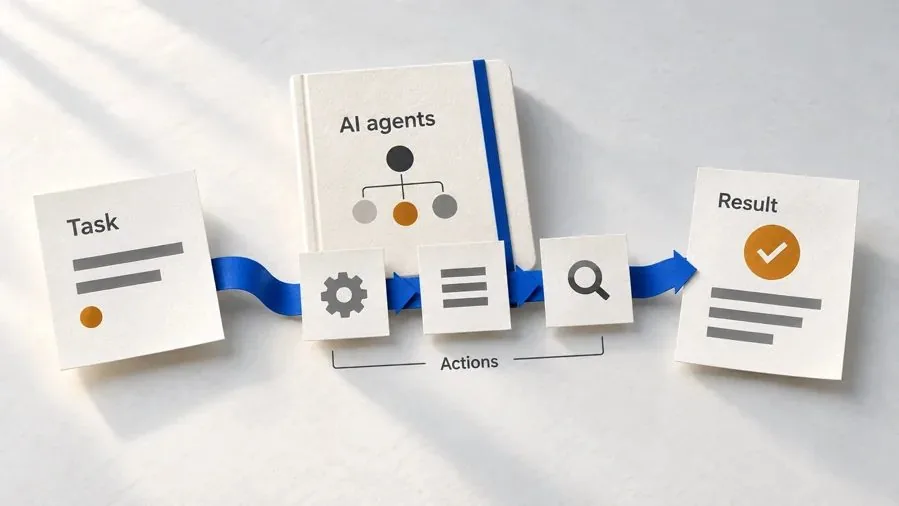
Agentic AI Explained: How AI Agents Actually Work
Coming soon. Follow real agent work, then learn how models, tools, memory and checks fit together.
Join the waitlist →Toolkits and programme
Go deeper

Toolkit
SEO Accelerator Toolkit
150+ copy-paste AI prompts for audience research, keywords, content, technical SEO and link building.

Toolkit
GEO Accelerator Toolkit
100 detailed AI prompts for GEO audits, entity building, content structure and client reporting.

Programme
GEO Authority Accelerator
A complete GEO programme on our learner platform: nine modules and a 30, 60, 90 day roadmap. The GEO Accelerator Toolkit is included.
Claude certification practice
Preparing for a Claude certification?
Practice exams written by Arun: 600 questions across 4 mock exams and 2 drill banks. Unofficial preparation, not affiliated with Anthropic.
 CCAR-F
 CCAO-F
 CCDV-F
 CCAR-P
See Where You Stand
This resource is one piece of a much bigger system.
Take the free Claude Code Readiness Quiz. It is 15 short situations, scored out of 100, and it tests how you handle a job rather than what you know about a tool, so you can take it without ever having opened Claude Code.
Take the Claude Code Readiness Quiz 15 situations · Scored out of 100 · Free