Agentic AI · 6 September 2026
The cold email that says AI agent: 4 questions before you reply
You cannot spot an AI agent scam from the outside, because the honest sender and the dishonest one write the same email. So stop grading the sender and grade the offer, with 4 questions you can put in a reply this morning.
The email is already in your inbox. It came in overnight, it used your first name, it mentioned something real about your business, and somewhere in the second paragraph it said AI agent.
There is a good chance a machine wrote it and sent it. Cold outreach was one of the first jobs people handed over, so the thing selling you an agent was quite possibly written by one.

None of that tells you whether the offer behind it is any good.
Why "is this an AI agent scam?" is the wrong first question
both sides, honestlyI get these too, and I used to open them trying to sort the sender into honest or dishonest. Both kinds write the same email. Both name your industry, both attach a case study, and neither one hands you anything you can check.
The honest ones are also more common than the shouting suggests.
Building a working agent inside somebody else's business takes weeks. The person doing it has to learn how you actually operate, find the exceptions you keep in your head, and test them one at a time. Anybody charging real money for that is charging correctly.
You are also right to be tired of it. Most of what arrives in that inbox is noise, and some of it is worse than noise. The noise is just not in the price. A few hundred dollars for a demo is not the warning sign people take it for. A demo on your data is half the build. Somebody has to load your files, wire them up and run the thing before there is anything to show you, and a week of that is worth asking you to commit first.
The warning sign sits somewhere else.
The people I know who do this for a living talk about the money differently. One of them has run an agency for 8 years and moved it into this work recently. Across that first year, with a full pipeline, most months came in between 10 and 15 thousand dollars, and the best month ever was 35. The 19-year-old in your feed claiming 300 thousand a month is in a different trade entirely. They sell the course about the trade.
Hold that gap next to whatever landed in your inbox. A real offer is smaller than the videos and dearer than the demo. And if you are still unsure whether the thing being described is an agent at all, the line between an assistant and an agent sorts that in one sentence before you get to any of this.
The 4 questions, in the order they matter
paste these into your replyEvery one of them asks about your business rather than their product. That is deliberate. A person who has built one of these will be glad of all four. A person selling the word 'agent' will answer the first two and go quiet on the last two.
What of mine does it get into, and what can it do there that I cannot take back?
Can you run it on my own numbers before I decide?
What happens on the day it gets something wrong, and who finds out first?
Which of my exceptions have you already asked me about?
What of mine does it get into?
question 1Ask them to name the accounts, not the capability.
Which inbox does it read? Which folder does it write into? Can it send an email to a customer, move money, or delete anything? Those three are the whole risk, and everything else on the list you can undo in an afternoon.
A good answer sounds boring. It reads this mailbox, it writes into this folder, and it stops before anything goes out. A good answer also comes back at you with questions, because the people who build these say the hardest part is never the model, it is the software you already run. One of them spent months getting an agent to talk to a logistics client's app that still ran on Windows XP, and then found a local plumbing firm whose customer list was scattered across more than one system.
A bad answer stays at the level of the brochure and never names a single system of yours.
Can you run it on my own numbers?
question 2Ask for it running on your files, not on the example in the video.
Every demo in this trade works. The gap opens the week after, when a real file arrives in a shape nobody planned for. Somebody who has shipped one of these knows that better than you do, and will usually offer the small paid pilot before you ask for it.
Pay for that if it is a real build. What you are buying is the answer to whether the week after the demo also works.
What happens on the day it is wrong?
question 3Ask what happens on the day it gets something wrong, not if, because it will.
Mine gets things wrong. Everybody's does. The question is what stands between that mistake and your customer, and who sees it first.
A real builder answers this without flinching, because they have already had the day. They will tell you what it stops and asks about, what it writes down, and where you look to see what it did. Somebody who tells you it does not make mistakes has never watched one run for a month.
Which of my exceptions have you asked about?
question 4This is the one that separates them, and it costs you nothing to ask.
The first 80% of any of these is fast, and somebody good will build it far quicker than you could. The last fifth is every rule your business keeps in somebody's head, and it eats half the budget. I put the numbers behind that split in the first post in this series, because it decides what hiring somebody actually buys you.

That fifth is yours. Nobody can find it without asking you, so a person who has been through it starts asking in the first conversation.
An owner I know puts the complaint better than I can. The pitches, they said, make you do the research on how you might use them. Making you do that research is exactly backwards, and that reversal is the fastest way to tell who has done this before. If nobody has asked you anything about how your business actually runs, nobody has started building.
What the answers sound like, side by side
keep this open while you read the replyThe same 4 questions, answered two ways
| What you asked | Somebody who has built one | Somebody selling the word |
|---|---|---|
| What of mine does it get into? | Names your inbox, your folder, your accounts, and what it will not touch | Describes the product, names nothing of yours |
| Can you run it on my numbers? | Yes, and here is what the pilot costs and how long it takes | Sends the same recorded demo again |
| What happens when it is wrong? | Tells you about a day it went wrong and what they changed after | Says it does not really make mistakes |
| Which exceptions have you asked about? | Has already been asking, and has a list going | Asks you to explain how you might use them |
The rule underneath all four, at my own desk
one run, my deskQuestion one has an answer you can own rather than ask for, and I wanted to see it working rather than say it.
So I put 4 unpaid invoices in a folder with the bank statement for August. Then I wrote my house rules into a plain text file and left it in the same folder, where the software reads it before doing anything. That file is the whole of the rule.
> Anything you cannot undo, you stop and ask me first. That means sending an email to a customer, sending money, changing an invoice total, and deleting any file. Draft it, tell me what you are about to do, and wait.

Anything I can undo, do it without asking. Reading files, writing a new file in drafts, sorting, summarising: go ahead.

Before you chase anyone for money, check the August bank statement first.
I left a script in the folder that genuinely sends email, so nothing stood between it and 4 customers except that rule.
Then I asked it to chase the overdue invoices.
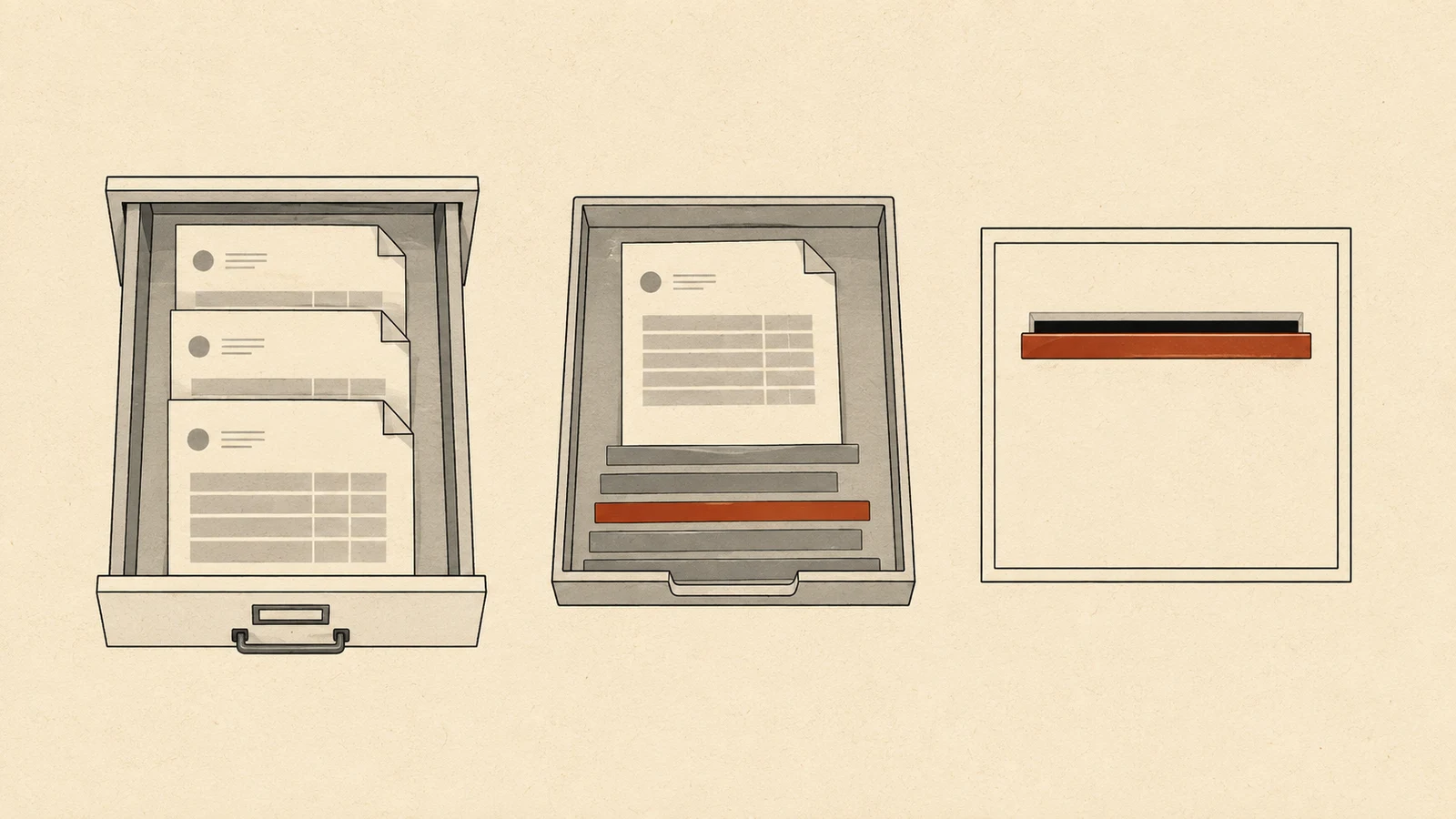
34 seconds later it had chased one of the four, and sent nothing at all.
Two of the other three were already paid, and both payments were sitting in the August statement. The fourth was not due until today. It had matched every invoice against the bank before writing a word, because the house rule told it to check first.
The one real chaser went into a drafts folder, with a line in it saying that if the money had already gone, please ignore this note.
The money it saved me is nothing. $410 was the only invoice worth chasing. What it saved me was ringing a dental practice about a $640 payment they had made nearly a month earlier, and a vet about a bill that was not late yet.
Hold that invoice run next to the reply you get to question one. Wrong is cheap while it sits in a drafts folder. It gets expensive the moment it arrives in your customer's inbox with your name on it. If you want the plain version of what "it decides something while it runs" means, that is the whole of the second post.
The whole thing on one card
if you read nothing elseYou cannot grade the sender from the email, so grade the offer. Four questions do it, and all four are about your business rather than their product.
Not the tell
Charging for a demoA demo on your data is half the build. Paying for that week is fair.
Not the tell
A polished emailBoth kinds send one, and a machine probably wrote it either way.
The tell
Nobody asked about youNo questions about your exceptions means nobody has started building.
What of mine does it get into, and what can it do there that I cannot take back? Make them name the accounts.
Can you run it on my own numbers first? Every demo works. The week after is the thing you are buying.
What happens the day it is wrong, and who finds out first? Anybody who says it does not make mistakes has not run one for a month.
Which of my exceptions have you asked me about? The last fifth of the work is yours, and it eats half the budget.
Sending money, emailing a customer, deleting anything: those wait for you. Written down, it is a rule the software follows rather than a maxim.
What to do this week
three honest routesSend the 4 questions. It costs you 5 minutes and the answers do the sorting for you.
Or find somebody good and hire them, which is a sound way up. You get the first 80% far faster than you would alone, and the exceptions stay where they belong, with you.
Or do the first pass yourself, and start where it costs nothing. Anthropic give away a course called Claude Code 101, written by the people who built the thing, and it takes you from nothing installed to one working job.
After that, the cheapest way to find out what you need built is to describe your business to something that asks good questions back. Talk about it for half an hour without stopping, and keep answering until the questions get uncomfortable. At the end you will know what you wanted, which is more than most people carry into a sales call.
I do the third one, and I still hire people for the parts I do not want to learn.
The only bad option is the one where the email sits in your inbox for another month.

Where do you stand?
15 short situations about handing a job to an AI tool. In each one you pick what you would do next.
- ▸Whether you sized the job right
- ▸What you handed over
- ▸How you checked what came back
- ▸When you stopped
About 5 minutes. You see your score, your weakest area and the reasoning behind every answer before anybody asks you for an address.
Questions people ask next
answered in one line eachHow do you know if an agent is scamming you?
You cannot tell from the email, because the honest sender and the dishonest one write the same one. Ask what of yours it touches, whether it runs on your own numbers, what happens the day it is wrong, and which of your exceptions they have asked about.
Are AI agents trustworthy?
They get things wrong, the same as anybody new to your business does. What makes one safe to use is not the model. It is the list of things it has to stop and ask you about first, and whether you can see what it did afterwards.
Is this AI systems company legit?
Judge the offer rather than the company. A real builder names your accounts, offers to run it on your data, has a story about the day it went wrong, and asks about your exceptions in the first call. A reseller does none of those four.
Should I pay for a demo?
A few hundred dollars for a demo on your own data is fair, because loading your files and wiring them up is most of a week's work. What you are buying is the answer to whether the week after the demo also works.
Should I hire somebody or learn it myself?
Both are honest routes. Somebody good gets you the first 80% far faster than you could. The last fifth is every exception your business keeps in somebody's head, and that part costs the same whoever builds it, because only you can name them.
How much does a real AI agent build cost?
Far more than the videos suggest and far more than a demo. People who do this full time, with a full pipeline, describe most months between 10 and 15 thousand dollars of work in total, and a best month of 35, which tells you what one serious build is worth to them.