AI SEO Course · Optimizing Content for the AI Era (AEO & GEO) · Notes
Notes: Optimizing Content for the AI Era (AEO & GEO)
 Arun Nagarathanam · 10 Jul 2026 Notes · 20 of 54 in this course
 An exclusive resource for students of Arun's AI SEO Course.
In This Section, You Will Master:
- How to structure your content so AI assistants like ChatGPT and Google's AI Overviews use your work as a primary source.
- The "Inverted Pyramid" method to provide direct answers that machines love.
- Simple formatting techniques (lists, tables, bolding) to make your content more machine-readable.
- How to use specific types of Schema (FAQ & How-To) to explicitly label your content for AI.
- How to track your visibility in this new AI-driven landscape and navigate common challenges.
How to Use These Notes:
These notes are your efficient companion to the video lectures.
- Focus on the
Key Takeawaysto solidify the core concepts. - When you see
Actionable ItemsorApplied Learning, it's your cue to put theory into practice. - For conceptual lectures, use the
Food for Thoughtto think more deeply about the 'why'.
The Growth Payoff:
This is about future-proofing your SEO skills.
Learning to optimize for AEO (Answer Engine Optimization) and GEO (Generative Engine Optimization) gives you a profound competitive advantage.
You'll learn how to become a foundational source for AI, ensuring your expertise remains visible and influential in the new era of search.
Optimizing Content for the AI Era (AEO & GEO)
AI-Friendly Structure (The Inverted Pyramid)
Key Takeaways
- 01For your content to be understood and used by AI systems, the structure is just as important as the words.
- 02We need to make it incredibly easy for a machine to find the answer it's looking for.
- 03The single most powerful way to do this is a classic journalistic technique: the Inverted Pyramid.
- 04It's simple: Give the most important information (the direct, concise answer) right at the very top. Then, follow up with supporting details and context further down.
- 05This simple structural shift, from a slow build-up to an "answer-first" approach, massively increases your chances of being chosen as the source for a Featured Snippet or an AI-generated response.
Actionable Items
- The next time you write a "how-to" or question-based article, resist the urge to start with a long, rambling introduction.
- Instead, write a short, direct summary or a step-by-step list that answers the user's core question immediately in the first paragraph.
Optimizing Content for the AI Era (AEO & GEO)
Formatting for Machines (Lists, Tables & Bold Text)
Key Takeaways
- 01Giving the answer first is the perfect start. Now, how do we format the rest of the content to be even easier for machines to read? We need to think in simple, structured HTML.
- 02Use Lists: For step-by-step processes, use numbered lists (
<ol>). For items without a specific order, use bulleted lists (<ul>). This clean structure is incredibly easy for any AI to understand. - 03Use Tables: When comparing things (like pros and cons), using a table (
<table>) provides highly structured data that is a goldmine for an AI trying to synthesize information. - 04Use Bold Text: When you bold a key term, the code wraps it in
<strong>tags. This acts like a small but significant signal to the AI, saying, "Hey, pay attention, this is a key term."
Optimizing Content for the AI Era (AEO & GEO)
Quick Wins! Using Schema to Speak Directly to AI
Key Takeaways
- 01What if you could put special, invisible labels on your content that explicitly tell AI models, "Hey! This section is a list of Frequently Asked Questions," or "This part is a step-by-step tutorial"?
- 02You can! This is a massive quick win for your AEO and GEO strategy, and it's done using Schema Markup.
- 03Even though Google has reduced some of the visual "rich snippets" for these, the underlying structured data is more valuable than ever for AI chatbots like Perplexity, Claude, and ChatGPT.
- 04When an AI crawler sees your content is explicitly marked up as a question-and-answer or a how-to guide, it signals immense clarity and makes it much more likely that your content will be used as a trusted source.
Applied Learning
Implementing FAQ & How-To Schema
- Part 1: For FAQ Content
- Your Input: A page on your site that contains a list of frequently asked questions and their answers.
- Your Task: Use FAQPage Schema to mark up these questions and answers. You can do this easily with many WordPress SEO plugins or with free online Schema Markup Generators.
- Expected Output: You will have code that clearly labels each question and its corresponding answer, making it unambiguous for AI engines and increasing your chances of appearing in "People Also Ask" sections and chatbot responses.
- Part 2: For "How-To" Tutorials
- Your Input: A tutorial or guide on your site that explains a process with clear, distinct steps (e.g., "How to Set Up Your First Iwagumi Aquascape").
- Your Task: Use HowTo Schema to mark up the steps, tools needed, and time required. Again, you can use SEO plugins, online generators, or even AI to help you create the code.
- Reference the Prompt: For the exact prompt structure to use to generate HowTo Schema with AI, please refer to the downloadable course resources.
- Expected Output: You will have handed any AI the perfect, pre-digested, structured data it needs to provide a step-by-step answer, making your tutorial a prime candidate to be used as a source.
Tools & Resources Mentioned
- SEO Plugins with Schema features (e.g., Rank Math, Yoast SEO)
- Online Schema Markup Generators
- AI Tools (for generating schema code)
Optimizing Content for the AI Era (AEO & GEO)
Tracking AI Visibility & Common GEO Challenges
Key Takeaways
- 01How do you know if your GEO efforts are working? It's different from just tracking keyword rankings.
How to Measure Visibility:
- Manually check your most important queries in chatbots (ChatGPT, Perplexity, etc.) to see if your site gets cited or mentioned.
- Use tools like Google Alerts to track mentions of your brand name or unique phrases from your articles across the web.
- In Google Search Console, watch your Click-Through Rate (CTR). If an AI Overview appears and your CTR drops, that's a key impact to note.
Common Challenges:
- "Why did the AI cite my competitor?" The answer often comes back to E-E-A-T and overall authority. The AI might perceive your competitor's site as a more established and trustworthy source. This makes your off-page SEO and brand-building more important than ever.
- Traffic Impact: Sometimes, an AI answers the user's question so perfectly they have no reason to click through to your site. This can lead to a drop in traffic even if you are cited.
Food for Thought
- Navigating GEO requires a new way of measuring success. The goal isn't just to get clicks, but to achieve influence and citation, becoming the recognized expert whose information powers the answers.


Keep building
More from Aruntastic
Practical courses for people who want to build useful things with AI.

AI SEO Course 2026: From Zero to Page-One Results
Research search demand, structure useful pages, and work through technical and off-page SEO.
Open the course →
AEO, GEO, AI SEO: Get Cited by ChatGPT, Google, Perplexity
Study how AI search finds information, and make your pages clear enough to be cited.
Open the course →
Microsoft PowerPoint Presentation 2026 for Professionals
Learn visual hierarchy, slide composition, typography and animation through practical work.
Open the course →
AI Leadership: Gen AI for Leaders, A Practical Toolkit
A short course on using generative AI as a co-pilot, written for senior leaders.
Open the course →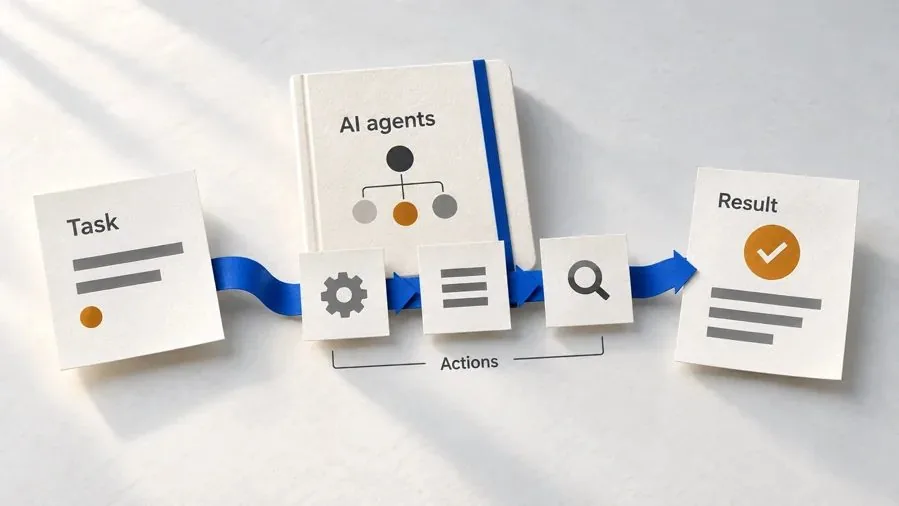
Agentic AI Explained: How AI Agents Actually Work
Coming soon. Follow real agent work, then learn how models, tools, memory and checks fit together.
Join the waitlist →Toolkits and programme
Go deeper

Toolkit
SEO Accelerator Toolkit
150+ copy-paste AI prompts for audience research, keywords, content, technical SEO and link building.
Toolkit
GEO Accelerator Toolkit
100 detailed AI prompts for GEO audits, entity building, content structure and client reporting.

Programme
GEO Authority Accelerator
A complete GEO programme on our learner platform: nine modules and a 30, 60, 90 day roadmap. The GEO Accelerator Toolkit is included.
Claude certification practice
Preparing for a Claude certification?
Practice exams written by Arun: 600 questions across 4 mock exams and 2 drill banks. Unofficial preparation, not affiliated with Anthropic.
 CCAR-F
 CCAO-F
 CCDV-F
 CCAR-P
See Where You Stand
This resource is one piece of a much bigger system.
Take the free GEO Readiness Quiz to see exactly where your business stands with AI search engines today.
Take the GEO Readiness Quiz 60 seconds · Personalized report · Free