AI SEO Course · On-Page SEO Essentials · Notes
Notes: On-Page SEO Essentials
 Arun Nagarathanam · 10 Jul 2026 Notes · 14 of 54 in this course
 An exclusive resource for students of Arun's AI SEO Course.
In This Section, You Will Master:
- The art of On-Page SEO, optimizing the elements you directly control on your pages.
- Crafting compelling Title Tags and Meta Descriptions that grab attention and win clicks on the SERP.
- Understanding the crucial length limits for titles and metas to ensure your message doesn't get cut off.
- Using AI as a powerful assistant to draft and refine these critical snippets faster.
- The best practices for creating clean, simple, and SEO-friendly URLs.
How to Use These Notes:
These notes are your efficient companion to the video lectures.
- Focus on the
Key Takeawaysto solidify the core concepts. - When you see
Actionable ItemsorApplied Learning, it's your cue to put theory into practice. - For conceptual lectures, use the
Food for Thoughtto think more deeply about the 'why'.
The Growth Payoff:
Mastering these on-page essentials is one of the fastest ways to improve your results.
A well-crafted title and description can dramatically increase your Click-Through Rate (CTR), meaning you get more traffic from the rankings you already have.
This is about making your digital storefront irresistible.
On-Page SEO Essentials
On-Page SEO Intro (Optimizing Your Actual Web Pages)
Key Takeaways
- 01It's time to get hands-on! We're now moving into On-Page SEO.
- 02This is everything you do directly on your own pages to make them better for both users and search engines.
- 03Think of it like polishing your storefront: you're arranging things perfectly and writing clear, inviting signs to signal quality and relevance to everyone who sees it.
On-Page SEO Essentials
Your SERP Snippet (Understanding Title Tags & Meta Descriptions)
Key Takeaways
- 01When you search on Google, what makes you click one link over another? A huge part of it is that little preview, your SERP Snippet.
- 02This snippet has two star players:
- The Title Tag: This is the main blue headline. Think of it like the attention-grabbing headline on a magazine cover. It's a huge driver for clicks and a key ranking signal.
- The Meta Description: This is the summary text below the headline. Its main mission is to persuade someone your page is worth their click by providing context and sealing the deal.
On-Page SEO Essentials
Write to Win Clicks! (Crafting Compelling Titles & Descriptions)
Key Takeaways
- 01Writing good titles and descriptions is a crucial skill. It's not just about listing what's on the page; it's about making your result irresistible.
- 02Here are the best practices:
- Clarity First: Your title and description must accurately reflect what the user will find. No tricks or misleading promises!
- Incorporate Keywords Naturally: Your main keyword should be in your Title Tag, ideally near the beginning. Never force it; read it aloud to ensure it sounds natural.
- Focus on Benefits & Solutions: Don't just describe your page; explain why someone should care. Focus on the positive outcome they'll get.
- Good: "Expert Landscaping Services to Transform Your Garden"
- Bad: "Our Landscaping Services"
- Use Power Words (Sparingly!): Words like "Ultimate," "Easy," "Proven," or "Guide" can boost clicks, but only if they genuinely describe your content.
- Include a Call-to-Action (CTA): Gently nudge the user in your description with phrases like "Learn more here" or "Shop the collection now."
- Match the Search Intent: This is critical. If the intent is informational, promise a guide. If it's transactional, make it clear they can buy something.
On-Page SEO Essentials
Size Matters! (Title & Meta Description Length Best Practices)
Key Takeaways
- 01Ever see a headline or email subject get cut off with an awkward "..."? The same thing happens on Google if your titles and descriptions are too long.
- 02Google doesn't actually measure in characters; it measures in pixels. A capital 'W' takes up more pixel space than a lowercase 'i'.
- 03However, using character counts is the most practical way to stay safe.
Actionable Items
- Stick to the Guidelines: Aim for under 60 characters for Title Tags and under 160 characters for Meta Descriptions.
- Front-Load the Important Stuff: Put your main keyword and the core benefit right at the beginning. That way, even if the end gets trimmed, the essential message is still visible.
- Use Preview Tools: Many SEO plugins (like Yoast or Rank Math) and online tools offer a SERP preview. Use them! It's the best way to visually check for awkward cut-offs before you publish.
On-Page SEO Essentials
AI Assist for Titles/Metas (Draft Faster with Gemini)
Key Takeaways
- 01Feeling stuck or just want to speed up the process of writing titles and metas? You can use AI as a powerful assistant.
- 02The key is giving the AI rich context. Don't just ask for "a title." Feed it the target keyword, audience, the page's core benefit, the search intent, and even the full text of the article.
- 03The better your instructions, the better the draft it will generate for you.
Applied Learning
Drafting Titles & Metas with AI
- Your Input: Your target keyword, a description of your audience and their intent, and the text of your page or article.
- Your Task: Use a detailed, multi-part prompt to instruct an AI tool like Gemini to act as an expert SEO copywriter. You will ask it to generate several options for titles and descriptions that adhere to character limits and best practices.
- Reference the Prompt: For the exact prompt structure to use for this task, please refer to the downloadable course resources.
- Expected Output: The AI will provide several compelling options for your Title Tag and Meta Description. You can then use the best one as-is, tweak it slightly, or even ask the AI to iterate and refine it further based on your feedback. Remember, you are always the final editor.
On-Page SEO Essentials
Clean URLs & Keywords in URLs?
Key Takeaways
- 01The address of your webpage, the URL, is an often-overlooked but important piece of on-page SEO.
- 02A clean, readable URL helps both users and search engines understand what a page is about at a glance. It looks more professional and trustworthy.
- 03The Rules for Clean URLs:
- Keep them Short & Descriptive: Avoid long, messy URLs filled with random numbers.
- Good:
mysite.com/services/garden-landscaping - Bad:
mysite.com/cat?id=123&article=789
- Good:
- Use Hyphens to Separate Words: This is the standard best practice. Google prefers hyphens over underscores
_or spaces. - Stick to Lowercase: Using all lowercase letters prevents potential duplicate content issues and user confusion.
- Keywords in URLs? The impact is small today, but still a good practice if it fits. If your main keyword fits naturally into a short, descriptive URL, great! But never sacrifice clarity or make the URL long and awkward just to stuff a keyword in. User experience always comes first.
- Keep them Short & Descriptive: Avoid long, messy URLs filled with random numbers.


Keep building
More from Aruntastic
Practical courses for people who want to build useful things with AI.
AI SEO Course 2026: From Zero to Page-One Results
Research search demand, structure useful pages, and work through technical and off-page SEO.
Open the course →
AEO, GEO, AI SEO: Get Cited by ChatGPT, Google, Perplexity
Study how AI search finds information, and make your pages clear enough to be cited.
Open the course →
Microsoft PowerPoint Presentation 2026 for Professionals
Learn visual hierarchy, slide composition, typography and animation through practical work.
Open the course →
AI Leadership: Gen AI for Leaders, A Practical Toolkit
A short course on using generative AI as a co-pilot, written for senior leaders.
Open the course →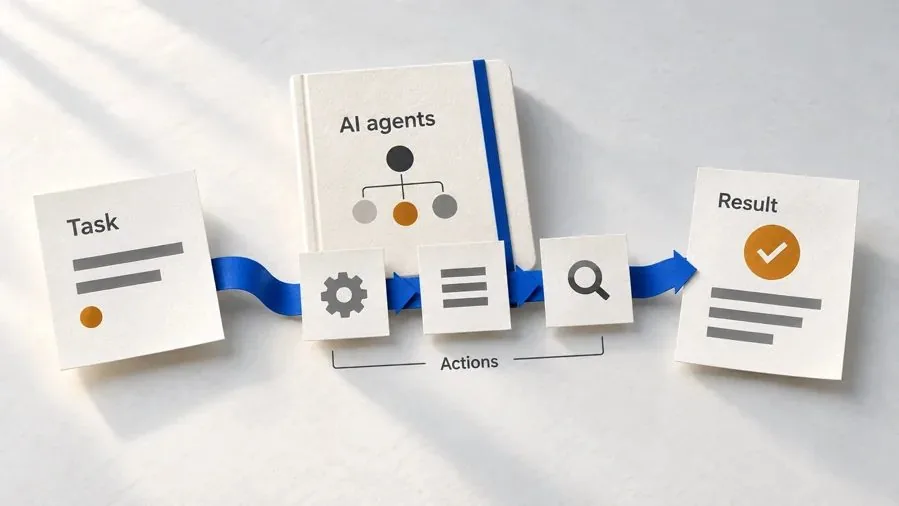
Agentic AI Explained: How AI Agents Actually Work
Coming soon. Follow real agent work, then learn how models, tools, memory and checks fit together.
Join the waitlist →Toolkits and programme
Go deeper
Toolkit
SEO Accelerator Toolkit
150+ copy-paste AI prompts for audience research, keywords, content, technical SEO and link building.
Toolkit
GEO Accelerator Toolkit
100 detailed AI prompts for GEO audits, entity building, content structure and client reporting.
Programme
GEO Authority Accelerator
A complete GEO programme on our learner platform: nine modules and a 30, 60, 90 day roadmap. The GEO Accelerator Toolkit is included.
Claude certification practice
Preparing for a Claude certification?
Practice exams written by Arun: 600 questions across 4 mock exams and 2 drill banks. Unofficial preparation, not affiliated with Anthropic.
 CCAR-F
 CCAO-F
 CCDV-F
 CCAR-P
See Where You Stand
This resource is one piece of a much bigger system.
Take the free GEO Readiness Quiz to see exactly where your business stands with AI search engines today.
Take the GEO Readiness Quiz 60 seconds · Personalized report · Free