AI Agents for Leaders Who Have No Time to Learn AI · Section 6 · Prepared example
Delegation and Governance, a Prepared Example
The page the Section 6 lectures open: judge delegation by total supervision effort and clear return boundaries.
 Arun Nagarathanam · 20 Oct 2026 Template · 41 of 42 in this course

Section 6 · Lectures 6.2 to 6.6
About this page
Prepared fictional example. Maya, Meridian Manufacturing, Alex and Northstar are invented for this course. The reviewer briefs, findings, standing rule, routes and effort minutes are authored teaching material, not output from an observed agent run. Live execution and standing rules require verification in your own permitted workspace.
This is the text of the delegation and governance page shown in Section 6. The same page, with its four tabs, is in the starter zip as practice/agentic-delegation-and-governance.html.
Files and links
- Open the interactive delegation and governance page/downloads/leaders/section-06/agentic-delegation-and-governance.html
- Maya and Alex case files: the full prepared text/resources/library/leaders/maya-and-alex-delegation-case-files
Tab 01 · Lecture 6.2
Two-subagent proposal review
Maya explains the decision to her usual agent in Work, which acts as the coordinator. It briefs two reviewer subagents with distinct jobs and different inputs on the Meridian Manufacturing proposal, and the coordinator preserves their disagreement over week-5 capacity.
Who gets what, and what each found
| Agent / Coordinator | Inputs supplied | Assigned job & finding |
|---|---|---|
| 1. Case-For Reviewer Subagent | Meridian RFP scope + capacity record + 4 criteria + Maya’s preferred phased option | Tests the strongest case for the phased option; treats the 20 specialist hours in week 5 as available. |
| 2. Independent Evidence Subagent | Meridian RFP scope + capacity record + 4 criteria (no preferred answer supplied) | Evaluates raw evidence from scratch; spots a calendar footnote showing an internal platform upgrade scheduled in week 5. |
| 3. Coordinating Agent Synthesis | Both subagent reports and cited source lines | Preserves disagreement (never averages votes): Both agree full 6-week bid is too risky; returns the week-5 platform upgrade conflict for Maya’s judgment. |
The coordinator's report, in 4 sections
- Where the reviewers agree: Both subagents conclude that bidding on the full 6-week scope is too risky because the active client launch has unconfirmed third-party testing through day 10.
- Where they materially disagree: Case-For Subagent treats the 20 hours of senior integration specialist time in week 5 as available for Meridian's custom ERP integration. Independent Evidence Subagent flags a footnote in the department engineering calendar showing an internal platform upgrade scheduled during week 5 that may claim those same 20 specialist hours.
- Missing evidence: Written confirmation of whether the internal platform upgrade in week 5 can be shifted to week 6.
- Judgment returned to Maya: Confirm with the VP of Engineering whether the week-5 internal platform upgrade is movable before submitting the phased bid.
Tab 02 · Lecture 6.3
Scoped standing permission
Alex’s 4-part standing rule for personal preparation reminders—with destination readback and immediate exception returns. Alex sets it only after checking action receipts: saved records, such as the calendar entry read back after each booking, showing an action really happened. The Northstar reminders here are a prepared example, so no real receipts sit behind them.
Standing permission rule, personal calendar only: 15-minute private review preparation reminder
| Part | Rule |
|---|---|
| 1. Permitted action & destination: | Create one 15-minute private preparation reminder on Alex’s personal calendar only, 60 minutes before any confirmed Northstar meeting. |
| 2. Required evidence: | Client review date and time must be explicitly confirmed in the supplied meeting transcript or project record. |
| 3. Routine reporting & readback: | Read back the saved calendar entry from the destination calendar and log the receipt in the weekly summary report. |
| 4. Immediate-return exceptions: | Ambiguous date/time, existing calendar conflict (such as Tuesday’s 10 o’clock budget call), unavailable calendar tool, or any action affecting another person must stop and return immediately. |
Withdrawal or pause: During quarter-end review weeks, Alex withdraws the standing permission so all reminder actions return to Proposed only.
Tab 03 · Lecture 6.4
Away-from-desk routes and linked apps
Verify where the task runs, which files it can read, and whether a linked app (the course says linked app to keep it apart from the ChatGPT app on your phone; older guides say connector) has employer policy approval before leaving your desk.
Maya’s company has local computer access set up and she has sync on, so before leaving she keeps her laptop on and online and starts a new cloud task (a task begun on the laptop cannot switch to the cloud partway through), then follows up on it from her phone.
Three routes and a fallback
| Route | Where work runs | Access & governance check |
|---|---|---|
| ChatGPT Work, local | In ChatGPT on your computer | Uses the folders and files you approved on that machine; nothing local follows you to a phone. |
| ChatGPT Work, cloud task | On OpenAI’s own computers, so it keeps going after you leave; check or follow up from the web or your phone | Reaches files on your own computer only through local computer access, with that computer connected, switched on and online; in a company workspace the person who manages ChatGPT usually turns it on. |
| Dot (some plans) | Personal agent with its own cloud computer and browser | Connects to one of your computers only while it is online with ChatGPT open; reads cloud files only through a linked app plus separate employer policy approval. As of 20 October 2026: Pro plans in the European Economic Area, the UK and Switzerland do not include dots. Check your own screen. |
| Permitted summary (Maya’s fallback) | Employer-approved mobile workspace | Prepared before leaving the desk when company policy blocks both a connected laptop and a linked storage app for client bid files. |
Maya's 3-part check
- Does the task run locally or in the cloud, and is her laptop connected?
- Can that route read the Meridian proposal and its current decision record?
- Which linked apps does her organization approve for client bid documents?
Tab 04 · Lecture 6.5
Capstone effort comparison and team sharing
Compare total effort across all 4 buckets—initial setup, explanation, review, and manual correction—before keeping or sharing a workflow.
Alex's complete-effort comparison
| Effort bucket | Before the workflow | With the workflow |
|---|---|---|
| 1. Initial setup | None | About 1 hour in week one |
| 2. Task explanation | About 10 minutes a week explaining Northstar’s background | One spoken sentence, under a minute |
| 3. Output review | About 15 minutes reading a long unsorted draft | 3 minutes on one organized page |
| 4. Manual correction | About 15 minutes rewriting messages by hand | One minor phrasing tweak, about 2 minutes |
About 34 minutes saved each week, more than half an hour, so the setup pays back within 2 weeks: keep the workflow, using the keep-or-change test from the first section.
These minutes are made up for this prepared example. Alex supplies the transcript and a 1-sentence goal. The agent drafts the blocker-focused follow-ups in the style Alex's project notes describe and, because the standing permission is paused from quarter-end, proposes the Monday preparation reminder for Alex to confirm.
Five-item proportionate team sharing package
- Saved skill instructions (
Meetings and follow-through+ its supporting skills). - One permitted worked example (
Northstar follow-throughpage and transcript). - Explicit exception return rules (pause when review purpose is missing; hold calendar reminders when conflicts or external attendees exist).
- Named human review ownership (the human sender always reviews and sends every external message).
- Employer-approved tool requirement (run only inside workspace tools approved by the organization).
Tab 04 · Lecture 6.6
The 4 questions for any new problem
Principle: You lead the work, and the agent prepares it.
The 4 questions that guide any new leadership problem with AI
| Question | Ask yourself |
|---|---|
| 1. Useful result: | What result would actually help the next decision? |
| 2. Grounded context & method: | What project records and saved skills does the agent need? |
| 3. Return boundaries: | Which exceptions or conflicts must return to me immediately? |
| 4. Human ownership: | Which tradeoff, judgment, or conversation belongs only to me? |
Your first step: Pick one meeting this week whose follow-up you usually end up chasing, run the meeting follow-through workflow on its transcript, and judge the result with the keep-or-change test from the first section.
Prepared course illustration for Section 6. Live execution and standing rules require verification in your own permitted workspace.
More in this section
Keep going
Keep building
More from Aruntastic
Practical courses for people who want to build useful things with AI.

AI SEO Course 2026: From Zero to Page-One Results
Research search demand, structure useful pages, and work through technical and off-page SEO.
Open the course →
AEO, GEO, AI SEO: Get Cited by ChatGPT, Google, Perplexity
Study how AI search finds information, and make your pages clear enough to be cited.
Open the course →
Microsoft PowerPoint Presentation 2026 for Professionals
Learn visual hierarchy, slide composition, typography and animation through practical work.
Open the course →
AI Agents for Leaders Who Have No Time to Learn AI
If you can delegate to a person, you can delegate to an AI agent. You keep the judgment. For managers and founders.
Open the course →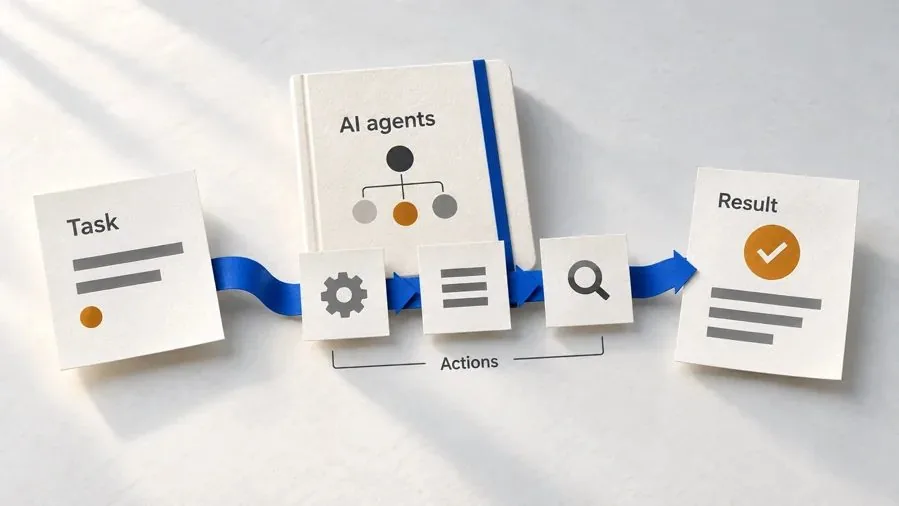
Introduction to Agentic AI and AI Agents
Learn how to direct an AI agent at work, with agentic workflows, RAG and MCP explained from a real first run.
Open the course →Toolkits and programme
Go deeper

Toolkit
SEO Accelerator Toolkit
150+ copy-paste AI prompts for audience research, keywords, content, technical SEO and link building.

Toolkit
GEO Accelerator Toolkit
100 detailed AI prompts for GEO audits, entity building, content structure and client reporting.

Programme
GEO Authority Accelerator
A complete GEO programme on our learner platform: nine modules and a 30, 60, 90 day roadmap. The GEO Accelerator Toolkit is included.
Claude certification practice
Preparing for a Claude certification?
Practice exams written by Arun: 600 questions across 4 mock exams and 2 drill banks. Unofficial preparation, not affiliated with Anthropic.
 CCAR-F
 CCAO-F
 CCDV-F
 CCAR-P
Keep going
This resource is part of a six-section course.
Follow the lectures on Udemy, then come back here whenever you want the files, requests and notes for a section.
Open the course AI Agents for Leaders Who Have No Time to Learn AI · Udemy