AI GEO Course · Platform Playbooks · Resources
Section Resources: Platform Playbooks (Win on Google, ChatGPT, and Perplexity)
Find the prompts, tools and email template for each platform playbook, then copy the resource you need.
 Arun Nagarathanam · 10 Jul 2026 Guide · 13 of 16 in this course
 An exclusive resource for students of Arun's AI GEO Course.
12 resources · 3 prompts · 8 tool links · 1 email template
Platform Playbooks · You Direct, AI Codes
AI Is Your Technical Team
Google Rich Results Test - Validate All Schema Types
Tool LinkFiles and links
- Open Google Rich Results Testhttps://search.google.com/test/rich-results
Google's Rich Results Test validates that your Schema markup is correctly formatted and readable by Google and AI engines.
Paste your Schema code or enter your page URL to see which properties can be parsed. The tool catches syntax errors automatically and shows exactly what Google sees.
Use this after implementing Article Schema, Organization Schema, or any other structured data.
Master Prompt - BlogPosting/Article Schema Generator
Master PromptThis prompt generates complete, validated BlogPosting Schema (JSON-LD) from any blog post URL.
The AI fetches your page, extracts key properties (headline, description, author, dates, publisher), and generates production-ready Schema code. If any fields are missing, it asks you to provide them before generating.
Copy the output and paste into your website header.
You are a structured-data validation and generation engine specialized in schema.org and Google Rich Results.

I will provide you with a URL to a published blog post.

URL = []

PHASE 1: FETCH & VALIDATE
1. Fetch the page content at the provided URL.
2. Extract and validate the following properties directly from visible content, metadata, or structured elements:
   - Canonical URL
   - Article headline (page title)
   - Meta description or article summary
   - Main / featured image URL
   - Author name
   - Date published (ISO 8601)
   - Date modified (ISO 8601, if available)
   - Publisher / organization name
   - Publisher logo URL

3. Validation rules:
   - All extracted values must be visible on the page or in legitimate metadata (title tag, meta description, Open Graph, JSON-LD).
   - All URLs must be absolute and crawlable.
   - Dates must follow YYYY-MM-DD format.
   - Headline must be under 110 characters.
   - Image must be at least 1200px wide.

PHASE 2: MISSING DATA CHECK
4. If any required or recommended property cannot be confidently extracted or validated, STOP.
5. Do NOT generate JSON-LD yet.
6. Instead, respond with a clear list in this exact format:

   "I could not reliably extract the following fields from the page:
   - [Field name]
   - [Field name]

   Please provide only these missing values, and I will generate a fully valid BlogPosting schema."

PHASE 3: SCHEMA GENERATION
7. Once the user supplies the missing values:
   - Merge them with the previously validated data.
   - Generate a complete BlogPosting schema in JSON-LD.
   - Use only schema.org-supported properties.
   - Ensure compatibility with Google Rich Results Test.

8. Output requirements:
   - Output ONLY a single <script type="application/ld+json"> block.
   - No explanations, comments, or markdown.
   - Ensure mainEntityOfPage matches the canonical URL.
   - Include publisher as an Organization with a logo ImageObject.

EXPECTED OUTPUT STRUCTURE:

<script type="application/ld+json">
{
  "@context": "https://schema.org",
  "@type": "BlogPosting",
  "mainEntityOfPage": {
    "@type": "WebPage",
    "@id": "<canonical URL>"
  },
  "headline": "",
  "description": "",
  "image": "",
  "author": {
    "@type": "Person",
    "name": ""
  },
  "publisher": {
    "@type": "Organization",
    "name": "",
    "logo": {
      "@type": "ImageObject",
      "url": ""
    }
  },
  "datePublished": "",
  "dateModified": ""
}
</script>

Write the properly formatted code inside a new Canvas.Platform Playbooks · Win AI Overviews and Featured Snippets
The Google Playbook
Master Prompt - Content Cluster Subtopics Generator
Master PromptThis is the exact prompt demonstrated in the lecture to instantly map out a full content cluster.
Ask any AI: "What are all the subtopics someone needs to understand about [your core topic]?" The AI returns 8-12 supporting subtopics in seconds - giving you a complete content cluster outline.
Use this to build the topical authority Google AI Overviews reward. Replace [your core topic] with your specific pillar topic before running.
What are all the subtopics someone needs to understand about [your core topic]?
How to use: Replace [your core topic] with your specific topic (e.g., "aquarium cycling", "email marketing for SaaS", "on-page SEO"). Use the output as your content cluster plan - each subtopic becomes a supporting article that links back to your pillar page.
Prerequisites: Have your pillar content topic identified before running.
Google AI Mode - Conversational AI Search Interface
Tool LinkFiles and links
- Open Google Labshttps://labs.google.com
(or via Google Search when available)
Google AI Mode is an experimental conversational interface within Google Search that lets users have follow-up conversations with AI.
Unlike AI Overviews which are static summaries, AI Mode enables contextual dialogue.
Your strategy for AI Mode focuses on comprehensive content clusters and strong E-E-A-T signals - the same foundations that work for AI Overviews. Monitor Google Labs for availability in your region.
Gemini - Brainstorm Content Cluster Subtopics
Tool LinkFiles and links
- Open Geminihttps://gemini.google.com
Use Gemini (or any AI assistant) to quickly identify supporting subtopics for your pillar content.
Simply ask: "What are all the subtopics someone needs to understand about [your core topic]?" The AI generates 8-12 related topics in seconds, giving you an instant content cluster outline.
This technique accelerates the topical authority strategy that wins Google AI Overviews.
Platform Playbooks · Win with Authority and Digital PR
The ChatGPT Playbook
Master Prompt - White Paper Generator (Blog to Professional Research)
Master PromptTransform any blog post into a professional white paper that journalists and industry publications want to reference.
Paste this prompt into Gemini or Claude, then add your blog post link. The AI generates a complete white paper with executive summary, market analysis, comparison tables, and infographic structure - formatted for download as PDF.
White papers get cited where blog posts don't. This turns your existing content into outreach-ready research assets.
Transform this blog post into a professional white paper.
Include Executive Summary, Market Analysis sections with charts showing the AI search trajectory.
Add comparison tables for Traditional SEO vs. AI Citations.
Create an infographic showing how AI search works in four steps.
Include case study dashboards with metrics.
Add charts for traffic migration patterns.
Professional typography, multi-column layout, embedded visualizations.
Create this as a complete white paper artifact ready to download.

[Paste your blog post link or full text here]
Prerequisites: Have a published blog post or draft content ready to paste in. Works best with data-driven or analytical content that can support charts and comparison tables.
HARO (Help A Reporter Out) - Get Quoted in Major Publications
Tool LinkFiles and links
- Open HAROhttps://www.helpareporter.com
HARO is a free service connecting journalists with expert sources.
- Sign up, select up to 2 categories matching your expertise, and you will receive daily emails listing journalist queries.
- Respond quickly with specific, human insights (not generic AI-written responses) to get quoted in publications like Forbes, Inc, and industry media.
These mentions create the external validation that moves ChatGPT from citing you to recommending you.
Wikipedia - Contribute and Build Authority
Tool LinkFiles and links
- Open Wikipediahttps://www.wikipedia.org
Wikipedia is one of the most trusted sources in ChatGPT's training data.
Instead of creating a promotional page about yourself (which gets deleted), contribute genuinely to existing articles in your expertise area. Find incomplete sections, add valuable content with citations, and build reputation as a legitimate contributor.
Over time, opportunities for more substantial representation emerge naturally.
Platform Playbooks · Win with Freshness and Niche Expertise
The Perplexity Playbook
Attribution Outreach Email Template - Request Citations from Copiers
AssetWhen competitors publish content covering the same topic without crediting your original analysis, this template gives you the exact email to send.
It is brief, friendly, and non-confrontational - most people add the citation immediately because nobody wants plagiarism accusations.
Every citation you recover this way becomes an authority signal. Use this alongside Google Alerts or Copyscape to turn content copies into backlinks.
Subject: Quick attribution request - [Topic] coverage

Hi [Name],

I came across your recent piece on [their article title or topic] - good coverage of [specific aspect].

I published the original analysis on this topic on [Date] at [Your URL]. Since your article covers similar ground, would you mind adding a citation back to the source?

Just a quick link addition - I appreciate it.

[Your Name]
[Your Website]
How to use:
Use the attribution template
- Set up Google Alerts or Copyscape for your article title and unique phrases (shown in the lecture)
- When you find a piece that covers the same topic without crediting you, check if the overlap is substantial
- If it is, use this template - customize [Name], [their article title], and [Your URL]
- Send once. If no response after 7 days, move on
Note: Only use this for genuine coverage of the same topic without attribution. Do not use it if the other article independently arrived at the same conclusions. Protect your credibility.
Google Alerts - Monitor Content Replication and Trends
Tool LinkFiles and links
- Open Google Alertshttps://www.google.com/alerts
Google Alerts sends email notifications when new content matches your specified keywords.
Set up alerts for your article titles and unique phrases from your content to detect when competitors cover similar topics. If they do not credit you, reach out and request attribution - turning potential copies into backlinks.
Also use alerts to monitor emerging trends in your niche so you can publish first.
Copyscape Copysentry - Premium Content Protection
Tool LinkFiles and links
- Open Copysentryhttps://www.copyscape.com/copysentry/
Copyscape Copysentry provides automated monitoring for your high-value content. At $4.95/month for up to 10 pages (first month free), it tracks where your content appears across the web and shows match percentages.
Use this for your most important analysis pieces and pillar content.
When you find copies, check for attribution and reach out if missing to convert copies into citations.
Perplexity AI - Test Your Niche Expertise Visibility
Tool LinkFiles and links
- Open Perplexityhttps://www.perplexity.ai
Perplexity is an AI answer engine that prioritizes freshness and niche expertise over established media authority.
Test your visibility by searching for emerging topics in your field - Perplexity often prefers detailed blog posts from hands-on experts over generic coverage from major publications.
This platform offers the fastest path to AI visibility for smaller players willing to publish first on new trends.


Keep building
More from Aruntastic
Practical courses for people who want to build useful things with AI.

AI SEO Course 2026: From Zero to Page-One Results
Research search demand, structure useful pages, and work through technical and off-page SEO.
Open the course →
AEO, GEO, AI SEO: Get Cited by ChatGPT, Google, Perplexity
Study how AI search finds information, and make your pages clear enough to be cited.
Open the course →
Microsoft PowerPoint Presentation 2026 for Professionals
Learn visual hierarchy, slide composition, typography and animation through practical work.
Open the course →
AI Leadership: Gen AI for Leaders, A Practical Toolkit
A short course on using generative AI as a co-pilot, written for senior leaders.
Open the course →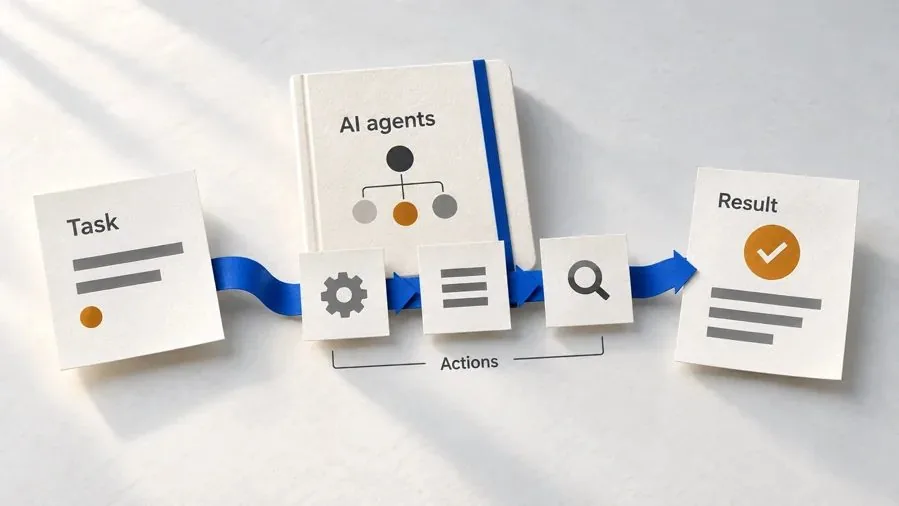
Agentic AI Explained: How AI Agents Actually Work
Coming soon. Follow real agent work, then learn how models, tools, memory and checks fit together.
Join the waitlist →Toolkits and programme
Go deeper

Toolkit
SEO Accelerator Toolkit
150+ copy-paste AI prompts for audience research, keywords, content, technical SEO and link building.

Toolkit
GEO Accelerator Toolkit
100 detailed AI prompts for GEO audits, entity building, content structure and client reporting.

Programme
GEO Authority Accelerator
A complete GEO programme on our learner platform: nine modules and a 30, 60, 90 day roadmap. The GEO Accelerator Toolkit is included.
Claude certification practice
Preparing for a Claude certification?
Practice exams written by Arun: 600 questions across 4 mock exams and 2 drill banks. Unofficial preparation, not affiliated with Anthropic.
 CCAR-F
 CCAO-F
 CCDV-F
 CCAR-P
Want the Full System Behind This Guide?
This resource is one piece of a much bigger GEO framework.
Take the free GEO Readiness Quiz to see exactly where your business stands with AI search engines today.
Take the GEO Readiness Quiz 60 seconds · Personalized report · Free