AI GEO Course · Reference
The GEO Practitioner's Dictionary: From Jargon to Strategy
 Arun Nagarathanam · 10 Jul 2026 Glossary · 5 of 16 in this course
 An exclusive resource for students of Arun's AI GEO Course.
Welcome to your GEO dictionary! This guide bridges the gap between technical definitions and strategic understanding. Use this resource to clarify concepts you encounter throughout the course modules.
GEO resources
Pillar 1: The Core GEO Concepts
Definition
GEO (Generative Engine Optimization)
The strategic process of optimizing content to be cited and recommended by AI answer engines like ChatGPT, Perplexity, and Google AI Overviews. Think of it like... Shifting from 'ranking' to 'becoming.' Instead of trying to be a blue link on a list, you are optimizing to be the source the AI reads to learn the answer.
AEO (Answer Engine Optimization)
Definition: A subset of GEO focused specifically on structuring content so machines can easily extract direct answers.
Think of it like... Writing a "Cheat Sheet" for the AI. You are making your content so easy to read that the AI prefers your answer over a complex academic paper.
RAG (Retrieval-Augmented Generation)
Definition: The technical workflow where an AI model pauses, searches the live web to "retrieve" fresh facts, and then uses that info to "generate" an answer.
Think of it like... A librarian on fast-forward. When you ask a question, she doesn't just guess; she runs to the shelf, grabs the 3 best books (sources), reads them instantly, and summarizes the answer for you.
AI Overviews (SGE)
Definition: Google's AI-generated summary that appears at the very top of the search results, pushing traditional links further down.
Think of it like... Getting the answer directly from the tour guide instead of being handed a map and told to find it yourself.
GEO resources
Pillar 2: Building Trust & Entities
The Knowledge Graph
Definition: A massive, structured database used by search engines to map real-world entities (people, places, businesses) and the connections between them.
Think of it like... A giant digital filing cabinet. If you have a folder in this cabinet, the AI knows you are a real, verified business. If you don't, you are just "ghost text" on a webpage.
Wikidata
Definition: A free, open knowledge base of structured data that acts as a primary verification source for Google's Knowledge Graph.
Think of it like... Your business's "Digital Birth Certificate." It is the official document that proves to machines that you exist, independent of your own website.
Corpus of Trust
Definition: The specific set of high-authority websites (like Wikipedia, New York Times, Academic Journals) that an AI model is trained to trust implicitly.
Think of it like... The AI's "Inner Circle." If you are in this circle (or mentioned by someone in it), the AI believes you.
Entity Home
Definition: A specific page on your website (typically "About Us") structured with Schema markup to serve as the definitive source of truth for your brand's facts.
Think of it like... A legal affidavit. It is not a marketing brochure; it is a declaration of facts (Founder, Location, Mission) written specifically for the AI to read.
E-E-A-T
Definition: Experience, Expertise, Authoritativeness, and Trustworthiness. The criteria Google uses to decide if a source is reliable.
Think of it like... A background check. Before the AI recommends you as a doctor, it wants to see your medical degree (Expertise) and check if other doctors respect you (Authority).
GEO resources
Pillar 3: Technical GEO Signals
Schema Markup (JSON-LD)
Definition: Invisible code added to your website that explicitly labels your content so search engines understand the context (e.g., "This text is a recipe," "This number is a price").
Think of it like... Putting a sticky note on a jar of salt that says "SALT" so the cook (AI) doesn't accidentally use it as sugar.
sameAs Property
Definition: A specific line of Schema code that links your website to your other verified profiles (LinkedIn, Crunchbase, Wikidata).
Think of it like... Connecting the dots. It tells the AI, "See that LinkedIn profile? That's definitely us. See that Wikipedia page? That's us too." It proves you are the same person everywhere.
Vector Database
Definition: The method AI uses to store information based on concepts and relationships rather than just keywords.
Think of it like... A grocery store layout. The AI knows that "Apples" and "Bananas" belong in the same aisle (Fruit), even if they look different.
GEO resources
Pillar 4: Content Strategy for AI
Answer-First Model
Definition: A writing style (Inverted Pyramid) where the direct answer to the user's question is placed immediately at the top of the content.
Think of it like... Don't bury the lead. If someone asks "What time is it?", don't tell them the history of clocks. Just tell them the time.
Answer Blocks
Definition: Self-contained sections of content (usually under H2 headers) designed to be extracted and understood independently.
Think of it like... Building with LEGO bricks. Each brick (section) is solid and complete on its own, so the AI can pick it up and use it anywhere.
Semantic Specificity
Definition: Using precise nouns instead of vague pronouns (like "it" or "this") to ensure a sentence makes sense even when taken out of context.
Think of it like... Instead of writing "It is healthy," write "Spinach is healthy." If the AI quotes just that one sentence, the reader still knows what you are talking about.
Canonical Source
Definition: The primary, original source of a statistic, study, or unique framework.
Think of it like... Being the inventor. If you invent a new machine, everyone else has to cite you when they talk about it.
Misinformation Inoculation
Definition: Proactively creating content to correct false information that an AI might be hallucinating about your brand.
Think of it like... A vaccine. You are injecting the truth into the web so the AI learns to fight off the bad data.
GEO resources
Pillar 5: Measuring GEO Success
Share of Answer (SoA)
Definition: A metric that measures how often your brand is cited in AI-generated responses compared to your competitors.
Think of it like... "Market Share" for the AI era. Out of 10 times someone asks about your industry, how many times does the AI mention you?
Citations vs. Recommendations
Definition:
- Citation: You are listed as a source in the footnote (Visibility).
- Recommendation: The AI actively suggests your solution (Trust).
Think of it like... Being invited to the party (Citation) vs. being the Guest of Honor (Recommendation).
Unlinked Brand Mentions
Definition: When a website mentions your brand name but doesn't add a clickable link. In GEO, this is still a powerful trust signal.
Think of it like... Word-of-mouth reputation. Even if they don't hand out your business card, people talking about you makes you famous.
GEO resources
Pillar 6: Essential SEO Foundations (Prerequisites)
Since GEO is built on top of SEO, you need to know these basics.
SEO (Search Engine Optimization)
Definition: The practice of optimizing a website to rank in traditional search results (the "Ten Blue Links").
Think of it like... The foundation of the house. You can't build the GEO penthouse if the SEO basement is crumbling.
Organic Traffic
Definition: Visitors who find your site for free via search engines.
Think of it like... Free foot traffic. These are customers you earned, not customers you bought with ads.
Backlink
Definition: A link from another website to yours.
Think of it like... A vote of confidence. The more reputable people who vote for you, the more Google (and AI) trusts you.
Crawlability & Indexing
Definition: Can Google's bots access (crawl) your page and file it (index) in their library?
Think of it like... If your book isn't in the library's system, the librarian (AI) can never find it to read it to a user.
Search Intent
Definition: The reason a user searches (To Buy, To Learn, To Go).
Think of it like... Reading minds. If you know why they are asking, you can give the perfect answer.


Keep building
More from Aruntastic
Practical courses for people who want to build useful things with AI.

AI SEO Course 2026: From Zero to Page-One Results
Research search demand, structure useful pages, and work through technical and off-page SEO.
Open the course →
AEO, GEO, AI SEO: Get Cited by ChatGPT, Google, Perplexity
Study how AI search finds information, and make your pages clear enough to be cited.
Open the course →
Microsoft PowerPoint Presentation 2026 for Professionals
Learn visual hierarchy, slide composition, typography and animation through practical work.
Open the course →
AI Leadership: Gen AI for Leaders, A Practical Toolkit
A short course on using generative AI as a co-pilot, written for senior leaders.
Open the course →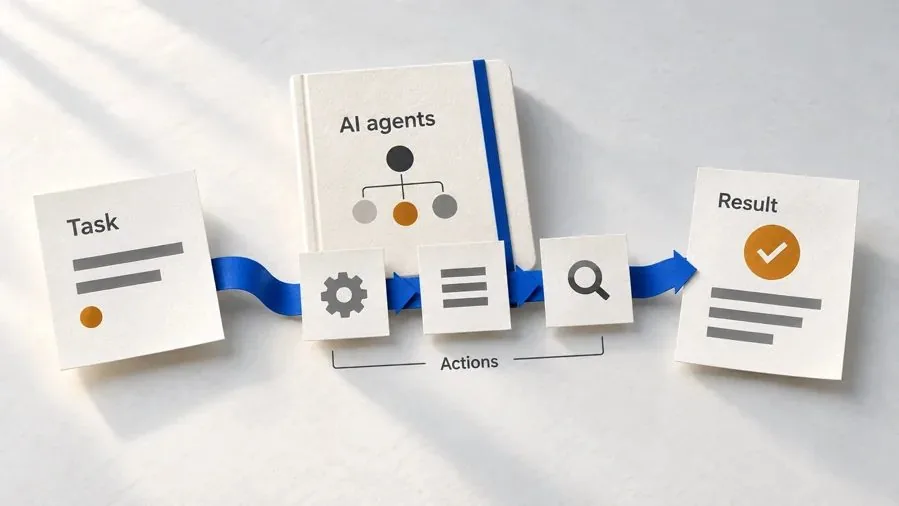
Agentic AI Explained: How AI Agents Actually Work
Coming soon. Follow real agent work, then learn how models, tools, memory and checks fit together.
Join the waitlist →Toolkits and programme
Go deeper

Toolkit
SEO Accelerator Toolkit
150+ copy-paste AI prompts for audience research, keywords, content, technical SEO and link building.

Toolkit
GEO Accelerator Toolkit
100 detailed AI prompts for GEO audits, entity building, content structure and client reporting.

Programme
GEO Authority Accelerator
A complete GEO programme on our learner platform: nine modules and a 30, 60, 90 day roadmap. The GEO Accelerator Toolkit is included.
Claude certification practice
Preparing for a Claude certification?
Practice exams written by Arun: 600 questions across 4 mock exams and 2 drill banks. Unofficial preparation, not affiliated with Anthropic.
 CCAR-F
 CCAO-F
 CCDV-F
 CCAR-P
Want the Full System Behind These Terms?
This dictionary is one piece of a much bigger AI search framework.
Take the free GEO Readiness Quiz to see exactly where your business stands with AI search engines today.
Take the GEO Readiness Quiz 60 seconds · Personalized report · Free