Claude Code Course
Hand The Error Back
 Arun Nagarathanam · 31 Aug 2026 Prompt · 19 of 72 in this course
 An exclusive resource for students of Arun's Claude Code Course.
The habit you will reach for most often over the next year, and it is the simplest one in the whole section. You hand the error back to the same tool that produced it.
Most of the time Claude already does this diagnostic work for you. When a command it ran returns an error, it typically reads it, names the cause, and offers a fix without you having to type anything else.
For the cases where it does not, or when you want a deeper walkthrough, ask directly.
What went wrong and how do I fix it?
When the terminal has a lot of other output mixed in
Copy only the specific error lines and paste them inside square brackets along with your question, so the whole thing reads as one block.
[paste the exact error lines here]

That happened when I tried to [describe what you were doing]. What went wrong and how do I fix it?
For errors that show up as screenshots or images from another tool, attach the screenshot along with the prompt.
Why this beats a search engine
Claude already has the context. It knows what it was trying to do, what files are around, and what went wrong. A general search result can never carry any of that, which is why most search answers take longer to apply than the original problem took to create.
Before AI, fixing a simple error meant opening a browser, searching the message, scrolling through forum threads that did not quite match your situation, and finding the right answer fifteen or twenty minutes later.
The habit underneath
Three steps, and it works the same way in every tool and every project you use it on.
- Ask AI for a diagnosis.
- Check that the fix makes sense for your specific situation.
- Apply it.
The second-order effect is the one worth naming. Once any error can be diagnosed in under a minute, the cost of trying something unfamiliar drops to almost nothing, and you start experimenting more freely.


Keep building
More from Aruntastic
Practical courses for people who want to build useful things with AI.

AI SEO Course 2026: From Zero to Page-One Results
Research search demand, structure useful pages, and work through technical and off-page SEO.
Open the course →
AEO, GEO, AI SEO: Get Cited by ChatGPT, Google, Perplexity
Study how AI search finds information, and make your pages clear enough to be cited.
Open the course →
Microsoft PowerPoint Presentation 2026 for Professionals
Learn visual hierarchy, slide composition, typography and animation through practical work.
Open the course →
AI Leadership: Gen AI for Leaders, A Practical Toolkit
A short course on using generative AI as a co-pilot, written for senior leaders.
Open the course →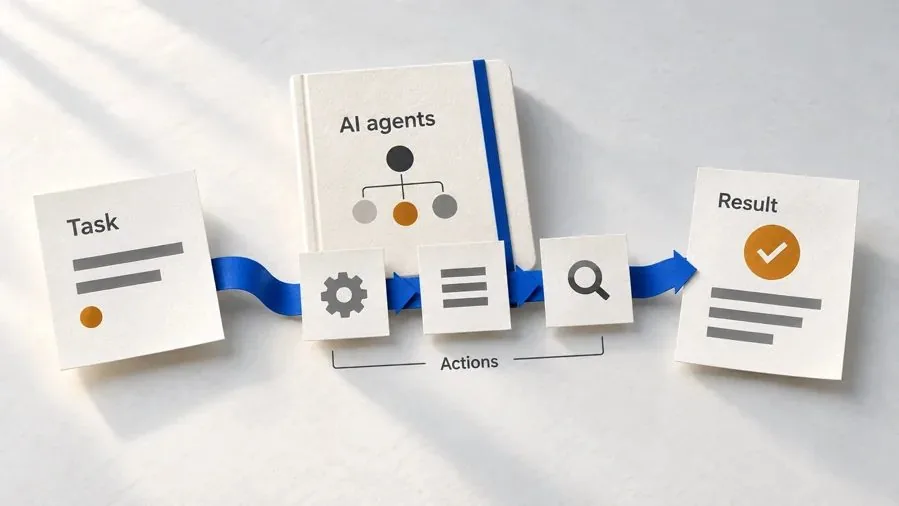
Agentic AI Explained: How AI Agents Actually Work
Coming soon. Follow real agent work, then learn how models, tools, memory and checks fit together.
Join the waitlist →Toolkits and programme
Go deeper

Toolkit
SEO Accelerator Toolkit
150+ copy-paste AI prompts for audience research, keywords, content, technical SEO and link building.

Toolkit
GEO Accelerator Toolkit
100 detailed AI prompts for GEO audits, entity building, content structure and client reporting.

Programme
GEO Authority Accelerator
A complete GEO programme on our learner platform: nine modules and a 30, 60, 90 day roadmap. The GEO Accelerator Toolkit is included.
Claude certification practice
Preparing for a Claude certification?
Practice exams written by Arun: 600 questions across 4 mock exams and 2 drill banks. Unofficial preparation, not affiliated with Anthropic.
 CCAR-F
 CCAO-F
 CCDV-F
 CCAR-P
See Where You Stand
This resource is one piece of a much bigger system.
Take the free Claude Code Readiness Quiz. It is 15 short situations, scored out of 100, and it tests how you handle a job rather than what you know about a tool, so you can take it without ever having opened Claude Code.
Take the Claude Code Readiness Quiz 15 situations · Scored out of 100 · Free